Home EV charger installation: circuit, panel and permit
A home Level 2 charger runs on its own 240 volt circuit, usually 40 to 60 amps. Whether the panel has room decides how big the job is.
- Circuit: 240 V, 40 to 60 A
- Typical install: $1,000 to $2,000
- Permit: Required
Estimate your installation cost
Three answers give the load result and the typical cost range.
$1,000 to $2,000
Charger circuit, mounting and permit. The charger itself is often extra.
Assumes an electric range and dryer and 4 kW of central AC. Change those in the full calculator.
Why install a home charger
Four facts from the guides on this site, each with its source.
- A circuit made for itThe cord that comes with a car only does Level 1 speed. A Level 2 charger runs on its own 240 volt circuit.Read why
- Permits follow state lawCalifornia law (AB 1236) asks cities to streamline home charger permits.Read why
- HOAs have to answerUnder Civil Code 4745, a request with no denial in 60 days is deemed approved.Read why
- Utility rebates existSCE, SDG&E, LADWP and some city utilities run charger programs. Check yours by ZIP.Read why
How an EV charger install goes
- 1
Survey
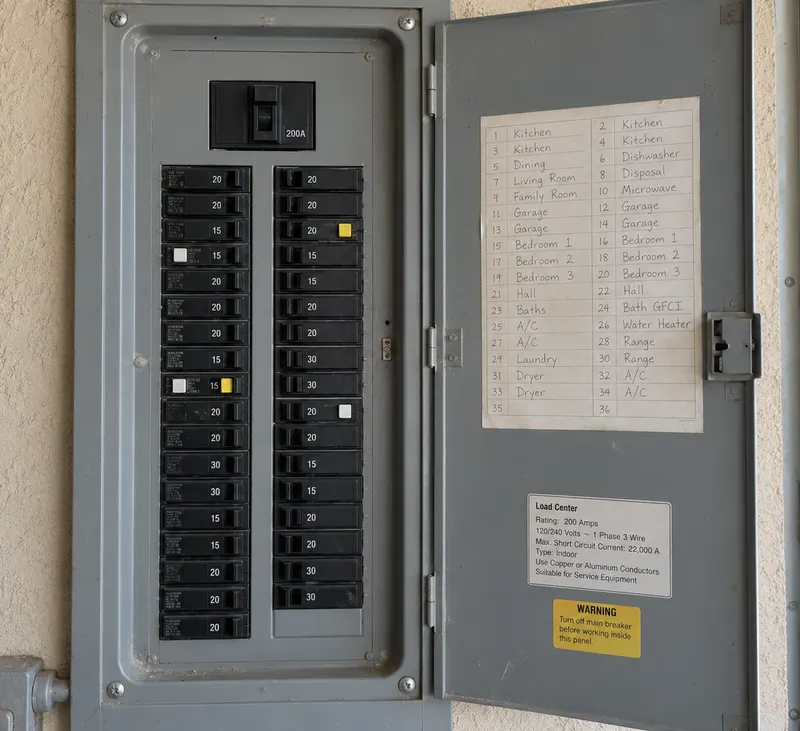
The electrician checks the panel, the run to the garage and the load.
- 2
Permit
The electrician files the city permit.
- 3
Circuit
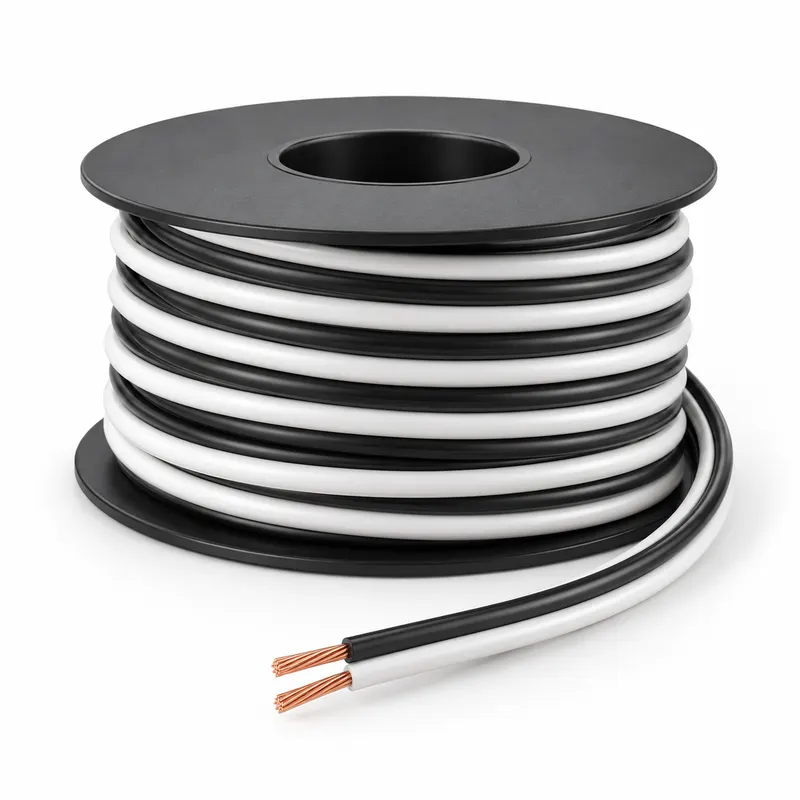
A 240 volt circuit runs from the panel to the charger spot.
- 4
Mount
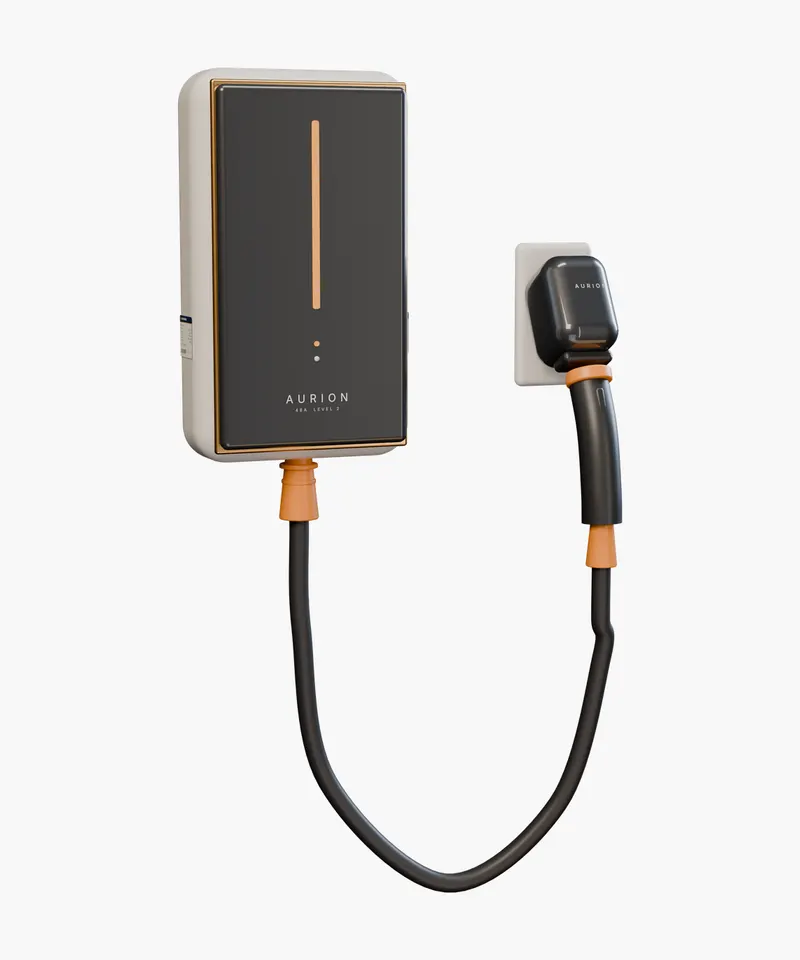
The charger is mounted on the wall and wired to the circuit.
- 5
Test
The city inspects, then the charger is tested with the car.
What the job is
The electrician runs a new 240 volt circuit from your panel to the place you park. The circuit ends at either a wall-mounted charger (hardwired) or a heavy-duty outlet. The car comes with a cord that only does Level 1 speed, so a Level 2 unit is what most owners mean by “a home charger.”
Owners of a large truck can start with the Ford F-150 Lightning page, which covers its 48 and 80 amp options.
Three things set the size of the job: how much power the car can take, how much spare capacity your panel has, and how far the garage is from the panel.
Pick the circuit size first
The charger is sized to the car, and the breaker is sized to the charger. The National Electrical Code treats EV charging as a continuous load, so the breaker must be about 25 percent above the charger’s output. Tesla’s manual shows this clearly for its Gen 3 Wall Connector: a 60 amp breaker supports 48 amps of charging (11.5 kW), and a 40 amp breaker supports 32 amps (7.6 kW).
| Breaker | Charging amps | Power at 240 V |
|---|---|---|
| 60 A | 48 A | 11.5 kW |
| 50 A | 40 A | 9.6 kW |
| 40 A | 32 A | 7.6 kW |
Many cars cannot take more than about 11 kW anyway. A bigger circuit will not make those cars charge faster, so do not pay for 100 amps unless your vehicle can use it. The car pages below show where the limits sit for popular models.

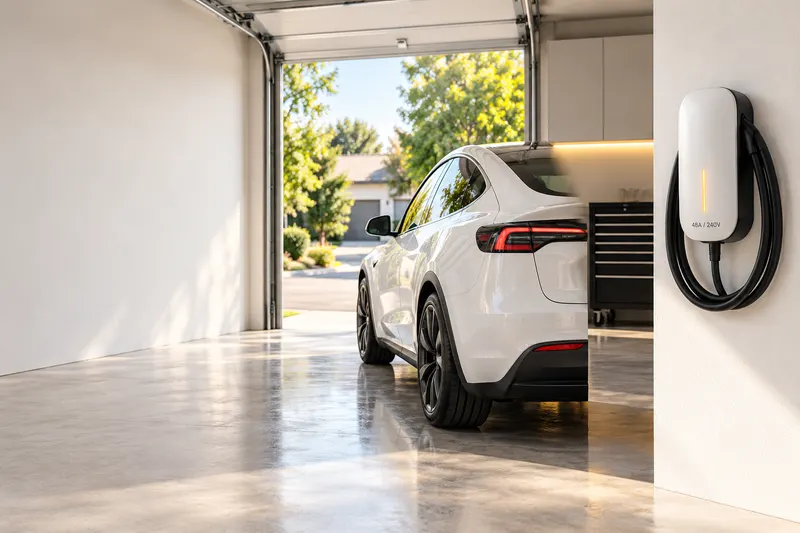
A 240 volt circuit, a mounted charger and a permit
Check the panel before you buy a charger
A 60 amp charger circuit on a busy 100 amp panel can overload the service. Your electrician will run a load calculation to find out. If the answer is no, you have three options: a panel upgrade, a smart panel or a load management device, or a lower-amp charger. The load calculation page shows how the numbers work, and the panel upgrade guide covers when an upgrade is unavoidable. If a larger panel is needed, see 200 amp panel upgrades.
Pages for your situation
By vehicle or charger
- Tesla Wall Connector installation
- Ford F-150 Lightning, Charge Station Pro and home backup
- Rivian R1T and R1S charging
- Hyundai and Kia (Ioniq 5, Ioniq 6, EV6, EV9)
By building or site
By panel limits
$1,000 to $2,000
Circuit, mount and permit. The charger itself is often extra.
Get this quote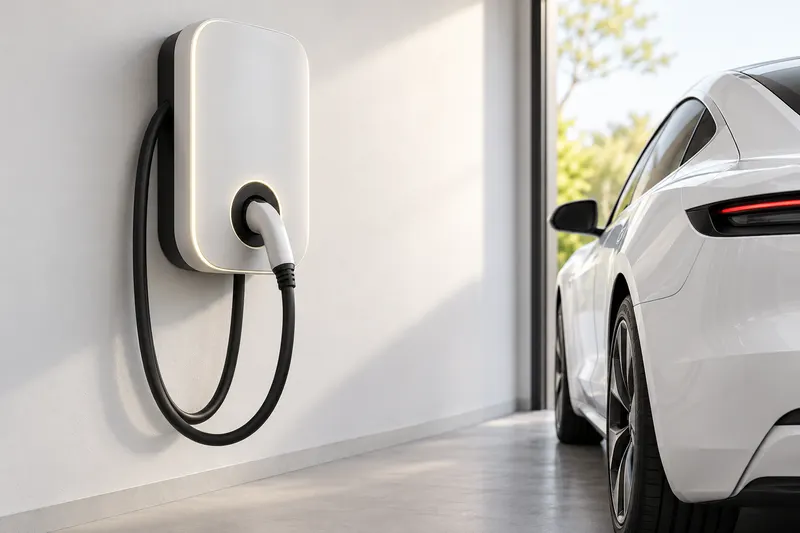
What the price includes
As of October 2026, the typical SoCal range for a Level 2 install is $1,000 to $2,000. That covers the new circuit, mounting the charger and the permit. The charger itself is often extra. When the panel needs work too, the range moves to roughly $3,600 to $7,500, so ask any quote to show the panel work as its own line. The cost page and the cost calculator break down the drivers.
Permit and inspection
Most cities want an electrical permit for a new charger circuit, and the inspector checks the breaker, wire size, grounding and mounting. California’s AB 1236 asks cities to streamline charger permits. The AB 1236 guide explains what that means in practice. Do not skip the permit. An unpermitted circuit can cause trouble with insurance and at resale.

Charging at home overnight
Rates and rebates
Charging at night on a time-of-use plan can cut your cost per mile. See time-of-use rates for EV owners. Some utilities offer charger or panel rebates, and the rules change often, so check before work starts. Charge Ready Home takes applications while you plan, during the work or up to six months after, while LADWP, PWP and BWP pay after the permit is finaled.
Questions to ask before you hire
Good quotes are specific. Ask each electrician for the same things so the numbers compare.
- The breaker size, wire size and length of the run, in writing.
- Whether the quote includes the permit fee, the inspection and the charger itself.
- The load calculation, or a note that one will be done before work starts.
- What happens if the panel turns out to be full: the price of a subpanel or a bigger service.
- Which plug type the charger has, matched to your car’s port.
Check the license number on the CSLB site before you sign. A C-10 electrical license is the one that covers this work.
Which page do I need
If you only know your car, start with the vehicle pages. If you rent or live in a condo, start with the rights page, because the permission step comes before any wire is run. If a first quote came back with a panel upgrade you did not expect, read the load calculation page and the load management page before you accept it. Many homes can add a charger with a lower-amp setting or a cap and no new service.
In this section
Home charging for the Ford F-150 Lightning
A Standard Range Lightning charges at up to 48 amps, so a 60 amp circuit is enough. Only the Extended Range truck...
Home charging for Hyundai and Kia EVs
Most Hyundai Ioniq and Kia EV6 and EV9 owners need a 48 amp class charger at most. Check your model year for the...
Home charging for a Rivian R1T or R1S
Rivian's own Wall Charger is rated 48 amps and 11.5 kW on 240 volts. That points to a hardwired charger on a 60 amp...
EV chargers in an HOA, condo or rental
In California an HOA cannot ban an EV charger in your parking space, and a landlord must approve a written request...
EV charger load calculation
Before a charger goes in, the electrician adds up your home's electrical load and checks that a new continuous EV...
EV charger load management and circuit sharing
A load management device lowers the charger's draw when the rest of the house is busy. The code allows the service...
Outdoor and detached garage EV charger installs
A charger on an outside wall or in a detached garage needs weather-rated gear, ground-fault protection and a...
Tesla Wall Connector installation: the circuit it needs
The Gen 3 Wall Connector is hardwired, with no plug. A 60 amp breaker gives the full 48 amps (11.5 kW), and a...
EV charger installation in your city
Each page uses that city's utility, permit office and fee schedule.
Questions people ask
Do I need a Level 2 charger, or is a regular outlet enough?
A regular 120 V outlet adds only a few miles of range per hour. That can work if you drive under 30 miles a day and park overnight. Most drivers who want a full battery by morning choose a Level 2 charger on a 240 V circuit. It adds roughly 20 to 40 miles of range per hour, depending on the car.
Does an EV charger install need a permit in California?
Yes, in almost every city. A new 240 V circuit is electrical work, so the electrician pulls a permit and the city inspects it. California law (AB 1236) also pushes cities to approve charger permits quickly. Fees and speed vary by city, so check the building department for your address.
How do I know if my panel can handle a charger?
Look at the main breaker size and count the open slots, then have the electrician run a load calculation. A 100 amp panel in a house with electric heat or a large air conditioner often has no room. A 200 amp panel usually does. The calculation settles it with numbers, not guesses.
Is a hardwired charger better than a plug-in charger?
Hardwired is simpler and safer at higher amps. A plug-in unit on a 14-50 outlet is limited to about 40 amps of charging, and the outlet can wear out. Many chargers, including Tesla's Gen 3 Wall Connector, must be hardwired. Check your charger manual before you pick.
Keep reading
How much does it cost to install a Level 2 EV charger at home?
A Level 2 EV charger install in Southern California typically costs $1,000 to $2,000 for the new 240-volt…
EV charger plus panel upgrade: what the whole job costs
When your panel cannot carry a charger, the combined job typically costs $3,600 to $7,500 in SoCal, as of…
Electrical panel upgrades in Southern California: when and how
A panel upgrade replaces the main breaker box, and most SoCal homes that need one are moving from 60 to…
Do I need a panel upgrade for an EV charger?
How to tell if your panel can carry a Level 2 charger, when a load manager saves the upgrade, and what…
EV charger cost calculator
Check if your panel can carry a Level 2 charger and see the typical cost.
Time-of-use rates for EV owners
Plan names, peak hours and sign-up rules for SCE, SDG&E and LADWP EV owners, with no price claims that go…
Get a quote
Send a photo, get a range.
Share your ZIP and a photo of your panel. Your request goes to a licensed partner electrician, who contacts you.
Get this quoteAurion Electric is a referral service operated by Roviq LLC. Electrical work is done by a licensed partner electrician.