Commercial electrical work in Southern California
A shop, a restaurant, an office, a warehouse and a 40-unit HOA all count as commercial electrical work. The wiring may look familiar, but the services, the permit path and the energy and fire codes are different from a house.
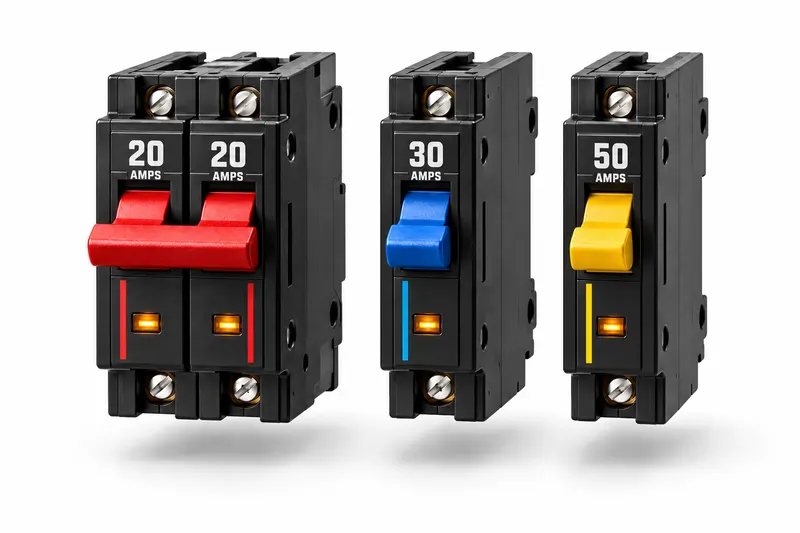
- 50 or more parking spacesCommercial EV charging lease law (Civil Code 1952.7) applies at
- 10 percent of the fixtures in one enclosed spaceLighting alteration trigger in nonresidential Title 24
- up to $100,000 per portCEC fast charger incentive, round 1 (to January 14, 2027)
- January 1, 20262025 Energy Code and CALGreen took effect
Pick the job
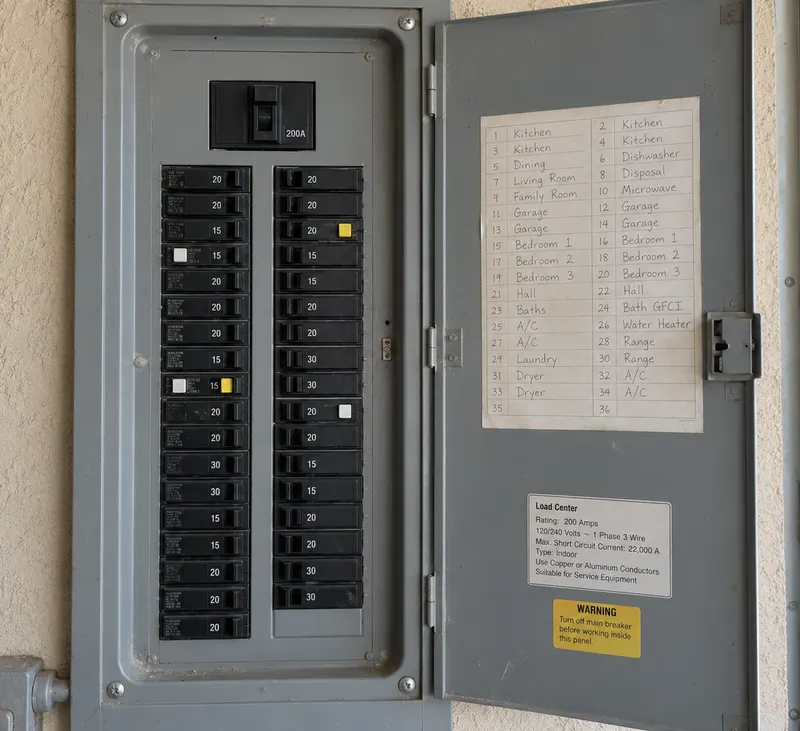
Commercial electrical service and repair
A business electrical problem is either inside your meter, where an electrician fixes it, or outside it, where the utility...
Read more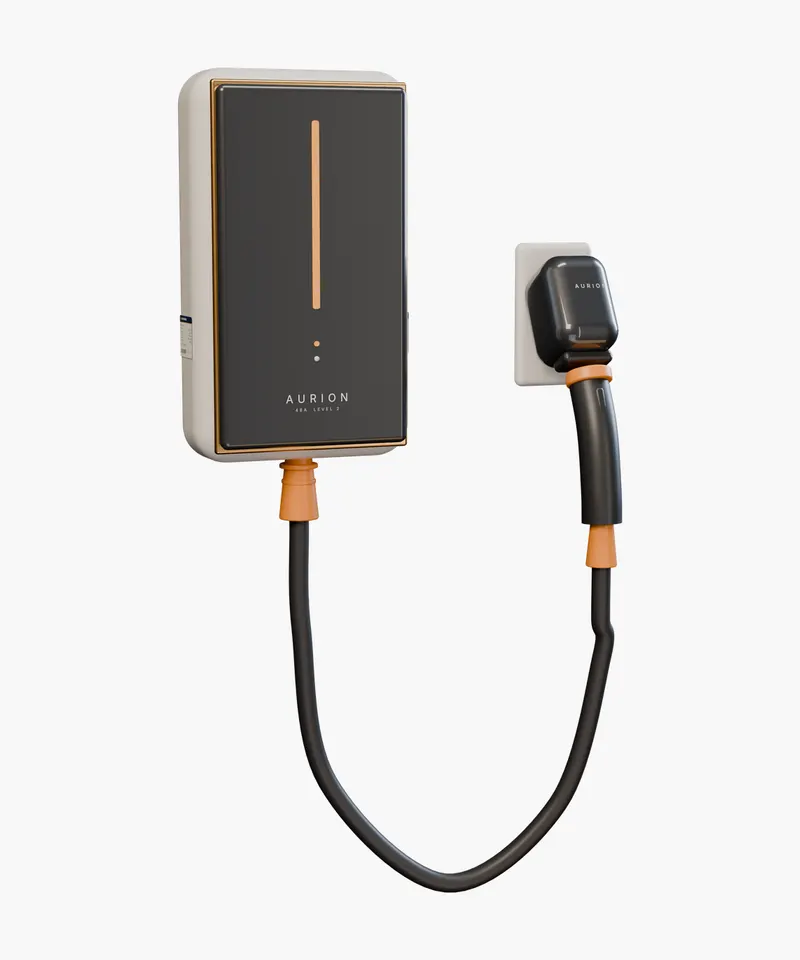
Commercial EV charger installation for workplaces and retail
A business charger project is mostly an electrical capacity question. The charger is the small part; the panel, the trench,...
Read more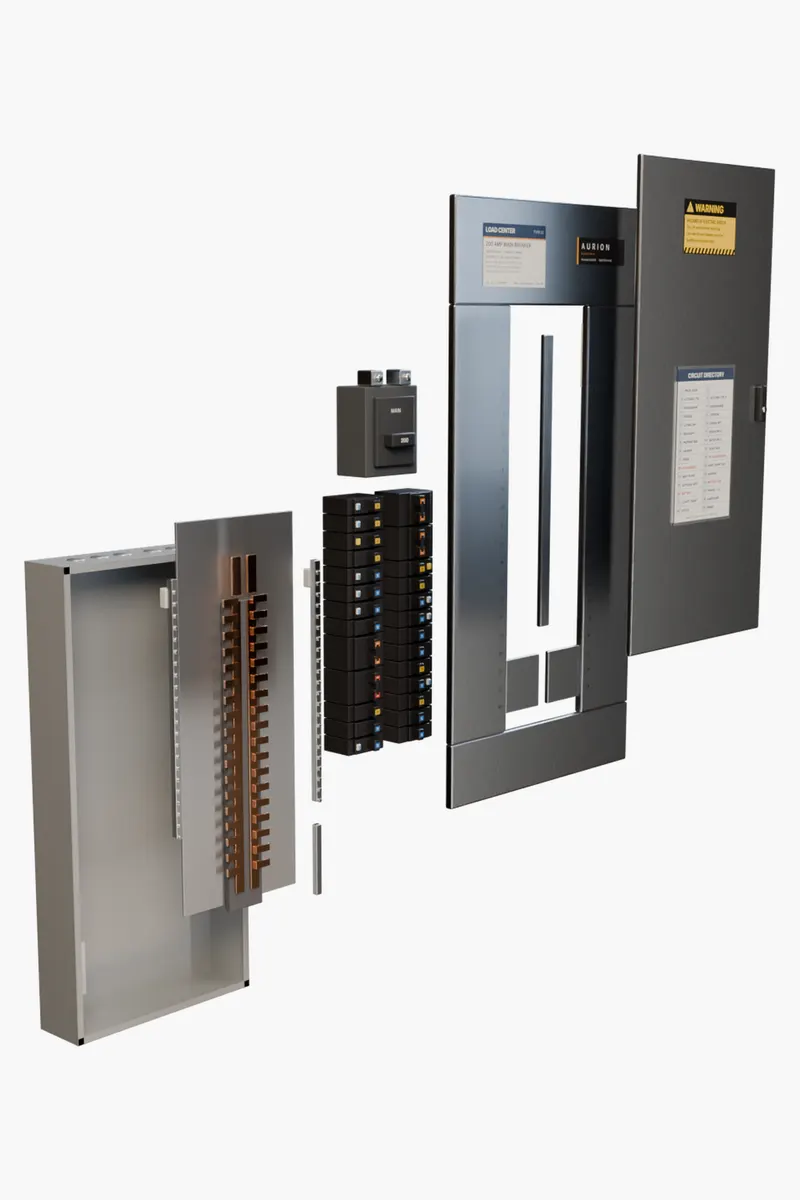
Commercial panel and service upgrades
A commercial service upgrade has two jobs: the electrician's work inside the building and the utility's work outside it. The...
Read moreElectrical maintenance agreements for commercial buildings
A maintenance agreement is a written list of electrical checks, how often they happen and what happens when something fails....
Read more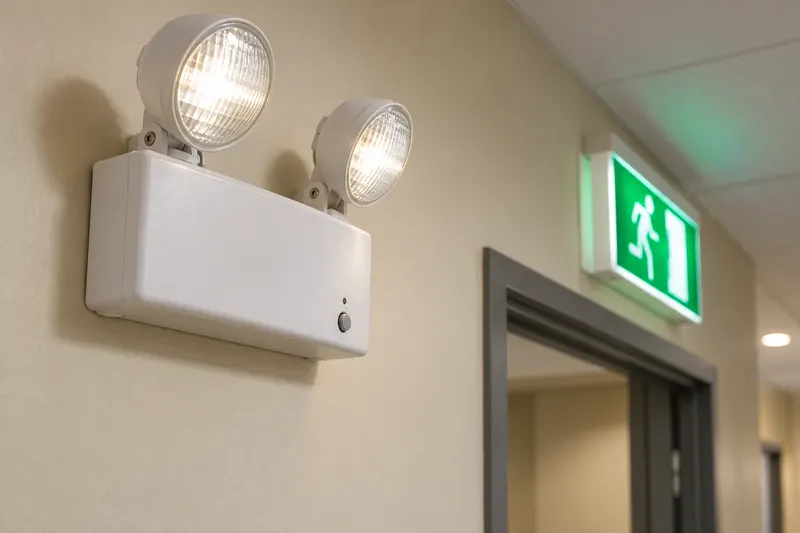
Exit signs and emergency lighting for businesses
Exit paths must be lit to at least 1 footcandle, and emergency lights and exit signs must run at least 90 minutes on backup...
Read more
What a property manager needs from an electrician
A property manager gets better electrical work by sending a complete request, knowing who pays, giving tenants proper notice...
Read moreElectrical work in HOA and condo common areas
In a California HOA, the association repairs common area electrical equipment unless the governing documents say otherwise....
Read more
Commercial LED lighting retrofits and Title 24
Swapping a warehouse or office to LED is regulated work in California when the change touches 10 percent or more of the...
Read more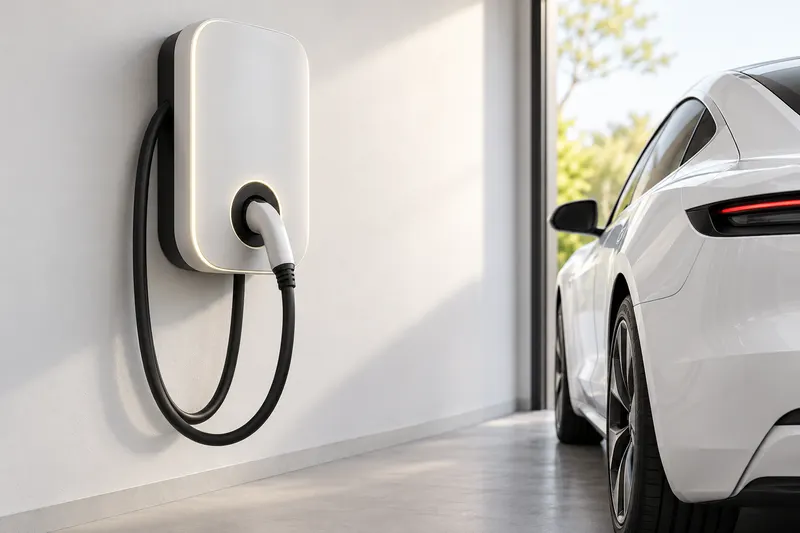
EV charging for multifamily buildings and HOAs
In a California HOA, the board cannot unreasonably block an owner's EV charger, and in many rentals the landlord must approve...
Read more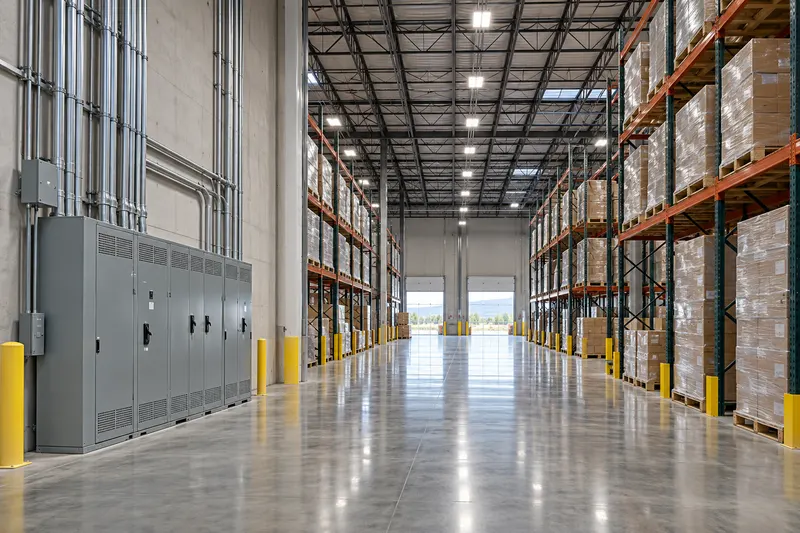
Commercial electrical work in Orange County
A business in Orange County deals with SCE in most cities, SDG&E in the south end, a city-run utility in Anaheim, and a power...
Read more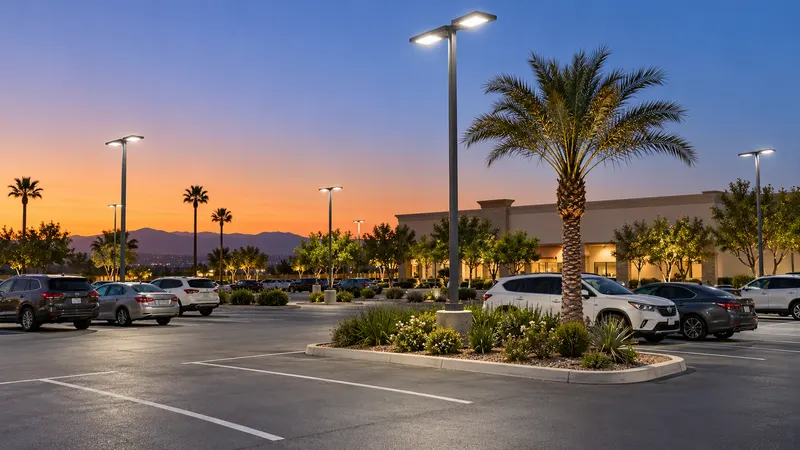
Parking lot lighting for California businesses
A new or rebuilt parking lot in California needs a photocontrol or time switch, an automatic schedule, and motion sensors that...
Read moreElectrical work for restaurants and retail stores
A restaurant electrical job ends with two inspectors, not one: the city building inspector and the county health department. A...
Read more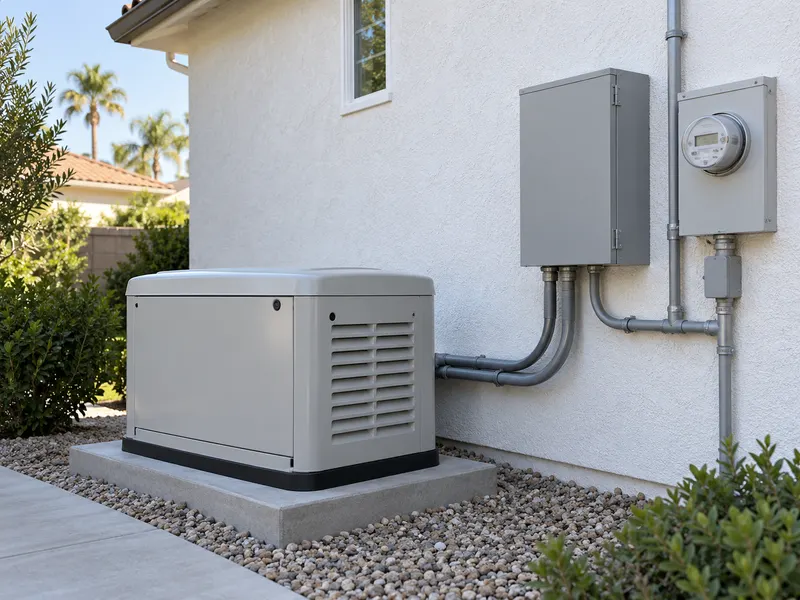
Standby generator installation for businesses
A business generator is built to one of three electrical classes, each with its own transfer time. Emergency systems must pick...
Read moreTenant improvement electrical: what a build-out needs
In a lease build-out, the electrician works from the landlord's service up to the last outlet. The code questions are how much...
Read moreWarehouse and industrial electrical work in Ontario and the Inland Empire
Warehouse electrical work is mostly about service size, lighting and charging capacity. In Ontario, SCE supplies the power,...
Read moreWho commercial pages are for
Commercial pages here are written for six kinds of readers: small business owners, restaurant and retail operators, office and medical tenants, warehouse operators, property managers and HOA boards. Multifamily owners are in the same group. If you pay a utility bill for a building that is not a single home, this section applies to you.
Commercial electrical work is available through the partner electrician. The pages describe how the work and the rules generally run in California. They do not set prices, timing or capacity for any one job.
Pick the page for your job
| If this is happening | Start here |
|---|---|
| Lights, outlets or equipment feeds fail | Commercial service and repair |
| You signed a lease and are building out the space | Tenant improvement electrical |
| You run a kitchen, a dining room or a store floor | Restaurant and retail electrical |
| The panel or meter is too small for new load | Panel and service upgrades |
| Old fixtures cost too much to run or fail inspection | LED lighting retrofits |
| You want chargers for staff, customers or vans | Commercial EV charging |
| Residents want chargers in shared parking | Multifamily and HOA EV charging |
| You want inspections on a schedule | Maintenance agreements |
| An HOA needs gate, pump or common-area work | HOA common-area electrical |
| You manage several buildings | Property manager checklist |
Each city has its own utility and building department. Commercial pages for Los Angeles, San Diego, Long Beach, Anaheim, Irvine, Ontario and Riverside cover the local utility, permit office and business types in each.
How commercial differs from residential
Service size and voltage
Most homes run on single-phase 120/240 volt service. Commercial buildings often use three-phase service. Small shops, offices and restaurants usually get 120/208 volt. Larger buildings and warehouses often get 277/480 volt, which runs 277 volt lighting and large motors. Equipment must match the service, so a new oven, compressor or charger starts with a nameplate check and a load calculation.
Plan check and permits
Home panel swaps often go through over-the-counter permits. Commercial work more often needs plans, a load calculation and plan check before a permit issues. The path depends on the city and the scope. Some cities take small tenant work over the counter. The permits guide covers the basic order, and the building department can say which path your scope takes.
Title 24 energy rules
The nonresidential part of the California Energy Code sets lighting power limits and controls. An alteration that touches 10 percent or more of the fixtures in an enclosed space triggers them, with exceptions such as lamp, ballast or driver swaps only. The 2025 edition took effect January 1, 2026. It also added electric-ready requirements for commercial kitchens, as the Energy Commission described in January 2026.
Fire and life safety
Exit signs and emergency lighting have their own rules. California Building Code section 1008 asks for emergency lighting that runs at least 90 minutes on a power failure, along aisles, corridors and exit routes. The fire marshal and building inspector check this, and a remodel can trigger it.
Accessibility
Chapter 11B of the California Building Code reaches charging spaces, routes to them and clear floor space. A charger that is simple at a house can need striping and a route check at a store.
What to send for a quote
Send the building type, the address, whether you are the owner, the tenant or the property manager, and what is wrong or planned. Add a photo of the main panel and the meter, and a spec sheet for any new equipment. The quote checklist shows what a written quote should list. Then use the quote form.
Permit and utility basics
A permit is required for panel, service and new circuit work in every Southern California city, and the city inspects the work. A service change also needs the utility. Southern California Edison, San Diego Gas & Electric and the Los Angeles Department of Water and Power each have their own service rules, and many cities run their own utility. The utility coordination guide lays out the usual order.
The work must be done under a C-10 license. Electricians who work for a C-10 contractor must hold state certification, according to the Department of Industrial Relations. Check the license before the first visit.
Restaurants also need the county health department to approve plans. In Los Angeles County, plans are required for new food facilities and for remodels that need a building permit. The health inspector also wants the building department sign-off before the final inspection.
Utility programs and incentives
Business programs change fast. As of October 2026, the Los Angeles Department of Water and Power shows its fiscal year 2026-27 commercial EV charger rebates as pending release, and the California Energy Commission is taking round 1 applications for public fast chargers until January 14, 2027, at up to $100,000 per port. The commercial EV charging page has the rest. Confirm any program with the utility before you buy equipment.
Utility programs also come with their own rules for metering and rates, which a quote should mention. Equipment bought before a program confirms payment is usually not covered.
Commercial work at a glance
| Item | What it involves |
|---|---|
| Repairs and service calls | Tripping breakers, dead circuits, failed lighting, equipment feeds that burned out. |
| Panel and service upgrades | More amps for a new tenant, kitchen, compressor or charger, often with the utility. |
| Tenant improvement electrical | Panels, lighting, receptacles and dedicated circuits inside a lease build-out. |
| Restaurant and retail | Kitchen equipment, hoods, walk-ins, signs, display lighting and exit lighting. |
| LED lighting retrofits | Fixture swaps and controls under the nonresidential energy code. |
| EV charging | Workplace, retail and fleet-light charging, plus multifamily and HOA parking. |
| Maintenance agreements | Scheduled inspections and thermal scans so failures show up before they close a business. |
| HOA and property work | Common-area lighting, gates, pumps and meter rooms for managers and boards. |
Commercial electricians by city
Each page covers that city's utility, building department and commercial permit path.
Anaheim
Every Anaheim business buys power from Anaheim Public Utilities, a city department, so SCE business rates...
Irvine
An Irvine business bill splits electricity into two lines: SCE delivery and OCPA generation. A tenant...
Long Beach
A Long Beach business license is not issued until the fire department clears the space. The clearance...
Los Angeles
Los Angeles businesses deal with two city agencies on one job. LADBS permits and inspects the wiring, and...
Ontario
Ontario's city booklet counts about 133 million square feet of industrial space, so much commercial...
Riverside
Riverside Public Utilities prices a business by size: a flat rate under 20 kW, demand billing from 20 kW,...
San Diego
The City of San Diego gives no-plan electrical permits to single-family homes and duplexes. A commercial...
Working in Orange County? Anaheim and Irvine have commercial pages above, and the Orange County commercial page compares utilities, permit offices and fire review in 22 cities. The Orange County page covers homes. Lots and backup power have their own pages: parking lot lighting and standby generators. Compare permit fees by city before you budget.
Send three things. Get a call.
Share the building, the job and a deadline. Your request goes to a licensed partner electrician, who contacts you about the building, the load and the permit path.
Commercial electrical work is available through the partner electrician.
- The buildingType of business, address and rough size.
- Who you areOwner, tenant, property manager or HOA board.
- The jobWhat is wrong or planned, and any deadline such as a lease date or inspection.
Questions people ask
Does a commercial job need a different license than a home job?
No. Both use the C-10 electrical contractor license from the Contractors State License Board. The difference is the work: three-phase power, larger services, plan check and accessibility rules. Ask for recent commercial work like yours and look up the license on the CSLB site before you sign anything.
Do I need a permit to replace lights in my shop or office?
Usually yes when you replace fixtures and not just lamps, but it depends on the city and the scope. Under the California Energy Code, altering 10 percent or more of the fixtures in an enclosed space triggers lighting power and control rules. Call the building department with the fixture count before you buy.
Why does a tenant space need plan check when a house often does not?
Commercial spaces carry more people, more load and fire and exit rules. Many building departments want a plan, a load calculation and review before the permit issues. Some cities take small tenant work over the counter. Ask the department which path your scope follows, because it changes the schedule more than the wiring does.
What is the difference between 120/208 volt and 277/480 volt service?
Both are three-phase. A 120/208 volt service is common in small shops, offices and restaurants. A 277/480 volt service is common in larger buildings and warehouses, where 277 volt lighting and big motors run on it. Equipment must match the service, so check the nameplate before you order.
Is the 2025 code in force for my project?
The 2025 California Energy Code and 2025 CALGreen took effect on January 1, 2026. They apply to permit applications submitted on or after that date. Ask the building department which edition covers your application before the electrician finalizes the design.
Related
Commercial electrical service and repair
A business electrical problem is either inside your meter, where an electrician fixes it, or outside it…
Tenant improvement electrical: what a build-out needs
In a lease build-out, the electrician works from the landlord's service up to the last outlet. The code…
Commercial EV charger installation for workplaces and retail
A business charger project is mostly an electrical capacity question. The charger is the small part; the…
What a property manager needs from an electrician
A property manager gets better electrical work by sending a complete request, knowing who pays, giving…
Electrical permits in Southern California: what needs one and who pulls it
What needs an electrical permit, who pulls it, what the inspector checks, and what happens if the work was…
Who files, who pays and who to call in a service upgrade
The four parties in a panel or service upgrade, what each files, what each pays and what to say when you call.
What an electrical quote should include
Twelve lines every written electrical quote needs, so three bids can be compared on the same job.
Get a quote
Warehouse and industrial electrical work in Ontario and the Inland Empire
Warehouse electrical work is mostly about service size, lighting and charging capacity. In Ontario, SCE…