Tesla Wall Connector installation: the circuit it needs
The Gen 3 Wall Connector is hardwired, with no plug. A 60 amp breaker gives the full 48 amps (11.5 kW), and a smaller breaker lowers the output.
- Full output: 48 A, 11.5 kW
- Breaker for full output: 60 A double pole
- Connection: Hardwired only
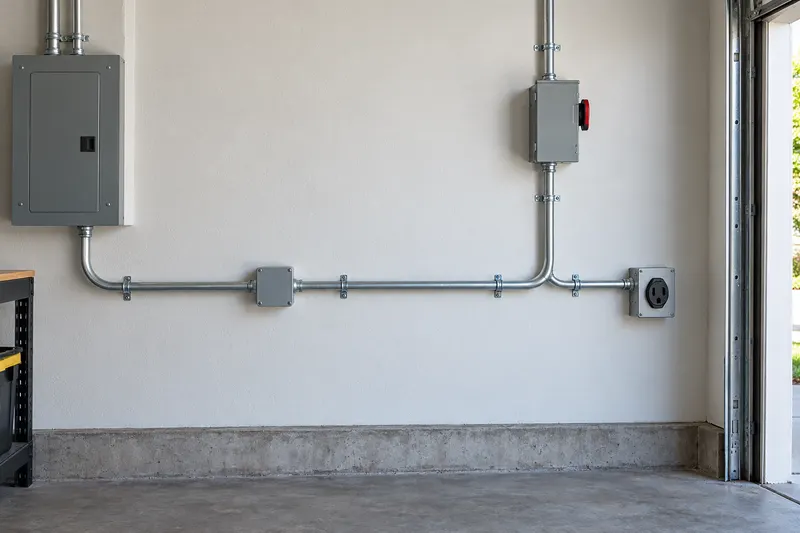
The short answer on the circuit
For full speed, the Gen 3 Wall Connector goes on a standard double pole 60 amp breaker. That gives 48 amps of charging, which is 11.5 kW at 240 volts. Tesla’s installation manual lists the full table, and this is the part most owners need before they call an electrician.
| Breaker | Wall Connector output | Power |
|---|---|---|
| 60 A | 48 A | 11.5 kW |
| 50 A | 40 A | 9.6 kW |
| 40 A | 32 A | 7.6 kW |
| 30 A | 24 A | 5.7 kW |
| 20 A | 16 A | 3.8 kW |
The breaker size is set in the unit during setup. A lower breaker is a fine choice when the panel is tight. Many Teslas draw less than the unit can supply, so the car’s own onboard charger sets the real speed.
Wire and conduit
For the full 48 amps, Tesla calls for at least 4 AWG copper rated 90 degrees C with a 60 degree breaker, or 6 AWG copper rated 90 degrees C with a 75 degree breaker. Only copper is allowed in the wirebox. The ground wire runs with the circuit wires, and the unit will fault its ground test without a good ground path. Your electrician picks wire for the real conditions, including distance, so a long run from the panel may call for a larger size.
Outdoors, watertight fittings go where the wires enter the wirebox. The outdoor and detached garage page covers conduit, burial depth and subpanels for those cases.
Hardwired only
Tesla’s manual says branch circuits must be hardwired to a disconnect or breaker and that cord-and-plug connections are not allowed. That is a real difference from older chargers that sat on a 14-50 outlet. Hardwiring also removes the weakest part of many home setups, the outlet itself, which can heat up over years of long charges.
Does the Wall Connector fit other cars?
Tesla’s connector is now the same shape as the NACS port on a growing list of cars. Hyundai lists the Wall Connector as an 11 kW (48 amp) Level 2 charger that works with the NACS port on the 2025 Ioniq 5. Cars with a J1772 port need an adapter. If you drive both a Tesla and another brand, read the Hyundai and Kia page before buying. Truck owners can read the Ford F-150 Lightning page for its 48 and 80 amp options.
Will your panel carry 60 amps?
A 60 amp circuit adds a big continuous load. On a 100 amp panel with a dryer, range or heat pump, the answer may be no. The electrician runs the numbers on the load calculation. Tesla’s own load management tools can lower the charging amps to fit what the panel can give. See load management for options, and panel upgrades if the numbers do not work.
What the job costs
As of October 2026, the typical SoCal range for a Wall Connector supplied and installed is $1,500 to $2,800. That is a desk estimate that adds the charger price to a normal install, not a published price list. If you buy the unit yourself, the install alone sits closer to the general EV charger range of $1,000 to $2,000. Long wire runs, trenching, a new subpanel and stucco work push the number up. The Tesla cost page lists the drivers.
Steps for the install day
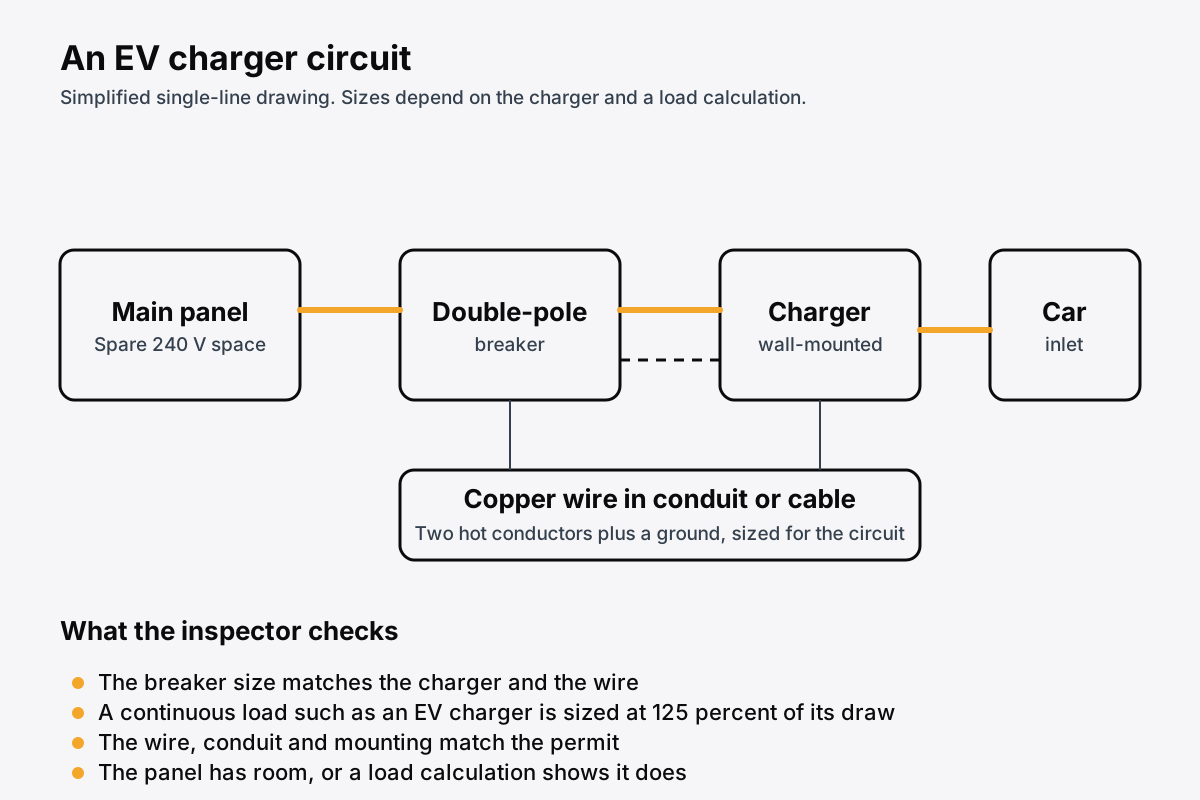
- The electrician checks the panel, the main breaker size and the open slots.
- A permit is pulled and the route is chosen.
- The breaker, conduit and wire go in, and the wirebox is mounted.
- The unit is attached, the breaker size is set and the charger is tested.
- The inspector checks the work.
Setup and settings
After the wire is landed, the unit is powered up and set up in the Tesla app. The breaker size is chosen in setup, and the unit then limits its output to match. If you later swap the panel or the breaker, the setting must be changed too, so keep the install paperwork. A charger set higher than its breaker can trip often and wastes the wire’s safety margin.
Mistakes to avoid
- Buying the 60 amp wire for a 40 amp breaker, or the reverse. Match them on purpose and write both down.
- Using aluminum wire. Tesla’s manual calls for copper in the wirebox.
- Skipping the ground. The unit runs a ground assurance test and will fault without a good ground path.
- Adding a disconnect because it feels safer. Tesla does not require one. The city inspector has the final word on local rules.
Questions people ask
Can I plug a Tesla Wall Connector into a 14-50 outlet?
No. Tesla's manual says the Gen 3 Wall Connector must be hardwired to a breaker or disconnect, and cord-and-plug connections are not allowed. If you want a plug-in setup, you need a different charger made for a 14-50 outlet, which tops out lower than 48 amps.
What size breaker do I need for a Tesla Wall Connector?
A 60 amp double pole breaker gives the full 48 amps. Smaller breakers still work and set a lower output: 50 A gives 40 A of charging, 40 A gives 32 A, and 30 A gives 24 A. The breaker size is programmed into the unit when it is set up, so the two must match.
Do I need a shutoff switch next to the Wall Connector?
Tesla states that an external disconnect is neither required nor recommended for the Gen 3 unit. Local rules can still add requirements, so the electrician follows what the city inspector expects. The breaker in the panel is the normal way to shut the circuit off for service, and it stays accessible.
My panel is small. Can the Wall Connector share power with something else?
Yes. Tesla lists load management features, including Dynamic Power Management and Group Power Management, that lower the charging amps to fit the available supply. Ask the electrician which one your home needs, since the first watches the house and the second splits power across several units. Details are on the load management page.
Keep reading
Home EV charger installation: circuit, panel and permit
A home Level 2 charger runs on its own 240 volt circuit, usually 40 to 60 amps. Whether the panel has room…
How much does a Tesla Wall Connector install cost?
A Tesla Wall Connector installed in SoCal typically costs $1,500 to $2,800 with the charger, the circuit…
EV charger load calculation
Before a charger goes in, the electrician adds up your home's electrical load and checks that a new…
EV charger load management and circuit sharing
A load management device lowers the charger's draw when the rest of the house is busy. The code allows the…
Outdoor and detached garage EV charger installs
A charger on an outside wall or in a detached garage needs weather-rated gear, ground-fault protection and…
200 amp panel upgrade: what changes and when you need it
A 200 amp panel upgrade swaps your old main panel for a new one and, usually, the wire from the meter to…
Send a photo, get a range.
Share your ZIP and a photo of your panel. Your request goes to a licensed partner electrician, who contacts you.
Get this quoteAurion Electric is a referral service operated by Roviq LLC. Electrical work is done by a licensed partner electrician.
