Home charging for Hyundai and Kia EVs
Most Hyundai Ioniq and Kia EV6 and EV9 owners need a 48 amp class charger at most. Check your model year for the port, because the 2025 Ioniq 5 moved to a Tesla-style NACS inlet.
- Typical AC limit: About 11 kW
- Circuit: 40 to 60 A breaker
- Port: Varies by year
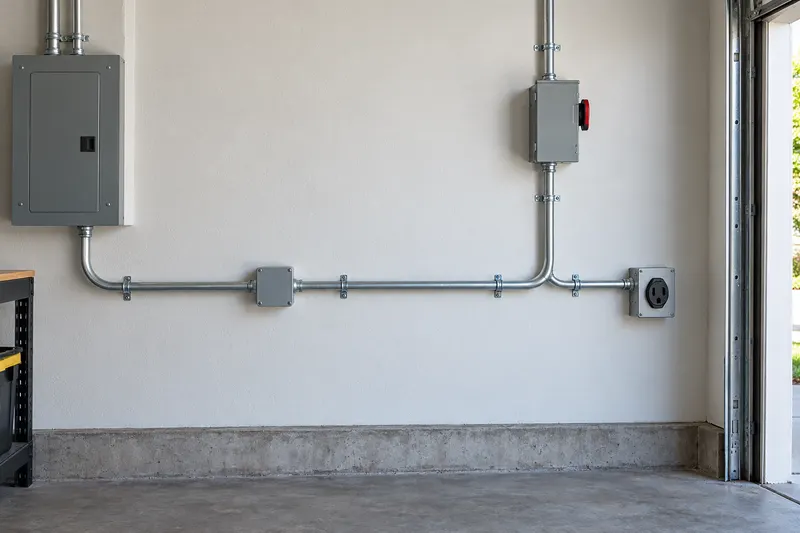
What the cars actually accept
Hyundai’s own FAQ lists the Tesla Wall Connector as an 11 kW (48 amp) Level 2 charger that works with the 2025 Ioniq 5. Published figures for the Ioniq 5 AC rate sit near 11 kW. For the Ioniq 6, the Kia EV6 and the Kia EV9, third-party sources describe a similar limit of roughly 10.9 to 11 kW, though the EV6 has been listed at both 46 and 48 amps by retailers. Treat the Kia numbers as a starting point, since Kia’s own spec is not quoted here, and read the owner’s manual for your model year.
What this means for the circuit:
| Charger setting | Breaker | Power at 240 V | Good for |
|---|---|---|---|
| 48 A | 60 A | 11.5 kW | Matching the car’s limit |
| 40 A | 50 A | 9.6 kW | Almost full speed, lighter on the panel |
| 32 A | 40 A | 7.6 kW | Overnight charging for typical daily miles |
Because the cars stop near 11 kW, a 100 amp circuit would buy nothing. Spend that money on a shorter wire run or a panel fix if needed.
The plug depends on the year
Hyundai says the 2025 Ioniq 5 is the first Hyundai with a native NACS port, and the Ioniq 5 N does not have one. Earlier Ioniq 5 years use J1772, and Hyundai states future new and redesigned models will carry only NACS. Kia is moving the same way, but check your car’s inlet rather than relying on the model name.
This changes what you buy.
- J1772 inlet: any J1772 wall charger works with no adapter.
- NACS inlet: a NACS charger, such as the Tesla Wall Connector, plugs in directly. A J1772 charger needs a certified adapter. Hyundai advises using only adapters with CSA or UL certification, and its warranty does not cover damage from non-Hyundai accessories.
The CCS adapter warning
Hyundai’s FAQ says the CCS adapter, the one that lets a NACS car use CCS fast chargers, cannot be used with AC Level 2 or Level 1 inlets, including home chargers. The page says it may cause vehicle damage the warranty will not cover. Do not use that adapter to connect a home J1772 unit. This matters because owners of a 2025 Ioniq 5 receive a CCS adapter and may assume it covers home charging. It does not.
Pick the circuit by your driving
A 40 amp breaker feeding a 32 amp charger delivers 7.6 kW. In an eight hour night that is about 60 kWh of energy. Most commuters use far less than that per day, so many owners do not need the full 48 amps. A lower circuit costs less and leaves room in the panel. The load calculation page shows how much room a 60 amp circuit takes compared with a 40 amp circuit.
If you share a garage or have a rental or condo, the plug you choose and the way you request approval matter. See the HOA and condo page.
Panel room and cost
As of October 2026, the typical SoCal range for a Level 2 install is $1,000 to $2,000, with the charger often extra. A 60 amp circuit usually costs more than a 40 amp circuit because of heavier wire and a larger breaker. Go to the cost page for drivers, and use time-of-use rates to cut the monthly bill.
Before you buy the charger
- Find your inlet type (J1772 or NACS) on the car.
- Read the owner’s manual for the maximum AC charging amps.
- Decide how many amps you actually need overnight.
- Pick a charger that matches the plug.
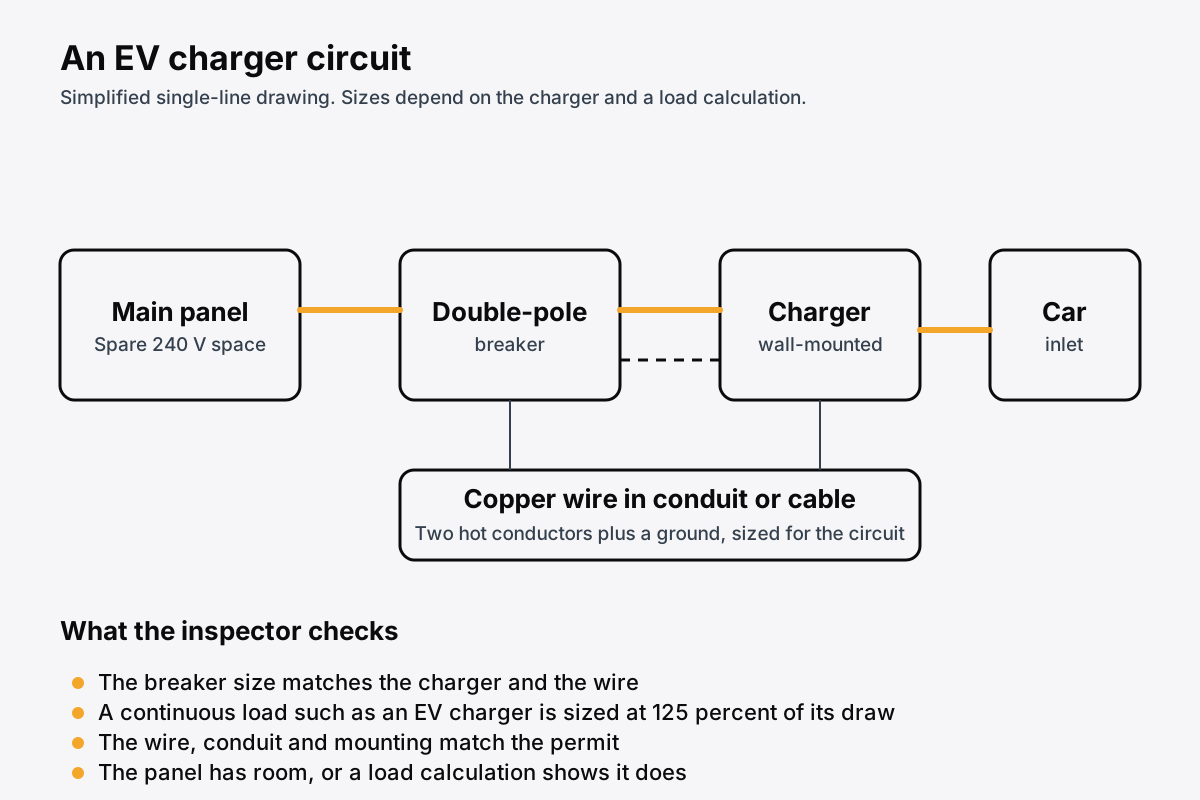
- Have the electrician size the breaker and wire for the chosen amps.
Garages with more than one EV
Households often own a Hyundai or Kia next to a Tesla or a truck. The cars have different plugs and different limits, but the chargers can share a panel. Two 40 amp circuits cost less in copper and panel space than two 60 amp circuits, and a pair of cars charging overnight rarely needs the top rate. Ask the electrician about sharing one circuit with a controller. The page on load management covers it. A household with a truck can compare the Ford F-150 Lightning page. If you live in a condo, a charger in your own space still needs board approval, and the HOA page lists the steps.
Warranty and brand programs
Some dealers offer a free charger or a charging credit with a new car, and the offer changes often. A dealer-supplied charger still needs a licensed electrician and a permit. Ask what the program covers before you buy a second unit.
Questions people ask
Do I need a 60 amp circuit for an Ioniq 5?
Not always. Published figures put the Ioniq 5 near 11 kW, which is about 48 amps and a 60 amp breaker for full speed. A 40 amp breaker with a 32 amp charger gives 7.6 kW, which still fills the battery overnight for most drivers. Pick the size by how many miles you drive, then check your owner's manual.
Can I use a CCS adapter to charge my Ioniq at home?
No. Hyundai states that its CCS adapter cannot be used with AC Level 2 or Level 1 J1772 inlets, including home chargers, and that doing so may damage the vehicle in a way the warranty does not cover. Use a Level 2 charger with the correct plug, or a certified NACS-to-J1772 adapter where the car needs one.
My Ioniq 5 is a 2023. Do I need a NACS charger?
Probably not. Hyundai says the 2025 Ioniq 5 is the first with a native NACS port, which means earlier years use the J1772 plug. Check the inlet on your own car. Many wall chargers sold today come with J1772, and that is the plug an earlier Ioniq 5 expects.
Will a bigger charger make my Kia EV9 charge faster?
Only up to the car's onboard charger limit. Sources describe Kia's EV6 and EV9 AC charging as roughly 11 kW, and Kia's owner's manual is the authority for your model year. A charger rated higher than the car accepts adds cost and wire size without adding speed. Match the circuit to the car.
Keep reading
Home EV charger installation: circuit, panel and permit
A home Level 2 charger runs on its own 240 volt circuit, usually 40 to 60 amps. Whether the panel has room…
Tesla Wall Connector installation: the circuit it needs
The Gen 3 Wall Connector is hardwired, with no plug. A 60 amp breaker gives the full 48 amps (11.5 kW)…
EV charger load calculation
Before a charger goes in, the electrician adds up your home's electrical load and checks that a new…
EV chargers in an HOA, condo or rental
In California an HOA cannot ban an EV charger in your parking space, and a landlord must approve a written…
How much does it cost to install a Level 2 EV charger at home?
A Level 2 EV charger install in Southern California typically costs $1,000 to $2,000 for the new 240-volt…
Time-of-use rates for EV owners
Plan names, peak hours and sign-up rules for SCE, SDG&E and LADWP EV owners, with no price claims that go…
Send a photo, get a range.
Share your ZIP and a photo of your panel. Your request goes to a licensed partner electrician, who contacts you.
Get this quoteAurion Electric is a referral service operated by Roviq LLC. Electrical work is done by a licensed partner electrician.
