Power from SDG&E
Commercial · San DiegoElectrical work for San Diego businesses
The City of San Diego gives no-plan electrical permits to single-family homes and duplexes. A commercial space needs plans and calculations, and sometimes a separate fire permit.
- $353.13City plan check per EV charging station, commercial (IB 187, May 2026)
- $264.25City inspection per EV charging station (IB 187, May 2026)
- up to 4Fire alarm devices that can be changed under the no-plan affidavit (DS-163)
- up to 20Sprinklers that can be changed under the no-plan affidavit (DS-161, light hazard wet system)
- 20 kWSDG&E AL-TOU schedule demand line
Electric utility
SDG&E
San Diego Gas & Electric (SDG&E) delivers; San Diego Community Power (SDCP) supplies the electricity by default
Commercial service upgrades, meters and load letters go through the utility. Utility site
Building department
City of San Diego Development Services Department (DSD)
619-446-5000 (customer service, weekdays 8 a.m. to 3 p.m. per a July 2025 DSD notice) · Permit page
Electrical permit fees in San Diego
City fee lines. Commercial permits can also carry plan check and fire review.
| Item | Fee |
|---|---|
| Panel replace/upgrade up to 200 amp (single family, duplex, townhouse; qualifies for Simple Permit) One panel, each. | $176.57 |
| Circuits 15-45 A, first 5 circuits | $176.57 |
| Circuits 225-400 A, each 2 circuits Simple Permit eligible for single family. | $353.13 |
| Conduit and J-box only (pre-wire) | $176.57 |
| EV charger in a single-dwelling, duplex or townhouse private garage, inspection per charger IB 187 (dated May 2025, fee amounts as posted on the bulletin in October 2026). No plan check fee for this category. Mapping fee $11.34 only if plans or maps are used. | $246.39 |
| EV charger, other installations (multifamily, commercial): plan check per unique charger IB 187; plus $246.39 inspection per charger. | $329.26 |
Taken from the city's fee page. Commercial valuation-based fees and plan check can apply on top. Confirm at the permit counter.
Where the no-plan permit stops
San Diego’s Development Services Department runs a quick track for small jobs. It is called a Simple permit, and it covers electrical work on single-family homes and duplexes without plans. For anything else the city says plans and calculations are required. A tenant improvement, which the city defines as a nonstructural interior alteration to an existing commercial or industrial space, needs a building permit with plans.
Some electrical work gets its own permit. The city’s example is breakers over 400 amps, which need a stand-alone electrical permit submitted with building plans. The practical effect for a business owner is time. A job that would be same-day in a house may sit in review for a commercial suite, so the lease start date and the permit date should be planned together. The tenant improvement electrical page lists what a plan set usually includes.
Fire permits that come with the job
The fire side is separate. San Diego’s fire permit page says a fire permit is required before altering, adding to or replacing a fire alarm or fire suppression system, while routine maintenance is exempt. Two affidavits let small changes skip plans. Form DS-163 covers up to four devices or appliances in an existing alarm system. Form DS-161 covers up to 20 sprinklers in a light hazard wet system. A licensed professional signs each one and the city inspects the work. All other tenant improvements and new buildings must provide plans and calculations, and alarm design follows the California Fire Code, the California Electrical Code and NFPA 72.
For a restaurant or retail space that adds a hood, a larger exit sign package or a few strobes, find out early which affidavit applies. The restaurant and retail electrical page covers the equipment side.
Charging in a commercial lot
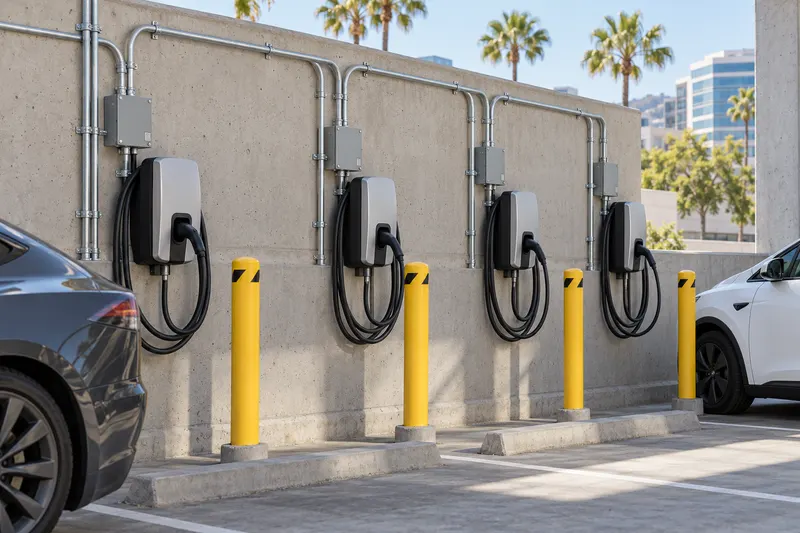
Information Bulletin 187, dated May 2026, is the city’s checklist for chargers. An electrical permit is required. A building permit is needed only if there is new construction or an alteration to a structure. Commercial and multifamily chargers without a building permit apply as a stand-alone electrical, mechanical and plumbing permit with plans, and the plans must be approved first.
The bulletin lists what the plans carry. Electrical plans are signed and stamped by a California registered electrical engineer or a licensed C-10 contractor. They show a single-line diagram, fault current calculations, a panel schedule and charger data sheets. The load calculation includes existing and proposed loads, and unless equipment is listed for continuous duty the calculated load stays within 80 percent of the equipment rating. Accessible charging stations have to follow the California Building Code, Chapter 11B. The bulletin recommends talking to the utility before installation. See commercial EV charging for the wider picture.
SDG&E: delivery, rates and a closed program
SDG&E serves every San Diego business meter. Its AL-TOU schedule is the standard commercial and industrial tariff at 20 kW of maximum monthly demand and above, and small commercial accounts below that line use the TOU-A family, according to SDG&E’s rate summary. Schedule changes take effect more than once a year, so use the current table.
SDG&E’s Power Your Drive workplace program says it is fully subscribed and not accepting applications. Anyone planning a workplace charger should check what incentives are open before budgeting. The SDG&E programs guide tracks the household programs, and panel and service upgrades explains the utility steps.
Downtown and the Gaslamp Quarter
The Gaslamp Quarter has its own planned district ordinance and design guidelines. The Gaslamp Quarter Association’s land use committee advises the city on facade, signage, awning, sidewalk cafe, storefront and tenant improvement changes. Interior wiring is rarely visible from the street. Exterior conduit, new blade signs and meter locations are. A tenant in a historic Gaslamp building should ask what the district reviews before the electrician orders a sign circuit.
What to send
Commercial electrical work in San Diego is available through the partner electrician. Send the building type, the address, whether you are the tenant, the owner or the property manager, and what is wrong or planned. A photo of the main panel and the meter helps. Start from the commercial hub, the San Diego residential page or the county page.
Send three things. Get a call.
Share the building, the job and a deadline. Your request goes to a licensed partner electrician, who contacts you about the building, the load and the permit path.
Commercial electrical work is available through the partner electrician.
- The buildingType of business, address and rough size.
- Who you areOwner, tenant, property manager or HOA board.
- The jobWhat is wrong or planned, and any deadline such as a lease date or inspection.
Commercial work in San Diego
Commercial electrical service and repair
Commercial EV charger installation for workplaces and retail
Commercial panel and service upgrades
Electrical maintenance agreements for commercial buildings
Exit signs and emergency lighting for businesses
What a property manager needs from an electrician
Electrical work in HOA and condo common areas
Commercial LED lighting retrofits and Title 24
EV charging for multifamily buildings and HOAs
Commercial electrical work in Orange County
Parking lot lighting for California businesses
Electrical work for restaurants and retail stores
Standby generator installation for businesses
Tenant improvement electrical: what a build-out needs
Warehouse and industrial electrical work in Ontario and the Inland Empire
Questions people ask
Can a San Diego tenant improvement get a no-plan electrical permit?
Generally no. The city's permit FAQ says the no-plan Simple electrical permits are for single-family homes and duplexes, and that plans and calculations are required for commercial and other non-residential properties. A tenant improvement is a nonstructural interior alteration to an existing commercial or industrial space, and it needs a building permit with plans.
Who has to sign the plans for a commercial EV charger in San Diego?
The city's Information Bulletin 187 (May 2026) says electrical plans for commercial and multifamily chargers must be signed and stamped by a California registered electrical engineer or a licensed C-10 electrical contractor. The plans need a single-line diagram, fault current calculations, a panel schedule and charger data sheets, plus a load calculation with existing and proposed loads.
Does adding a few fire alarm devices need a fire permit and plans?
A permit is needed, but plans may not be. The city's fire permit page says replacing, moving or adding up to four devices in an existing alarm system can go without plans if the conditions on Form DS-163 are met. A licensed professional signs the affidavit, and every job is inspected. Larger changes go to plan review under Information Bulletin 137.
Is SDG&E's workplace charging program still open?
No. SDG&E's Power Your Drive page says the workplace program is fully subscribed and no longer accepting applications. Drivers at participating sites can still enroll. Check the page again before you plan, because program status can change, and do not order chargers on the assumption of an SDG&E incentive.
Do changes in the Gaslamp Quarter need extra review?
They can. The Gaslamp Quarter is governed by its own planned district ordinance and design guidelines, and the design guidelines cover the exterior of every building, including facades, signs and awnings. Interior electrical work may not be visible, but new signs, conduit on a facade or a moved meter can be.
Related
Commercial
Electrician in San Diego
Electrical work in San Diego County
Every San Diego County city on this site gets its wires from SDG&E, so the big local difference is…
Tenant improvement electrical: what a build-out needs
In a lease build-out, the electrician works from the landlord's service up to the last outlet. The code…
Commercial EV charger installation for workplaces and retail
A business charger project is mostly an electrical capacity question. The charger is the small part; the…
Electrical work for restaurants and retail stores
A restaurant electrical job ends with two inspectors, not one: the city building inspector and the county…
Commercial panel and service upgrades
A commercial service upgrade has two jobs: the electrician's work inside the building and the utility's…
SDG&E EV and panel programs: what is available and what is not
A sorted list of SDG&E and state programs for San Diego County homeowners, with what to check before you…