Electrical maintenance agreements for commercial buildings
A maintenance agreement is a written list of electrical checks, how often they happen and what happens when something fails. The useful ones name the equipment, the tests and the records.
- A standard, not only a guide, since January 16, 2023NFPA 70B status
- 30 seconds monthly, 90 minutes yearly, written recordsEmergency lighting tests
- Press TEST then RESET monthly (manufacturer instruction)GFCI self-test
- 30 minutes monthly at 30% or more of nameplate loadGenerator exercise (NFPA 110)
Start with the list of equipment
An agreement is only as good as its inventory. Before anyone prices it, walk the building and list every panel, subpanel, disconnect, transfer switch, generator, emergency light, exit sign and outdoor fixture circuit. Add the age and the location of each. A short list leaves gaps that surface as extra charges later. A long list with no schedule is just a wish.
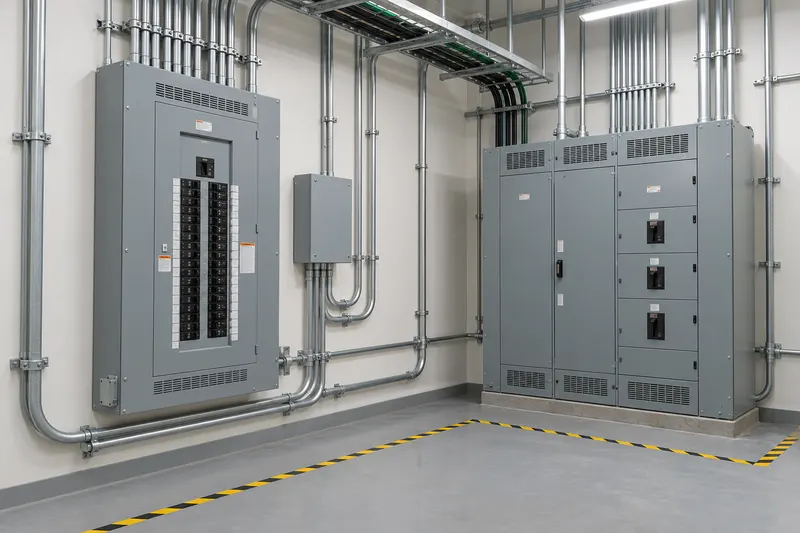
The panel reading guide helps a manager find what is in a panel. For a mixed building, the property manager page covers who owns which equipment.
What NFPA 70B changed
NFPA 70B is the national standard for keeping electrical equipment in working condition. EC&M reports that the 2023 edition turned it from a recommended practice into a standard, effective January 16, 2023, and switched the wording from “should” to “shall.” Check NFPA for the current edition, since newer ones follow.
Two ideas matter to a buyer. First, the standard expects a written electrical maintenance program with named people, an equipment survey, documented procedures and records. Second, it sets how often to test by a condition assessment of each piece of equipment: its physical condition, how critical it is and the environment it sits in. The worst of the three decides. Equipment in poor shape gets looked at more often. The article also describes a decal applied after maintenance that shows the equipment’s condition to workers.
NFPA 70B is not a California statute. Whether an insurer, lender or lease clause requires it is a question for those parties.
Tests with their own schedules
Some checks have a published schedule. Put them in the agreement by name.
- Emergency lighting and exit signs. Riverside County Fire’s guidance asks for a functional test every 3 to 5 weeks lasting at least 30 seconds, and an annual test with power cut so the unit runs 90 minutes. The owner keeps written records for the authority. The California Building Code asks for 90 minutes of emergency power for egress lighting in most buildings.
- GFCI devices. Leviton’s instructions tell the user to press TEST, then RESET, every month. A device that fails the test should be replaced. A maintenance visit can include the test on protected circuits.
- Standby generators. Under NFPA 110, as EC&M describes the 2013 edition, a diesel generator runs 30 minutes a month at operating temperature and at 30 percent or more of its nameplate rating. A yearly load bank test can be needed when the building cannot supply that load. Ask which edition the site follows.
Scans, torque and labels
An infrared scan finds connections that run hot under load. A torque check tightens terminals to the maker’s value. Both are about loose connections, which is a common cause of failures. Label and one-line updates keep panels readable after tenant changes. Equipment likely to be worked on while energized needs an arc-flash warning label under NEC 110.16, which a maintenance visit can confirm is still in place.
Ask for a written report after each visit: what was tested, what was found, photos of anything abnormal and a priced list of repairs. Repairs are normally outside the visit fee.
Questions to ask before you sign
These are questions, not promises any electrician has made.
- Which equipment is listed, and what happens to equipment not listed?
- How often is each check done, and in which month?
- What is in the report, and who receives it?
- What counts as an emergency call, and how is it received?
- What response terms will the agreement state in writing, and what happens if they are missed?
- Are after-hours and travel time billed differently?
- Who keeps the emergency lighting test records?
- How do you end or change the agreement, and when does it renew?
How pricing is built
Agreements are priced in one of a few ways. A flat annual fee covers a set list of visits. A per-visit fee bills each trip. A time-and-materials arrangement bills hours and parts as they occur, sometimes with a discounted rate. A per-equipment fee prices each panel or device. This page gives no price for an agreement because SoCal pricing varies by building and scope. Compare quotes by asking each bidder to price the same inventory and the same visit list. The quote guide lists the lines to match.
Commercial electrical work is available through the partner electrician. To ask about an agreement, send the building type, address, whether you are the tenant, owner or property manager, the equipment list and any past failures through the quote form. Repairs that come out of a visit are covered on the service and repair page.
What the work covers
| Item | What it involves |
|---|---|
| Panel and switchgear inspection | Visual check, cover-off look at connections, breaker condition, labels and clearances. |
| Thermographic scan | Infrared camera look at connections and breakers under load, with a written finding for each hot spot. |
| Torque and cleaning | Tightening connections to the manufacturer's value and cleaning dust from equipment. |
| Emergency lighting and exit signs | Monthly 30 second test, yearly 90 minute test, and a record kept for the fire authority. |
| GFCI and AFCI testing | Test button check on protected circuits, with replacement of devices that fail. |
| Panel labeling and one-lines | Directory updates, equipment labels and a current single-line diagram. |
| Backup generator and transfer switch | Run tests and checks under the generator standard that applies to the site. |
Send three things. Get a call.
Share the building, the job and a deadline. Your request goes to a licensed partner electrician, who contacts you about the building, the load and the permit path.
Commercial electrical work is available through the partner electrician.
- The buildingType of business, address and rough size.
- Who you areOwner, tenant, property manager or HOA board.
- The jobWhat is wrong or planned, and any deadline such as a lease date or inspection.
Commercial electricians by city
Questions people ask
What does a preventive electrical maintenance contract cover?
It covers a written list of equipment and checks, such as panel inspections, an infrared scan, connection torque checks, emergency lighting tests and GFCI testing. It should say how often each check happens and what report you get. Items not listed are usually billed separately, so read the exclusions as closely as the scope.
Is NFPA 70B required by law for my building?
NFPA 70B is a consensus standard, and it changed from a recommended practice to a standard on January 16, 2023. Whether a rule requires it for your building depends on your jurisdiction, your insurer and your lease. Ask your insurer and the building department. The fire code testing of emergency lights is a separate requirement.
How often should emergency lights and exit signs be tested?
Riverside County Fire's guidance calls for a functional test about every month, lasting at least 30 seconds, and a yearly test of 90 minutes on battery power. The owner must keep written records for the fire authority. Units that fail to light fully, or run short, should be repaired or replaced. Confirm the schedule with your local fire department.
What is an infrared scan and do I need one?
An infrared scan uses a heat camera on panels and equipment while they carry load. A loose or worn connection runs hotter than the ones around it, so it shows up in the picture. NFPA 70B ties how often to test to the equipment's condition, importance and environment. Ask what the report includes and what happens with each finding.
What should I ask about response time in a maintenance agreement?
Ask what counts as an emergency, how a call is received, who responds and the time to phone back or arrive. Ask whether after-hours calls carry a different rate and whether travel is billed. Get the answers written in the agreement. This page makes no promise about any electrician's response time.
Related
Commercial
What a property manager needs from an electrician
A property manager gets better electrical work by sending a complete request, knowing who pays, giving…
Commercial electrical service and repair
A business electrical problem is either inside your meter, where an electrician fixes it, or outside it…
Commercial LED lighting retrofits and Title 24
Swapping a warehouse or office to LED is regulated work in California when the change touches 10 percent…
Commercial panel and service upgrades
A commercial service upgrade has two jobs: the electrician's work inside the building and the utility's…
Electrical work in HOA and condo common areas
In a California HOA, the association repairs common area electrical equipment unless the governing…
How to read your electrical panel
A safe five-step read of your panel: main breaker, label, brand, free spaces and directory, plus when to…
What an electrical quote should include
Twelve lines every written electrical quote needs, so three bids can be compared on the same job.