How to add an outlet to a room, and what it takes
Adding an outlet usually means extending a nearby circuit, and a simple outlet runs $120 to $200 in Fixr's national guide. The code decides how many outlets a room needs and what protection the new one must have.
- Simple outlet (Fixr): $120 to $200
- Wall spacing rule: 6 ft from any outlet
- Permit: Usually required
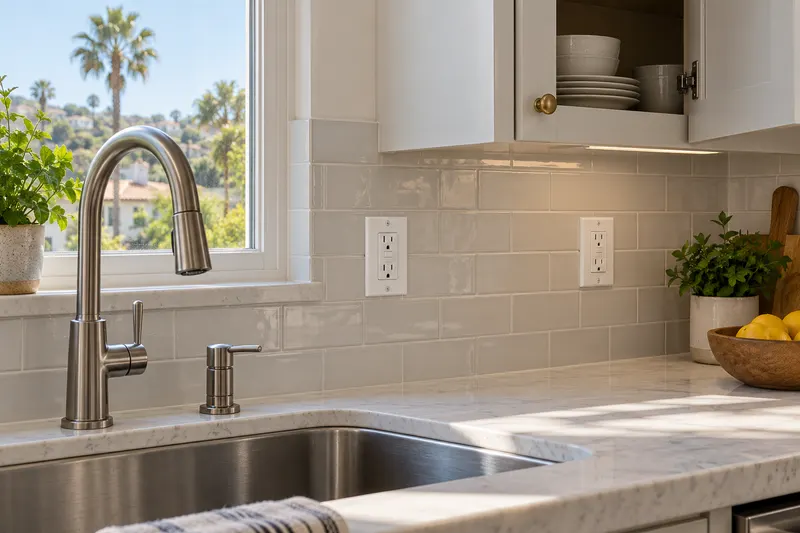
When an extra outlet is the right fix
If you run extension cords or power strips every day, the room needs another outlet. If breakers trip when two things run, the room needs more capacity, which is a different job. The first is extending a circuit. The second is a new circuit or an upgrade at the panel. The breaker page, breaker keeps tripping, shows how to tell.
The two ways to add it
Extend a nearby circuit. The electrician taps the cable at an existing box or runs a new cable from it. This is the cheapest path, and Fixr gives $120 to $200 as of October 2026 for a simple outlet, plus one to two hours of wiring labor at $40 to $120 an hour when no wiring exists. SoCal quotes can run higher. See the outlet cost page.
Run a new circuit from the panel. This is the answer when the old circuit is full or when the load is a heater, a freezer or a workshop. Fixr lists $100 to $150 for a 20-amp outlet; a full line from the panel costs more with the run, and it needs a free breaker slot.
How the wire gets there
An unfinished garage or basement ceiling is the easy case, since cable runs across open framing. Finished walls are harder. The electrician makes a small opening for the box and fishes cable through the cavity from the attic, crawl space or the next outlet. Fire blocks, insulation and plaster slow that down, and a repair hole may need patching and paint.
Surface raceway is another choice for a spot where opening the wall is not worth it. It is a flat channel on the wall that holds the wire, and it is allowed when installed to code.
Rules the new outlet has to meet
- Spacing. NEC 210.52 says no point along the floor line of a wall in a living area can be more than 6 feet from an outlet. A long blank wall may need one.
- AFCI. In bedrooms, living rooms, kitchens, laundry areas, hallways and closets, 15 and 20 amp circuits need arc-fault protection under 210.12. Extending, modifying or replacing the circuit triggers it, with an exception for extensions of 6 feet or less that add no outlets. The usual answer is an AFCI breaker. See GFCI and AFCI protection.
- GFCI. If the new outlet sits in a bathroom, kitchen, garage, laundry room or outdoors, it needs GFCI protection too. See GFCI outlet installation.
- Receptacle ratings. A single receptacle must be rated at least as high as the circuit breaker, and the wire must carry the load. A 20-amp breaker needs 12-gauge copper.
- Box fill. The box has to be big enough for the wires and devices. If an existing box is full, the electrician swaps it.
Permit and who can do it
Adding an outlet or circuit generally needs an electrical permit, and the city inspects it. California lets people skip a license only for jobs that cost under $1,000 in total, need no permit, and are not part of a larger project (Business and Professions Code 7048). Because this job normally needs a permit, it is outside the exemption, so hire a licensed electrician. See the permit guide and the licensed electrician page.
What changes the price
- Finished walls versus open framing
- Distance from the panel or the nearest box
- A full panel with no breaker slot
- Old wiring that needs repair before the new outlet can tie in
- A new AFCI or GFCI breaker, which costs more than a standard one
- Several outlets in one visit, which costs less per outlet
Ask for a quote that lists the permit and the protection device. If you are adding several outlets, say so at the start. The quote form is the place to describe the room.
Plan the outlets before a remodel
If walls are open for a remodel, adding outlets is cheap, because the cable is run before drywall goes up. That is the time to think about where cords actually land. Common places people forget are above the kitchen counter, behind a TV, at the head of a bed, in a closet for a vacuum, in a garage for a freezer, and on an island. If a spot may get a heavy appliance, run a dedicated circuit then, not later.
A short list helps the electrician quote it. For each room, note the wall, the height and what plugs in. If you plan a ceiling fan or recessed lights at the same time, say so, since cables for all of them can be run in one visit.
One more tip: ask the electrician to label the new circuit in the panel directory. A clear label saves guessing later, and the inspector expects the panel to match the work. The panel guide shows how to read one.
Questions people ask
Can I add an outlet to an existing circuit?
Yes, if the circuit has room. The electrician checks what else is on it, how much it carries, and whether the box and wire can handle another outlet. A circuit that already trips when you run a heater or vacuum needs a new circuit instead. Adding an outlet does not add capacity.
How many outlets can go on one circuit?
The NEC does not set a number for general home circuits. The limit comes from the load, so a 15-amp or 20-amp circuit feeds as many as it safely can. Kitchen counters and laundry have required circuits of their own. An electrician counts what is on the line before adding anything.
Do I need an AFCI breaker for the new outlet?
Probably. NEC 210.12 requires arc-fault protection on 15 and 20 amp circuits in bedrooms, living areas, kitchens, laundry areas, hallways and closets. When wiring there is extended or changed, the circuit must get AFCI protection, by a breaker or an AFCI outlet at the first outlet. An exception covers extensions of 6 feet or less with no added outlets.
Can an outlet be added without cutting the drywall?
Often yes. Electricians fish cable through the wall from the attic, crawl space or an existing outlet and cut only a small hole for the new box. Walls with fire blocks, insulation or plaster make it harder, and some need patching. The finished-wall fee is a big part of the price range.
What is box fill and why does it matter?
Box fill is how many wires, devices and clamps a box can hold based on its size in cubic inches. A crowded box overheats and is hard to wire. If an existing box is full, the electrician swaps in a deeper one or adds a new box. Ask how the electrician checks this on old walls.
Keep reading
Outlets and circuits: adding, protecting and upgrading them
Most outlet jobs fall into four kinds: a GFCI where water is near, a new outlet in a room, a 240-volt line…
GFCI outlet installation: where code requires it, cost and testing
Under the 2023 NEC, which California's 2025 code is built on, a home needs GFCI protection in bathrooms…
240-volt and dedicated circuits: breaker size, wire gauge and permit
A dryer usually needs a 30-amp circuit on 10-gauge copper, a range 50 amps on 6-gauge, and an EV charger…
GFCI and AFCI: where code requires them and what they do
A GFCI stops current that leaks to ground, which protects people from shock. An AFCI stops electrical…
Why your breaker keeps tripping
A breaker trips to stop too much current. The cause is an overload, a short circuit, a ground fault or a…
How much does it cost to install or replace an outlet or GFCI?
Outlet work typically runs $135 to $850 in SoCal. That is a desk range. Fixr lists $120 to $200 to install…
Electrical permits in Southern California: what needs one and who pulls it
What needs an electrical permit, who pulls it, what the inspector checks, and what happens if the work was…
Power out in part of the house
If some rooms are dark and others work, check whether neighbors have power, then reset any tripped GFCI or…
Send a photo, get a range.
Share your ZIP and a photo of your panel. Your request goes to a licensed partner electrician, who contacts you.
Get this quoteAurion Electric is a referral service operated by Roviq LLC. Electrical work is done by a licensed partner electrician.
