GFCI and AFCI: where code requires them and what they do
A GFCI stops current that leaks to ground, which protects people from shock. An AFCI stops electrical arcs, which protect against fires. NEC 210.8 lists where homes need the first. NEC 210.12 lists where homes need the second.
What the two devices catch
A GFCI (ground-fault circuit interrupter) watches current going out and coming back on a circuit. If a small amount, about 5 milliamps, goes somewhere else, such as through a person to ground, it shuts the circuit off in a fraction of a second. It is about preventing shock and electrocution.
An AFCI (arc-fault circuit interrupter) listens for the pattern of an electrical arc, such as a pinched cord or a loose wire spitting sparks inside a wall. It cuts the power before the arc starts a fire. It does not protect people from shock.
They do different jobs, and a room that needs both needs both. If a protective device trips often, treat it as a report of a real fault. See breaker keeps tripping if a breaker is doing the tripping.
Safety note
Press TEST on every GFCI outlet monthly. A GFCI that no longer trips still gives power, so you will not know it has failed. If a GFCI or AFCI is warm, buzzing or smells, shut off the breaker and read hot or burning-smell outlets. Never bypass either device with a regular outlet to stop tripping.
Where GFCI protection is required (NEC 210.8)
California’s 2025 Electrical Code is based on the 2023 NEC and took effect January 1, 2026. For dwelling units, section 210.8(A) lists locations where receptacles need GFCI protection. As of October 2026 these include:
- Bathrooms
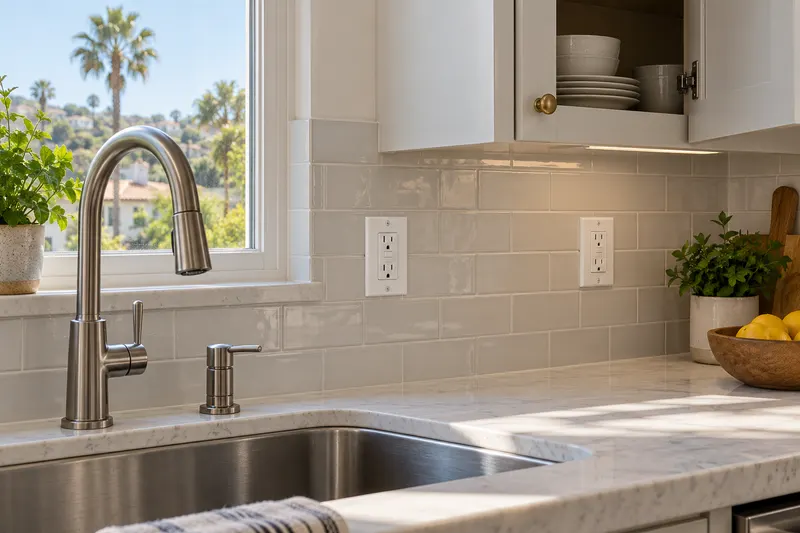
- Kitchens: under the 2023 NEC, all 125 to 250 volt receptacles, not only countertop outlets
- Laundry areas
- Garages and accessory buildings that are not habitable rooms
- Outdoors
- Crawl spaces at or below grade
- Basements, finished or not (a 2023 NEC change)
- Any outlet within 6 feet of a sink, tub or shower
- Indoor damp or wet locations
- Boathouses
210.8(D) requires GFCI protection for dishwasher circuits. The 2023 NEC also extended the voltage range to 250 volts, so 240-volt outlets in these places, such as a range receptacle in a kitchen, need protection too. Listed appliances such as dishwashers, dryers, ranges and sump pumps are covered by 210.8(D) in the 2023 edition. Section 210.8(F) covers outdoor outlets that supply HVAC equipment.
A GFCI outlet protects itself and any outlets wired after it (“downstream”). A GFCI breaker in the panel protects the whole circuit. Both meet the code. A breaker is simpler when a circuit has many outlets or the outlets are hard to reach.
Where AFCI protection is required (NEC 210.12)
Section 210.12 requires AFCI protection on 120-volt, single-phase, 15- and 20-amp branch circuits supplying outlets or devices in most living spaces of a dwelling:
- Bedrooms, living rooms, family rooms and dining rooms
- Kitchens and laundry areas
- Hallways and closets
- Dens, libraries, sunrooms and recreation rooms
Bathrooms, garages and outdoor circuits are not on that list for AFCI. Under 210.12(D), modifying or extending an existing branch circuit in these areas generally triggers AFCI protection, with a small exception for extending a circuit by 6 feet or less without adding outlets. Replacing a receptacle in an AFCI area can also trigger it under the 2023 NEC. Local rules vary, so confirm with the building department.
Types of AFCI protection include the combination AFCI breaker, which covers the whole circuit, and outlet branch-circuit devices. The breaker is the usual choice.
A kitchen or laundry needs both
Kitchens and laundry areas fall under both rules. A dual-function AFCI/GFCI breaker covers both in one device. Another approach is an AFCI breaker plus GFCI outlets. Each works. Ask the electrician which fits your panel, since breakers must match the panel brand and type. The panel upgrades page explains when the panel is too old or full to take new breakers.
Older homes
A home built before the 1990s may have no GFCI outlets in some places the code now covers, and no AFCI at all. Code does not force you to upgrade the whole house unless you do work that triggers it, such as a remodel or a new circuit. Many homeowners add GFCI outlets in bathrooms, garages and outdoors anyway, since the cost is low. Homes with two-prong outlets and no ground can use a GFCI outlet labeled “No Equipment Ground” as a safer replacement. The California electrical code changes guide covers what the new edition changed.
What it costs
As of October 2026, Fixr’s national guide lists $120 to $200 to install an outlet and up to $275 for a 15-amp GFCI outlet. A new dedicated circuit costs more and is quoted by the run. AFCI and dual-function breakers cost more than GFCI outlets because the device itself is pricier. The outlet and GFCI cost page breaks down the range. Prices shift with panel brand and access.
For a dead outlet that may be a tripped GFCI, see outlet not working.
Questions people ask
How do I test a GFCI outlet?
Press TEST. The RESET button should pop out and the power should go off. Plug in a lamp to confirm. Press RESET to restore power. Do this monthly. If TEST does not trip it, or RESET will not stay in, replace the outlet. A GFCI that has stopped working gives no protection even though it still delivers power.
Do I need AFCI protection if I replace an outlet in a bedroom?
Under the 2023 NEC, replacing a receptacle in an area that needs AFCI protection generally calls for AFCI protection on that circuit. A combination AFCI breaker in the panel is the usual way. Check with your city's building department and an electrician, since local rules and the edition adopted can change what is required.
Why does my GFCI keep tripping?
Moisture is the common cause, especially outdoors and in bathrooms. A worn appliance, a damaged cord or a ground fault on a downstream outlet can also trip it. Unplug everything on the circuit and reset. If it trips with nothing connected, the GFCI may have failed or the wiring may have a fault. Have it checked.
Can I put a GFCI outlet on an old two-wire circuit with no ground?
In general, yes. NEC rules allow a GFCI outlet on a circuit with no equipment ground, if it is labeled No Equipment Ground. This gives shock protection but does not ground the outlet. A GFCI breaker also works. An electrician can confirm what applies to your wiring, and may recommend running a ground wire.
Is a dual-function AFCI/GFCI breaker worth it?
It is useful in kitchens and laundry areas, where code asks for both kinds of protection. One device does both jobs. It costs more than a standard breaker, and the GFCI half protects every outlet on the circuit without needing GFCI outlets. Make sure it is made for your panel brand.
Keep reading
Electrical repair: what to check, what to shut off, and when to call
Most electrical repairs are small, but a hot outlet, a burning smell or a breaker that will not stay on…
An outlet that stopped working
Check for a tripped GFCI first, then the breaker. Most dead outlets come back with a reset. If you smell…
Why your breaker keeps tripping
A breaker trips to stop too much current. The cause is an overload, a short circuit, a ground fault or a…
Hot outlet or burning smell: act first, diagnose later
Turn off the breaker for that room now. If you cannot tell which breaker it is, or you see smoke, turn off…
How much does it cost to install or replace an outlet or GFCI?
Outlet work typically runs $135 to $850 in SoCal. That is a desk range. Fixr lists $120 to $200 to install…
Electrical panel upgrades in Southern California: when and how
A panel upgrade replaces the main breaker box, and most SoCal homes that need one are moving from 60 to…
2025 California Electrical Code: what changed for homeowners
Which code edition applies in October 2026 and the 2023 NEC changes that most often touch a home project.
Send a photo, get a range.
Share your ZIP and a photo of your panel. Your request goes to a licensed partner electrician, who contacts you.
Get this quoteAurion Electric is a referral service operated by Roviq LLC. Electrical work is done by a licensed partner electrician.
