GFCI outlet installation: where code requires it, cost and testing
Under the 2023 NEC, which California's 2025 code is built on, a home needs GFCI protection in bathrooms, kitchens, garages, outdoors and more. Fixr puts the top cost of installing a GFCI outlet at $275, and SoCal quotes can run higher.
- Code section: NEC 210.8(A)
- GFCI outlet, up to: $275
- Test: Monthly
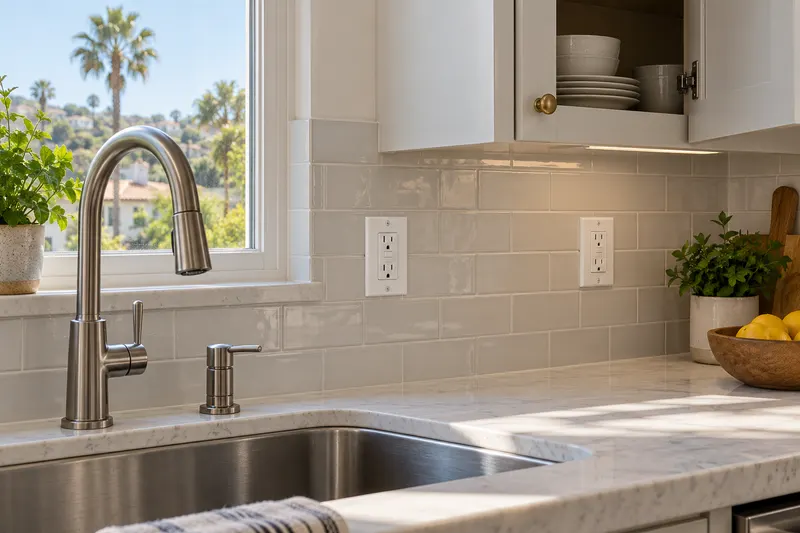
Which rooms need GFCI protection
A GFCI cuts power in a fraction of a second if current leaks to ground, as it would through a person. For homes, NEC 210.8(A) lists where outlets need that protection. As of October 2026 the list includes:
- Bathrooms
- Kitchens
- Garages and accessory buildings
- Outdoors
- Crawl spaces
- Basements
- Laundry areas
- Any outlet within 6 feet of a sink, bathtub or shower
- Indoor damp or wet locations
The 2023 edition widened the rule to cover 240-volt outlets as well as 120-volt ones. It also dropped any reference to windows and doors when measuring the 6-foot distance from a sink. If your home was built before GFCI was required, the electrician will list what is missing.
Dishwasher circuits have their own rule in 210.8(D). Outdoor outlets supplying heat pump or air conditioner equipment fall under 210.8(F). California’s 2025 Electrical Code took effect January 1, 2026, so a permit applied for now uses it. See the code changes guide for the rest.
Outlet or breaker: two ways to add GFCI
You can protect a circuit at the first outlet or at the panel.
| GFCI outlet | GFCI breaker | |
|---|---|---|
| Where it sits | At the wall | In the panel |
| Protects | Itself and downstream outlets | Every outlet on the circuit |
| Best when | A few outlets, easy access | Many outlets, or hidden ones |
| Test button | In the room | At the panel |
A dual-function breaker adds arc-fault protection as well, which helps in kitchens and laundry rooms where both are required. Not every panel brand takes every breaker, so the electrician matches the part to the panel.
What the installation involves
For one outlet, the electrician turns off the circuit and confirms it is dead with a tester. Then the old outlet comes out and the new one goes in. The wires from the panel go to the LINE terminals and the wires that continue to other outlets go to LOAD. That detail decides whether the other outlets are protected.
On an old circuit with two wires and no ground, a GFCI outlet may still go in if it is labeled “No Equipment Ground”. The outlet gives shock protection but does not ground a plugged-in device. The protection page covers that case. The electrician finishes by pressing TEST, confirming power drops, and checking that downstream outlets lose power too.
The extra step many people skip is looking for the other outlets. Garage and outdoor outlets are often on a circuit with a bathroom GFCI that protects them without anyone knowing. A tester shows what is protected.
Cost and permit
As of October 2026 Fixr puts a GFCI outlet at up to $275 and a plain outlet at $120 to $200. A new 20-amp circuit costs more and depends on the run, so ask for a written quote. The device itself is $10 to $20; the rest is about an hour of labor. Those are on the outlet and GFCI cost page. Price rises when several outlets need work or when the wiring behind them needs repair.
Permit rules differ by city. A like-for-like swap often needs none, but adding new GFCI protection to a circuit can. Ask your city, and read the permit guide.
Test it every month
Press TEST. The outlet should click and cut power. Plug in a lamp to confirm it went off, then press RESET. A GFCI that no longer trips still delivers power, so it can look fine while giving no protection. Replace any unit that fails the test or will not reset. If the outlet will not trip or is warm, shut off the breaker and see outlet not working.
Common mistakes with GFCI work
- Swapping LINE and LOAD. The outlet works, but the protection does not reach the downstream outlets.
- Covering a failed GFCI with a plain outlet. A GFCI that trips often is reporting a real problem. Replacing it with a plain outlet removes the shock protection and may violate the code.
- Assuming one GFCI covers the room. Each outlet needs to be checked, since circuits do not always follow the room layout.
- Ignoring the test button. A unit that has stopped tripping still passes power. Testing monthly is the only way to know.
- Forgetting 240-volt outlets. Since the 2023 NEC, 240-volt outlets in the listed places count too, so a garage or laundry outlet for a welder or dryer may need protection that an older install lacks.
If a protection device keeps tripping, the cause matters more than the device. The breaker keeps tripping page covers breakers, and the hot or burning-smell outlets page covers outlets that are warm.
Before you book, take photos of the outlet and the panel and note which rooms feel unprotected. A short list lets the electrician test the whole house in one visit and quote each fix separately. The licensed electrician page explains how to check the license and compare quotes.
Questions people ask
Can I replace a regular outlet with a GFCI myself?
It is a common job, but the risk is wiring it backward. The LINE and LOAD terminals are not interchangeable, and a wrong hookup leaves outlets unprotected while they still work. Some cities want a permit even for a swap. If you are unsure which wires are which, hire a licensed electrician and ask your building department about its rules.
Do I need one GFCI outlet for every outlet in the bathroom?
No. A GFCI outlet protects itself and any outlets wired after it on the same circuit, called downstream. One GFCI at the start of a bathroom circuit can cover the others. An electrician tests that downstream outlets are actually protected, since old wiring sometimes sends them from a different point.
Is a GFCI breaker better than a GFCI outlet?
Neither is better for safety. A GFCI breaker protects the whole circuit from the panel. A GFCI outlet protects at the wall. A breaker suits circuits with many outlets or outlets behind furniture. An outlet is cheaper per job and has a test button in the room, so you can check it monthly without opening the panel.
Why does my new GFCI outlet keep tripping?
Moisture in the box, a faulty appliance, or a wiring fault downstream are the usual causes. Unplug everything and reset. If it still trips with nothing plugged in, shut off the breaker and have it checked. Do not swap it for a plain outlet to stop the tripping. That removes the shock protection.
Does a 240-volt outlet need GFCI protection?
Sometimes. The 2023 NEC extended dwelling GFCI rules from 125 volts up to 250 volts, so a 240-volt outlet in a place like a garage or kitchen is now covered. Dishwashers, dryers and ranges are listed in 210.8(D). Your electrician should check which version your city has adopted.
Keep reading
Outlets and circuits: adding, protecting and upgrading them
Most outlet jobs fall into four kinds: a GFCI where water is near, a new outlet in a room, a 240-volt line…
Outdoor outlets and USB outlets: what the code asks for and what they cost
An outdoor outlet needs GFCI protection, a weather-resistant receptacle and a cover that keeps rain out…
GFCI and AFCI: where code requires them and what they do
A GFCI stops current that leaks to ground, which protects people from shock. An AFCI stops electrical…
An outlet that stopped working
Check for a tripped GFCI first, then the breaker. Most dead outlets come back with a reset. If you smell…
How much does it cost to install or replace an outlet or GFCI?
Outlet work typically runs $135 to $850 in SoCal. That is a desk range. Fixr lists $120 to $200 to install…
2025 California Electrical Code: what changed for homeowners
Which code edition applies in October 2026 and the 2023 NEC changes that most often touch a home project.
Electrical permits in Southern California: what needs one and who pulls it
What needs an electrical permit, who pulls it, what the inspector checks, and what happens if the work was…
Send a photo, get a range.
Share your ZIP and a photo of your panel. Your request goes to a licensed partner electrician, who contacts you.
Get this quoteAurion Electric is a referral service operated by Roviq LLC. Electrical work is done by a licensed partner electrician.
