Electrical inspections and code fixes
If an inspector flagged your wiring, you need a licensed electrician to fix each item and, for anything built without a permit, to bring it to the city.
- Typical SoCal range: $300 to $1,500
- Common triggers: Home sale, city notice, permit final
- Seller form: Transfer disclosure statement
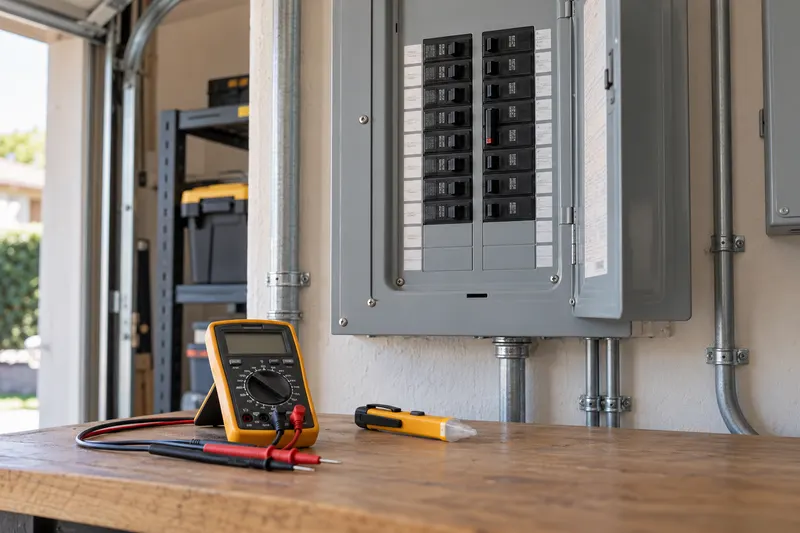
Three situations, three paths
People land on this page in one of three ways.
- A buyer’s inspector wrote up the wiring during a home sale.
- The city sent a correction notice, or a permit final failed.
- Work was done without a permit, and you want it recorded before it causes trouble.
The fix starts the same way in all three. A licensed electrician looks at the work, lists what is unsafe or out of code, and prices each item. The rest depends on who is asking.
Home-sale inspection findings
Home inspectors are generalists. They flag what they see: a rusted panel or a Zinsco or Federal Pacific brand, double-tapped breakers, missing GFCI protection, open splices, a missing cover plate, ungrounded outlets in an old house. A report is not a code order. It is a list that the buyer uses to negotiate.
Sort the findings into three groups:
- Safety now. Scorched parts, bare conductors, a panel brand known for breaker failure, wet-location outlets with no protection. See Zinsco and Federal Pacific panels.
- Old but working. Two-wire circuits, aluminum branch wiring, knob-and-tube. These are not automatic failures, but they worry buyers and insurers. See aluminum wiring.
- Cosmetic. Loose plates, painted-over outlets, labels.
The home-sale electrical inspection guide covers how to read a report and what to repair before listing. An electrician’s own inspection is often cheaper and clearer than guessing. The inspection cost page shows the $300 to $1,500 typical range for a visit and typical corrections.
What the seller must say
California home sellers complete the Real Estate Transfer Disclosure Statement under Civil Code 1102.6. The form asks, among other things:
- whether the seller knows of room additions, structural modifications or other alterations or repairs made without necessary permits;
- whether any such work is not in compliance with building codes;
- about significant defects in the electrical system;
- whether there is 220-volt wiring, and where.
It also covers smoke detectors and carbon monoxide devices. The smoke and CO detector page covers those rules. A seller who knows about unpermitted work should answer honestly and ask an agent or attorney about wording. This site gives electrical information, not legal advice.
City correction notices
A correction notice means an inspector found something that fails the adopted code, either on a permitted job or on a complaint. California’s 2025 Electrical Code took effect January 1, 2026 and is built on the 2023 NEC, but the rules that apply to an existing install depend on the permit date and on the city. A notice usually lists:
- the item and the code section;
- what the inspector wants to see;
- a deadline for correction and reinspection.
A common cause is a missing piece on a new circuit, such as GFCI protection, a bonding wire or a label. The electrician fixes it, the city comes back, and the permit closes. If the deadline is close, call the inspector or the building department and ask about an extension before it passes.
Unpermitted work
Panels, subpanels, hot tub circuits, EV charger circuits, ADU wiring and added circuits normally need a permit. See the permit guide. Work done without one is not invisible. It can surface during a sale, an insurance claim, an appraisal or a later permit.
Most cities have a way to apply after the fact. The usual shape is:
- The electrician inspects the work and lists the gaps against current code.
- The electrician fixes anything unsafe.
- The electrician or owner applies for a permit for the existing work. The city may want to see inside boxes or panels.
- The city inspects and signs off.
Ask the building department up front whether it adds fees for work done without a permit and whether it will accept photos or want walls opened. The answers vary by city, so no price on this page covers it.
Smoke alarms are part of the permit
Under Health and Safety Code 13113.7, when a permit is issued for alterations, repairs or additions over $1,000 on a dwelling, the building official cannot sign off until the required smoke alarms are in place and State Fire Marshal listed. An electrical permit that is part of a bigger remodel can trigger this. Plan for the alarms in the same visit.
The smoke detector installation cost page shows what a hardwired set runs.
Typical cost
As of October 2026 the typical SoCal range is $300 to $1,500, an estimate that covers an inspection visit and common corrections. A panel replacement, rewire or legalization of large work is quoted separately. The what an electrical quote should include guide helps compare line items.
What to read next
- Home-sale electrical inspection if you are buying or selling.
- Smoke and CO detectors for the alarm rules.
- GFCI and AFCI protection for the most common code finding.
- Send a photo of your panel to get the first look from a licensed electrician.
In this section
Questions people ask
What happens if a home inspector finds unpermitted electrical work?
The finding goes in the report, and it affects the sale. The seller must answer the transfer disclosure statement question about work made without necessary permits. Buyers then ask the seller to fix it, take a credit, or walk away. The usual fix is to have a licensed electrician assess the work and apply to the city for a permit.
Do I have to fix everything on the inspection report before I sell?
No law makes a seller fix every item. The seller must disclose known problems, and the buyer negotiates. Safety items such as a Federal Pacific panel, open junction boxes or missing smoke alarms get the most pushback. Fixing the cheap, clear items before listing often shortens negotiation. Your agent and an electrician can sort which ones matter.
What is a correction notice from the city?
It is a written list from the building department of items that failed an inspection or were found out of code. It names what to correct and usually a deadline. A licensed electrician can fix the items, and you then book a reinspection. Ignoring a notice can hold up your permit final or trigger further action.
Can I legalize a hot tub or subpanel that was added without a permit?
Many cities have a path to apply for a permit after the work is built. The electrician or the city may need to see inside walls or boxes, and the current code can apply to the redo. Fees and steps differ by city, so call the building department first and ask what it requires before you pay for any work.
Keep reading
How much does an electrical inspection or code-violation fix cost?
A home electrical inspection plus typical corrections runs $300 to $1,500 in SoCal, an estimate. The…
Selling a house in SoCal: the electrical inspection
What inspectors flag at sale, what a California seller must disclose, and which electrical repairs pay off…
Smoke and CO detectors: California rules and installation
California requires State Fire Marshal listed smoke alarms in every bedroom, outside sleeping areas and on…
Electrical permits in Southern California: what needs one and who pulls it
What needs an electrical permit, who pulls it, what the inspector checks, and what happens if the work was…
Zinsco and Federal Pacific panels: how to spot one and what to do
If your panel says Zinsco, Sylvania or Federal Pacific, or has Stab-Lok breakers, have an electrician look…
Aluminum wiring: how to tell, and what fixes it
If your house was wired between about 1965 and the mid 1970s, check for aluminum. CPSC says only three…
GFCI and AFCI: where code requires them and what they do
A GFCI stops current that leaks to ground, which protects people from shock. An AFCI stops electrical…
Send a photo, get a range.
Share your ZIP and a photo of your panel. Your request goes to a licensed partner electrician, who contacts you.
Get this quoteAurion Electric is a referral service operated by Roviq LLC. Electrical work is done by a licensed partner electrician.
