How much does an electrical inspection or code-violation fix cost?
A home electrical inspection plus typical corrections runs $300 to $1,500 in SoCal, an estimate. The inspection visit is the smaller part. The corrections it finds decide the total.
Typical SoCal range, October 2026
$300 to $1,500
inspection visit and typical corrections. This is a desk estimate, not a quote.
The estimate is a combined number. The typical SoCal range for an inspection plus common corrections is $300 to $1,500 as of October 2026. It is a desk estimate meant to cover the visit and the repairs that most homes need, not a major project.
What to do with a report or a correction notice is on the inspections and code fixes page.
The two parts
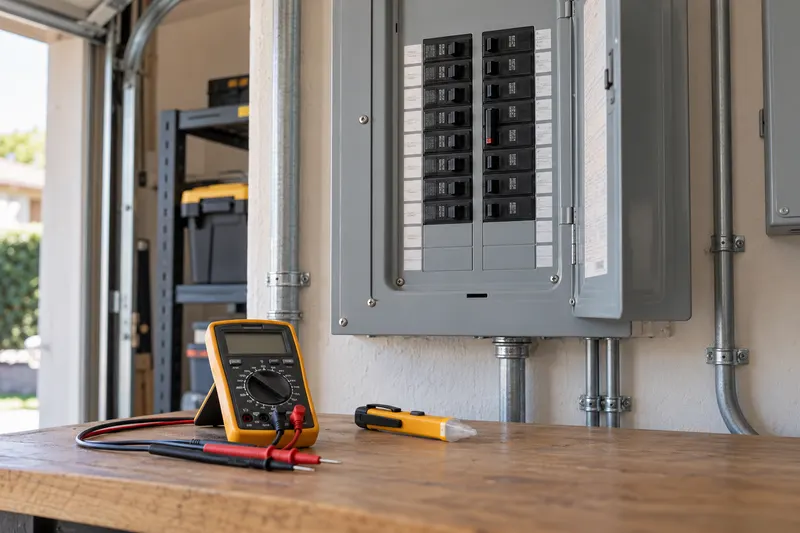
The inspection. An electrician opens the panel, checks the breakers and wire gauge, tests outlets for grounding and GFCI protection, looks for scorching or loose connections, and checks smoke and CO alarm placement. Fixr’s national guide says electrical inspections cost several hundred dollars, and a service call alone is $176 to $327. A whole-home check covers more ground, so ask what the price includes and whether a written report is part of it.
The corrections. These are the repairs that follow. Here are published national ranges:
| Common fix | Range |
|---|---|
| Install a 15-amp GFCI outlet | up to $275 (Fixr) |
| Replace a single-pole switch | About $75 (Fixr) |
| Replace a circuit breaker | $52 to $97 for the part and swap (Fixr, national) |
| Hardwired smoke or CO detector | Desk estimate, see the smoke detector cost page |
Several of these together is how a $300 inspection becomes a $1,500 bill.
What turns up most often
- Missing GFCI protection in kitchens, garages or outdoors
- Double-tapped breakers, where two wires share a terminal
- Open junction boxes or missing cover plates
- Smoke or CO alarms that are missing, expired or placed wrong
- Panel labeling and bonding problems
Alarm work is one fix an inspector can flag, and its price is on the smoke detector installation cost page.
Bigger findings, such as a Zinsco or Federal Pacific panel, aluminum branch wiring or knob-and-tube, are separate projects with their own cost pages. See aluminum wiring risks and panel upgrade cost if the inspection points that way.
Inspections during a sale
A pre-sale or buyer’s inspection is a common reason for this page. The home sale electrical inspection guide explains how to rank findings so repair requests are fair.
Permits and fees
Small corrections that replace like for like are often exempt. Adding circuits or replacing a panel needs a permit. California’s B&P section 7048 exemption for minor unlicensed work covers only jobs under $1,000 that need no building permit, and it excludes anyone who advertises as a contractor, so it rarely applies to electrical fixes. If the inspection finds unpermitted work, the usual fix is a permit and an inspection after the fact. The process differs by city, so look at your city page, such as Pasadena or Long Beach, and read the permits guide.
Getting the most from the visit
Make the visit useful by clearing access to the panel, the attic hatch and any crawl space ahead of time, and by listing what you have noticed: flickering lights, warm outlets, buzzing, breakers that trip. Symptoms help the electrician decide where to look first. Ask for the findings in writing, ranked by urgency, with a price beside each one. That list is what you take to a second electrician if you want another opinion, and what a buyer or seller will ask for in a sale.
How to compare quotes
- Ask what the inspection covers and whether a written report is included.
- Ask whether the inspection fee is credited if you hire the same electrician for the fixes.
- Ask for each correction priced separately and ranked by safety.
- Get a second quote for anything above a few hundred dollars. The quote checklist helps.
What is not included
- Major projects: rewiring, a panel upgrade or a service change
- Drywall and paint after opening walls
- Insurance, appraisal or mortgage paperwork beyond the report
- Permit fees for corrections that need a permit
- A guarantee that the home will pass a lender or insurer’s review
What moves the price
| Factor | Effect |
|---|---|
| Age and condition of the home | Older homes with ungrounded circuits, original panels or aluminum branch wiring turn up more findings |
| Size of the home and panel count | More circuits, subpanels and outbuildings mean more time to test |
| Kind of findings | Missing GFCI, loose connections or double-tapped breakers are small fixes; a Zinsco or Federal Pacific panel or old wiring is a large one |
| Whether the inspector also fixes things | Some electricians inspect only; some quote the corrections in the same visit |
| Purpose of the inspection | A pre-sale report, a buyer's inspection and a city inspection after a permit differ in scope and paperwork |
Questions people ask
Is a home electrical inspection the same as a city permit inspection?
No. A permit inspection is the city checking specific work under a permit. A home electrical inspection is a broader check of the existing system, often during a sale or after problems appear. An electrician or home inspector does it. The city is not involved unless you pull a permit to fix what it finds.
Who pays for corrections after a sale inspection?
It is negotiable between buyer and seller. Safety items, such as missing GFCI, hot panel parts or open junction boxes, are common requests. Cosmetic or optional upgrades usually are not. Ask the electrician to rank the findings as safety, code and optional so the repair requests are clear.
Can an inspection find unpermitted work?
It can show signs of it, such as extra circuits or a panel that does not match city records. Whether it creates a problem depends on the city. The fix is often a permit after the fact, with an inspection. Ask your electrician and your city's permit office what the process is.
How often should I get an electrical inspection?
There is no fixed schedule for homeowners. Common times are before buying, before selling, after a panel or wiring problem, and when adding major loads such as an EV charger or heat pump. A home over 40 years old with original wiring is a reasonable candidate for a check.
Related
Electrical inspections and code fixes
If an inspector flagged your wiring, you need a licensed electrician to fix each item and, for anything…
Smoke and CO detectors: California rules and installation
California requires State Fire Marshal listed smoke alarms in every bedroom, outside sleeping areas and on…
GFCI and AFCI: where code requires them and what they do
A GFCI stops current that leaks to ground, which protects people from shock. An AFCI stops electrical…
Selling a house in SoCal: the electrical inspection
What inspectors flag at sale, what a California seller must disclose, and which electrical repairs pay off…
Aluminum wiring: the risks and what fixes it
How to tell if your house has aluminum branch wiring, why the connections fail, and the repair paths with…
Electrical permits in Southern California: what needs one and who pulls it
What needs an electrical permit, who pulls it, what the inspector checks, and what happens if the work was…
How much does it cost to install hardwired smoke and CO detectors?
Hardwired smoke and CO detectors typically cost $150 to $450 for a small interconnected set in SoCal, an…
Panel upgrade cost estimator
Pick your panel, target size and site conditions to get a typical SoCal range.