How much does it cost to install hardwired smoke and CO detectors?
Hardwired smoke and CO detectors typically cost $150 to $450 for a small interconnected set in SoCal, an estimate. The price depends on how many units are needed and how the wire runs.
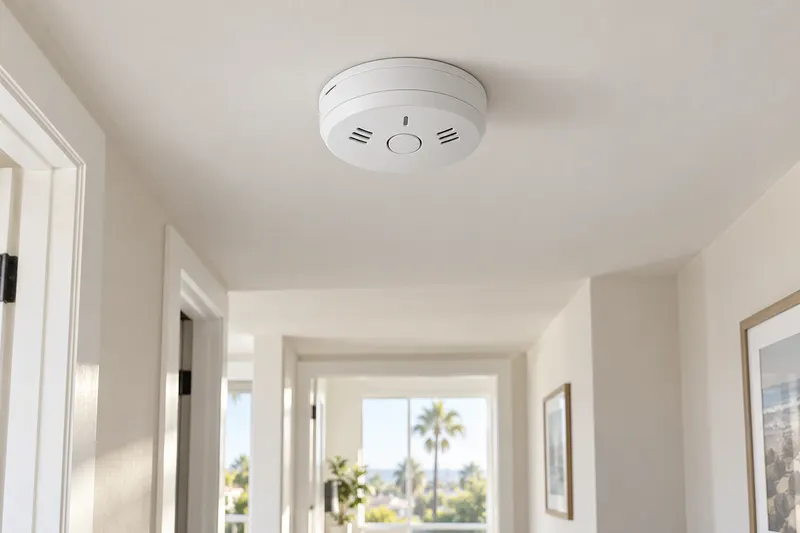
Typical SoCal range, October 2026
$150 to $450
per detector or small set, interconnected. This is a desk estimate, not a quote.
The price is per detector, and the number you see depends on how the wiring gets there. The typical SoCal range is $150 to $450 for a small interconnected set as of October 2026. This is a desk estimate, not a published price list, so the set price is built from the cost of each unit plus the labor to run interconnect wire between them.
A quick way to estimate
Count the detectors. Required locations in a home usually include each bedroom, the area outside the sleeping rooms, and each level. Each added detector adds the unit cost plus the interconnect wire, and the minimum visit charge can push a one-detector job toward the top of the range. That is why the set price here is a range, not a formula.
Swap versus new location
Swap. Replacing an old hardwired detector with a new one on the same base is quick and cheap. Most of the cost is the device and the visit.
New location. Adding a detector where there is none means running cable from the nearest connection and, for an interconnected system, between the units. In a finished house, that means fishing cable through attics and walls, and patching. This is the case that pushes cost toward the top.
What the law says
- Smoke alarms: Health and Safety Code 13113.7 requires State Fire Marshal-listed smoke alarms in dwellings. When a building permit is issued for alterations, repairs or additions above $1,000, the permit issuer cannot sign off until the permittee shows the required alarms are listed devices. A battery alarm that met the standard when installed can still satisfy the law unless local rules say otherwise.
- CO devices: Section 17926 requires a carbon monoxide device in each existing dwelling unit that has a fossil-fuel appliance, a fireplace or an attached garage. Placement follows the current building standards for new construction, or the manufacturer’s instructions where feasible.
- Fines: a violation of either section is an infraction with a fine up to $200 per offense. A property owner gets a 30-day notice to correct under the CO section.
- Landlords: the owner of a rented home or apartment is responsible for testing and maintaining required alarms.
Local rules can be stricter, so ask your city. The smoke and CO detector page covers placement and detector types.
Permits and fees
A detector swap is often exempt from a permit. New detectors added during a remodel fall under the project’s permit. When the alterations on a dwelling exceed $1,000, the city’s final sign-off checks the alarms. Fees depend on the city. Look at your page, such as Los Angeles, Irvine or Riverside, and the permits guide.
How to compare quotes
- Ask for a count and a location for each detector.
- Ask if the units are hardwired with battery backup, and whether they are interconnected.
- Ask whether smoke and CO are separate units or combined.
- Ask if patching is included.
- Ask about the manufacturer’s expiration date. If you are also getting an electrical inspection, bundle the detectors into it to avoid a second visit charge. The service call cost page explains minimum charges.
What is not included
- Detectors in outbuildings or detached garages, unless listed
- Drywall, ceiling repair or paint
- Fire alarm monitoring or a security system
- Fire sprinklers
- Permit fees, when the job needs a permit
What moves the price
| Factor | Effect |
|---|---|
| Number of detectors | Price is per device; a bedroom-by-bedroom layout in a larger home adds up quickly |
| Interconnection | Hardwired units that signal each other need cable between them, or a listed wireless link; running new cable costs more than swapping in the same locations |
| Replacing existing wiring versus new | A swap onto existing boxes is low; new locations need fishing cable through ceilings and walls |
| Combination units | Smoke and CO combination detectors cost more per unit than single-purpose ones |
| Battery backup | A hardwired unit with battery backup is typical; the model changes the part cost |
Questions people ask
Do I need hardwired smoke detectors, or are battery ones allowed?
It depends on the situation. California law lets a battery-operated alarm that met the standard at installation satisfy the requirement unless local rules prohibit it, but a building permit for work over $1,000 on a dwelling requires State Fire Marshal-listed alarms before final sign-off. Your city may require hardwired alarms for remodels.
Where does a carbon monoxide device need to go?
California law requires a CO device in an existing dwelling that has a fossil-fuel burning heater or appliance, a fireplace or an attached garage. Placement follows current building standards or the manufacturer's instructions. In practice, near sleeping areas and on each level. Your electrician can lay it out.
How often should smoke detectors be replaced?
Follow the manufacturer's date on the back of the unit. Detectors wear out, so an old unit is a reason to replace the unit, not only the battery. Test them regularly and replace any that fail the test or chirp after a fresh battery.
Do landlords have to install them?
California law makes the owner of a rented single-family home or an apartment responsible for testing and maintaining the alarms the law requires, and for installing additional alarms where needed. Violations are infractions with fines. Tenants should report a missing or failing alarm in writing.
Related
Smoke and CO detectors: California rules and installation
California requires State Fire Marshal listed smoke alarms in every bedroom, outside sleeping areas and on…
Electrical inspections and code fixes
If an inspector flagged your wiring, you need a licensed electrician to fix each item and, for anything…
How much does an electrical inspection or code-violation fix cost?
A home electrical inspection plus typical corrections runs $300 to $1,500 in SoCal, an estimate. The…
What does an electrician service call cost?
A typical flat-rate electrical repair in SoCal runs $185 to $575 as of October 2026. Some electricians…
Selling a house in SoCal: the electrical inspection
What inspectors flag at sale, what a California seller must disclose, and which electrical repairs pay off…
Electrical permits in Southern California: what needs one and who pulls it
What needs an electrical permit, who pulls it, what the inspector checks, and what happens if the work was…
How much does it cost to install or replace an outlet or GFCI?
Outlet work typically runs $135 to $850 in SoCal. That is a desk range. Fixr lists $120 to $200 to install…
Panel upgrade cost estimator
Pick your panel, target size and site conditions to get a typical SoCal range.