Aluminum wiring: how to tell, and what fixes it
If your house was wired between about 1965 and the mid 1970s, check for aluminum. CPSC says only three fixes are permanent: copper rewiring, COPALUM crimps and AlumiConn connectors. Twist-on wire nuts and CO/ALR devices are not on the list.
- Era: About 1965 to mid 1970s
- Approved fixes: 3 (CPSC)
- Rewire range: $8,000 to $20,000
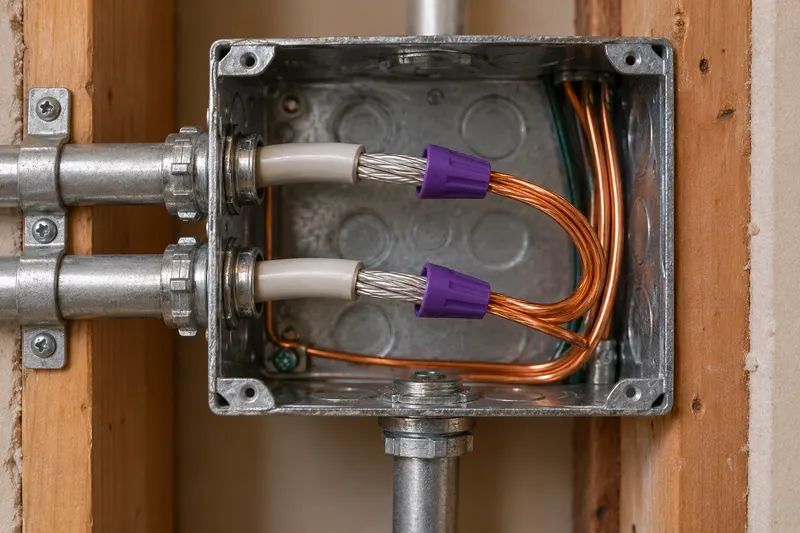
Why aluminum was used and why it fails
A copper shortage in the mid 1960s pushed builders to use aluminum wire for ordinary 15 and 20 amp branch circuits, not only for big appliances. The federal Consumer Product Safety Commission (CPSC) says homes built before 1965 are unlikely to have it, and cables put in between 1965 and the mid 1970s, including additions and rewired circuits, may.
The trouble is at the connections. Aluminum and the devices it connects to change over time, resistance goes up, and the joint gets hot. CPSC cites a survey in which homes built before 1972 and wired with aluminum were 55 times more likely to have outlet connections reach what it calls “Fire Hazard Conditions” than copper-wired homes. The same publication notes that failing connections seldom show warning signs. The aluminum wiring risks guide covers the background.
Finding out
Check the cable jacket where it is visible, in an unfinished basement, attic or garage. A flashlight at a low angle helps read embossed markings. Aluminum cable carries “AL” or “Aluminum” along the jacket. If it says “CU-clad” or “Copper-clad” it is copper-coated aluminum, and the repair rules in the CPSC publication do not cover it. Aluminum branch wire is also thicker: No. 12 and No. 10 for 15 and 20 amp circuits, against No. 14 and No. 12 for copper. Larger aluminum wire for service entrances, dryers and ranges is a separate matter.
An electrician can confirm quickly. Do not open outlets on your own with the power on.
The three fixes CPSC accepts
| Method | What happens | Notes |
|---|---|---|
| Rewire with copper | New copper cable replaces aluminum | CPSC calls it the best method, but impractical for many homes |
| COPALUM | Short copper tails are crimped to the aluminum at every connection | Permanent; needs a special tool and trained installer |
| AlumiConn | Copper tails joined with setscrew connectors | CPSC’s “next best alternative” where COPALUM is not available |
The COPALUM repair should cover every connection, including outlets, switches, fixtures, appliances and junction boxes. Skipping some defeats the purpose.
What CPSC does not recommend
- Twist-on wire nuts used to pigtail copper to aluminum. CPSC says this may fail even more often than the original connection.
- Hand-crimped connectors sold at retail.
- CO/ALR switches and receptacles as a standalone fix.
Contractors sometimes offer these because they cost less. If a bid uses one, ask them to show where CPSC accepts it. The agency lists only the three methods above.
Choosing between a repair and a rewire
A repair keeps the walls closed and costs less per connection. A rewire removes the aluminum and also lets you update circuits, add grounds and meet current protection rules. Where the house has attic or crawl-space access, rewiring can be reasonable. Published cost guides put a whole-house rewire at about $7,200 to $20,000 nationally (Fixr and Bob Vila), and the SoCal range on the whole-house rewire cost page is $8,000 to $20,000 as of October 2026. COPALUM and AlumiConn repairs have no published SoCal price list, so ask for itemized quotes per connection.
A partial rewire also works if only some circuits are aluminum.
Permit
Rewiring and most repairs are done under an electrical permit and city inspection. Ask the electrician which method will be used and how many connections are included. The whole-house rewire page describes the full job.
Selling a home with aluminum
Buyers, lenders and insurers ask about it. See home sale electrical inspection. A written record of the repair method and the electrician’s license helps.
Questions to ask each bidder
- Which of the three CPSC methods will you use, and at how many connections?
- Does the price include appliances, fixtures and junction boxes, or only wall outlets?
- Is the electrician trained for COPALUM, and if not, which connector is used instead?
- How will you document the repair for my insurer and a future buyer?
- Are the permit and inspection included?
If you rent or are buying
Tenants should report warm outlets or burning smells to the landlord in writing. Buyers can ask the seller for any repair records and ask an inspector to check cable markings in the attic and at the panel. A house with unrepaired aluminum is not unsellable, but the repair cost belongs in the negotiation.
Questions people ask
How can I tell if my house has aluminum wiring?
Look at the printed marking on cable jackets in an unfinished attic, garage or basement. Aluminum cable is marked AL or Aluminum. Copper-clad aluminum is marked CU-clad or Copper-clad and is handled differently. If you cannot read the marking, an electrician can tell. Do not open boxes with the power on.
What are the warning signs of a bad aluminum connection?
CPSC lists hot face plates on outlets or switches, flickering lights, circuits that do not work and the smell of burning plastic. It also warns that failing connections often give no warning. Call an electrician if you see any sign, and do not try to fix it yourself.
Is COPALUM still available in Southern California?
Only electricians trained by the maker can install COPALUM, and availability varies by region. Ask any installer near you whether they are COPALUM-trained. CPSC says that where COPALUM is not available, the AlumiConn connector is the next best permanent repair. Ask any bidder which method they use and which connectors they put in.
Do CO/ALR outlets fix aluminum wiring?
CPSC does not treat CO/ALR switches and receptacles as an acceptable permanent repair. Neither is the twist-on wire nut method. Both only address part of the problem, such as the outlet, while junctions, splices and appliances remain. Ask what happens at every connection, not just the wall plates.
Keep reading
House rewiring in Southern California
Rewiring replaces old branch-circuit wiring inside the walls. Most SoCal homes that need it have…
Whole-house rewire: what is replaced and how long it takes
A whole-house rewire replaces the branch wiring in every room, usually with a new panel. The electrician…
Partial rewire of a house or a few rooms
A partial rewire replaces only the circuits that are unsafe or failing, such as a kitchen run, an attic…
Aluminum wiring: the risks and what fixes it
How to tell if your house has aluminum branch wiring, why the connections fail, and the repair paths with…
How much does a whole-house rewire cost in SoCal?
A whole-house rewire in SoCal typically costs $8,000 to $20,000 for a 1,500 to 2,500 square foot home…
Selling a house in SoCal: the electrical inspection
What inspectors flag at sale, what a California seller must disclose, and which electrical repairs pay off…
Send a photo, get a range.
Share your ZIP and a photo of your panel. Your request goes to a licensed partner electrician, who contacts you.
Get this quoteAurion Electric is a referral service operated by Roviq LLC. Electrical work is done by a licensed partner electrician.
