ADU and remodel electrical work
Most ADUs get power from a subpanel fed by the main house panel, and a load calculation sets its size. A separate meter means utility work as well.
- Common ADU subpanel: 60 A to 100 A
- Typical SoCal range: $1,500 to $8,000
- Inspections: Rough-in and final
Start with the feed, not the fixtures
The first electrical question on an ADU is how the unit gets power. There are two choices. The ADU can run from a subpanel fed by the main house panel, or it can have its own meter and service from the utility. The choice drives cost, timing and who has to approve it.
Most ADUs use the subpanel route. The shared service is usually the cheaper path. Fixr puts a subpanel at $400 to $2,000 as of October 2026; a feeder to a detached unit adds trenching, which is a desk estimate and varies by yard. A separate meter adds utility work, a new service point and often a longer wait. The ADU electrical cost page shows the full typical SoCal range of $1,500 to $8,000 as of October 2026.
Subpanel or separate meter
| Subpanel from the house | Separate meter | |
|---|---|---|
| Bills | One bill for both units | Separate bill for the ADU |
| Cost | Lower | Higher, with utility work |
| Main panel | Must have room for the feeder | Not affected as much |
| Who approves | City inspector | City and utility |
State law limits what a city can require for ADU utility connections, and sources describe those limits differently for conversions, attached and detached units. Do not rely on a blog, including this one, for the final answer. The state housing agency (HCD) publishes ADU guidance, and your city and utility have their own rules. Ask both in writing before you design the feed. If the ADU will be rented, a separate meter may also help with billing, so ask the electrician to price both.
Tell the utility early
A shared service still changes the load on the house. If the main panel is a 100-amp panel from the 1970s, adding an all-electric ADU may mean replacing it first. The utility coordination guide explains the order of steps: the city permit, the city inspection and the utility’s meter work. A service upgrade can take weeks to months depending on whether the utility has to change its equipment. Start that conversation before the ADU framing begins.
Title 24: solar, battery-ready and heat pumps
The 2025 Energy Code took effect January 1, 2026 and applies to permit applications submitted on or after that date. For ADUs the Energy Commission’s guidance says:
- Detached, newly built ADU: newly installed solar PV is required unless an exception applies. The modules can be added to an existing system on the same lot, not only on the ADU roof, and the utility must allow the expansion.
- Attached ADU: treated as an addition, so solar PV is not required.
- Battery-ready wiring: a newly built ADU must meet the battery-ready rules in Section 150.0(s). If the ADU’s service is 125 amps or less, those rules do not apply.
- Mini-splits: allowed, though some projects need a field check by a rater.
The Commission’s page does not say anything about conversions, so ask the city how it treats a garage conversion.
A small service has a side effect. Keeping the ADU service at 125 amps or less removes the battery-ready rule, but it limits how much electric load the unit can carry. Run the load calculation before choosing.
Kitchen and bath remodel circuits
Remodels are the other half of this page. Opening walls for a kitchen is the best time to fix the electrical, because the wire is already exposed. The usual list:
- A dedicated circuit for the range or cooktop, and for the oven if separate.
- Dedicated circuits for the dishwasher, disposal and microwave.
- Countertop receptacle circuits sized for the number of outlets.
- GFCI protection on all kitchen receptacles. The 2023 NEC, which California’s 2025 code is built on, extends GFCI beyond countertops to all 125 to 250 volt kitchen receptacles.
- Lighting circuits for recessed and under-cabinet lights. See recessed lighting.
If the kitchen is going from gas to electric, the range circuit may be the largest new load. The heat pump and appliance circuits page covers induction cooktops, and the panel upgrade page covers what to do if the panel is full.
Permit and inspection steps
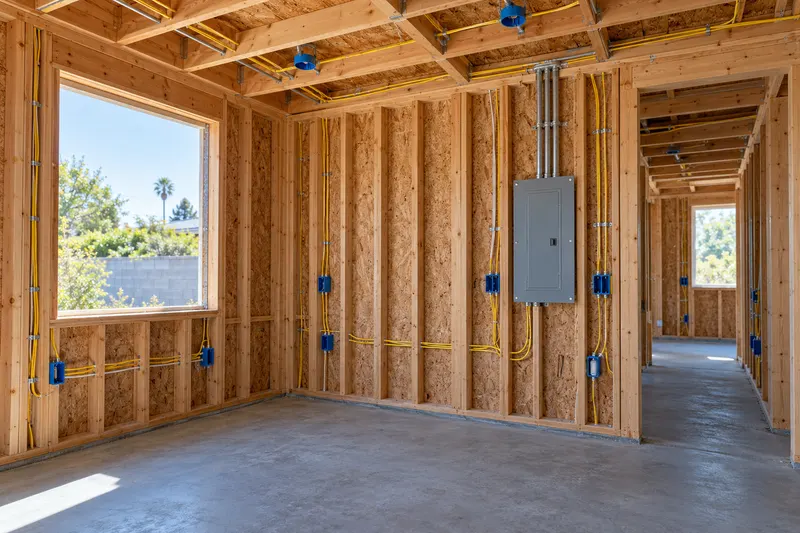
ADU electrical work and remodel circuits both need an electrical permit. A typical ADU goes through a rough-in inspection before the walls are closed and a final inspection at the end. Tell the electrician about the schedule early, because drywall cannot start until the rough-in passes. Unpermitted work can cause trouble at resale and with insurance. See inspections and code fixes for what that looks like later.
What to read next
- ADU electrical requirements for a checklist you can bring to the first meeting.
- Subpanel installation for how the feeder is sized and run.
- Whole-home electrification if the ADU is part of a bigger all-electric plan.
- Send a photo of your panel to find out whether the main panel can feed an ADU.
Questions people ask
Does my ADU need its own electric meter?
Not always. Many ADUs run from a subpanel fed by the main house panel. Whether a separate meter is required depends on the city, the utility, and the type of ADU, and sources disagree on how far state law goes. Ask both the building department and your utility in writing before you design the feed, because the answer changes the cost a lot.
Does a new detached ADU have to have solar panels?
Usually yes. The California Energy Commission says newly built detached ADUs must have newly installed solar PV to meet the prescriptive rule unless an exception applies. The panels can be added to an existing solar system on the same lot. An attached ADU is treated as an addition, so solar is not required there.
How big should the subpanel for an ADU be?
A studio with a mini-split often fits on 60 amps. A one-bedroom or all-electric unit with a heat pump, electric range and heat pump water heater usually needs 100 amps. The electrician decides after a load calculation of the ADU and of the main house panel, since the feeder has to fit inside what the house service can carry.
Do I need a permit to rewire a kitchen during a remodel?
Yes. New circuits, moved outlets and a new range or oven circuit need an electrical permit and an inspection before the walls are closed. Cities usually inspect at rough-in and again at final. Swapping a device like for like is often exempt, but adding or moving circuits is not.
Keep reading
How much does ADU electrical work cost?
Electrical work for an accessory dwelling unit typically costs $1,500 to $8,000 in SoCal, an estimate for…
Subpanel installation: when it fits and how it is wired
A subpanel is a second breaker box fed from your main panel, and it adds circuit space for a garage, ADU…
Electrical panel upgrades in Southern California: when and how
A panel upgrade replaces the main breaker box, and most SoCal homes that need one are moving from 60 to…
ADU electrical requirements
Subpanel or new service, feeder, meter choice, EV and heat pump loads, and typical cost for a backyard or…
Who files, who pays and who to call in a service upgrade
The four parties in a panel or service upgrade, what each files, what each pays and what to say when you call.
Heat pump and appliance circuits
A heat pump, a heat pump water heater or an induction range each needs a circuit sized from the appliance…
Whole-home electrification in Southern California
Going all-electric works best when the panel and a load calculation come first, because every later step…
Send a photo, get a range.
Share your ZIP and a photo of your panel. Your request goes to a licensed partner electrician, who contacts you.
Get this quoteAurion Electric is a referral service operated by Roviq LLC. Electrical work is done by a licensed partner electrician.
