Partial rewire of a house or a few rooms
A partial rewire replaces only the circuits that are unsafe or failing, such as a kitchen run, an attic loop or one wing of old wiring. Estimated typical SoCal range is $3,000 to $8,000, against $8,000 to $20,000 for a whole house.
- Typical estimate: $3,000 to $8,000
- Whole-house range: $8,000 to $20,000
- Permit: Required
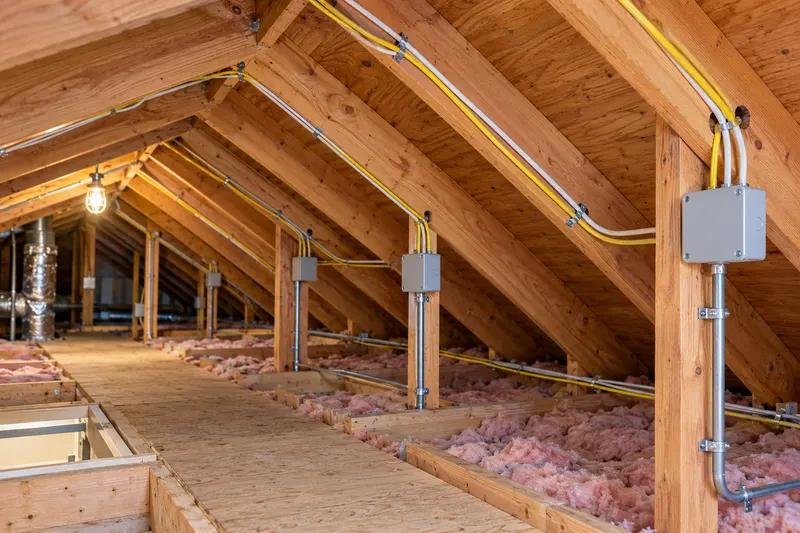
What counts as partial
There is no line between a repair and a rewire, but the work usually falls into one of these:
- One or two rooms, such as a kitchen and bath remodel
- A single floor of a two-story house
- A set of circuits with a known fault, like overheating outlets
- Part of the house with knob-and-tube or aluminum, while the rest is copper
- An addition where old and new wiring were spliced
If your problem is one dead outlet or a breaker that trips, that is a repair, not a rewire. See outlet not working and breaker keeps tripping.
Cost, as of October 2026
Published cost guides put a whole-house rewire at roughly $7,200 to $20,000 (Fixr and Bob Vila nationally), and the SoCal range on this site is $8,000 to $20,000. Partials are not. The estimate on this site is $3,000 to $8,000, and it is a planning figure only. A few things move it:
| Factor | Effect |
|---|---|
| Number of circuits | Each needs a new run from the panel |
| Attic or crawl access | Open access cuts labor |
| Plaster, stucco or block walls | Slower, higher patching cost |
| Kitchen and bath | More circuits and GFCI devices |
| Panel capacity | A full panel may need work first |
Drywall patching and paint are usually separate. See the whole-house cost page for the larger job.
How to choose which circuits
Ask the electrician to test and label. A good order of work looks like this:
- Circuits with signs of heat. Hot plates, burn marks, buzzing, a burning smell. See hot or burning-smell outlets.
- Aluminum or knob-and-tube runs. These have known problems. The aluminum wiring page and the knob-and-tube page cover each.
- High-load rooms. Kitchens, laundry, bathrooms and garage.
- Bedrooms and living areas. The remaining low-load circuits.
A “map and label” visit is a good first step. The electrician draws which circuits feed which rooms and marks what is old. You can then decide how much to do now.
What to ask about protection
New circuits come under the current code. That usually brings GFCI at kitchens, baths, garages and outdoors, and arc-fault protection in most living areas. This is one reason partial rewires still cost real money. Read GFCI and AFCI protection to see what the devices do.
Mixed wiring and inspections
A partial rewire leaves old and new side by side. The new work must be inspected, and the inspector may look at connected old wiring. The electrical code (394.12) does not allow concealed knob-and-tube where insulation envelops the wires, so an insulated attic can raise questions about old runs. Ask your building department how it handles this.
When to go whole-house
Choose a whole-house job if:
- The bad wiring is in most rooms
- A panel upgrade is planned anyway
- The walls will be open for a remodel
- Your insurer wants all of it gone
Splitting a job into stages is fine, as long as each stage is permitted and the electrician labels what is done. Keep the paperwork for a future sale.
Keep the records
Ask the electrician for a short written note listing the circuits that were replaced, the cable type and the permit number. Mark the panel directory to match. If you sell the house or file an insurance claim, that note shows what was done and what was left, which avoids repeat inspections.
A practical example
Say a 1960s house has aluminum in the bedrooms, copper in the kitchen from a remodel, and a garage circuit with no ground. A partial rewire could replace the bedroom runs with copper, add a grounded circuit for the garage and leave the kitchen alone. The electrician labels each part. The house then has one clear record of what was done, and the next buyer’s inspector sees a plan instead of a mystery.
Permits for small jobs
Even a small rewire usually needs a permit. Skipping it can cause trouble at resale or after a fire claim. The electrician applies, and the inspector checks the new circuits before walls close. Ask for the final inspection card when the job ends.
Questions people ask
Is a partial rewire safe, or should I do the whole house?
It is safe for the circuits that are replaced. Old wiring left in place keeps its risks. If the bad wiring is limited and the rest is in good condition, a partial rewire makes sense. If you find the same old wire in several areas, a full rewire often costs less than coming back later.
How much does a partial rewire cost?
The desk estimate is $3,000 to $8,000 as of October 2026. No published source covers partials, so it depends on how many circuits, how easy the access is, and the wall type. A kitchen and bath alone is near the low end. A floor of a two-story home is nearer the high end.
Which circuits should I replace first?
Start with anything that is hot, sparks, trips or smells. Then kitchens, bathrooms, laundry and garages, because they carry the most load and need GFCI protection. Any circuits found to be aluminum or knob-and-tube are a priority. The electrician ranks them after testing and a look in the attic.
Will a partial rewire satisfy my insurance company?
Only if the insurer's concern is gone. Insurers that ask about knob-and-tube or aluminum often want it all removed, not just part. Ask your insurer in writing what they require, and ask the electrician to document what was replaced and what remains.
Keep reading
House rewiring in Southern California
Rewiring replaces old branch-circuit wiring inside the walls. Most SoCal homes that need it have…
Whole-house rewire: what is replaced and how long it takes
A whole-house rewire replaces the branch wiring in every room, usually with a new panel. The electrician…
Knob-and-tube wiring: how to spot it and when to replace it
If you see ceramic knobs and cloth-covered wires in an attic or crawl space, it is knob-and-tube…
Aluminum wiring: how to tell, and what fixes it
If your house was wired between about 1965 and the mid 1970s, check for aluminum. CPSC says only three…
Hot outlet or burning smell: act first, diagnose later
Turn off the breaker for that room now. If you cannot tell which breaker it is, or you see smoke, turn off…
How much does a whole-house rewire cost in SoCal?
A whole-house rewire in SoCal typically costs $8,000 to $20,000 for a 1,500 to 2,500 square foot home…
GFCI and AFCI: where code requires them and what they do
A GFCI stops current that leaks to ground, which protects people from shock. An AFCI stops electrical…
Send a photo, get a range.
Share your ZIP and a photo of your panel. Your request goes to a licensed partner electrician, who contacts you.
Get this quoteAurion Electric is a referral service operated by Roviq LLC. Electrical work is done by a licensed partner electrician.
