Whole-house rewire: what is replaced and how long it takes
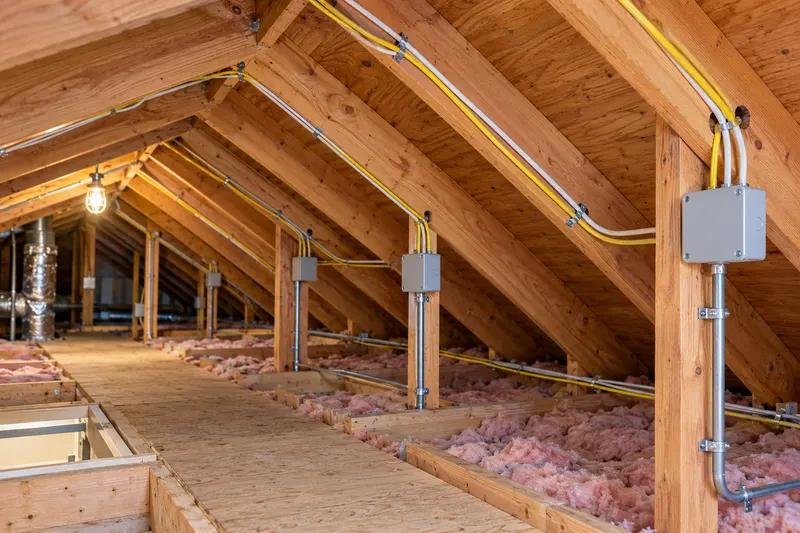
A whole-house rewire replaces the branch wiring in every room, usually with a new panel. The electrician opens walls or runs cable through the attic, and the city inspects the work before the walls close.
- Typical range: $8,000 to $20,000
- Home size: 1,500 to 2,500 sq ft
- Patching: Usually extra
When a whole-house rewire is the right call
Do it when the old wiring is everywhere, not in one corner. Two common cases: knob-and-tube that runs through most of the house, and aluminum branch wiring where the owner wants it gone for good. A third case is a remodel that already opens the walls. Then the extra labor is smaller. If only one area is bad, a partial rewire costs less.
Cost in brief
The typical SoCal range is $8,000 to $20,000 as of October 2026 for a home of about 1,500 to 2,500 square feet, with patching and paint extra. Wall type, access, the number of stories and a new panel move it most. The whole-house rewire cost page has the size breakdown and the full list of factors.
Step by step
- Walkthrough. The electrician tests outlets, checks cable markings and looks in the attic and crawl space.
- Plan. Circuits are laid out, and the plan adds required GFCI and arc-fault protection, smoke alarms where the city asks, and a new panel if needed.
- Permit. The electrician files for an electrical permit.
- Rough-in. New cable goes to every box. Old wiring is cut back or removed.
- Rough inspection. The city checks the cable before the walls close.
- Finish. Devices, covers and the panel go in. The old panel comes out.
- Final inspection and walk-through. The city signs off, and you get a labeled panel directory.
What a rewire often reveals
Old houses hide surprises. Cut-off cables in the attic, splices inside walls, ungrounded outlets, missing boxes and overloaded circuits. If the walls open and the electrician finds a problem, the price may change. Ask how change orders are handled before you start.
If the original wiring is aluminum, read aluminum wiring first, since repair may be an alternative. For old cloth wiring, read knob-and-tube replacement.
Panel and service
Many homes that are rewired also get a panel upgrade. Adding an EV charger, heat pump or ADU later is much easier if the service is sized first. The electrician can check the load and tell you whether the existing service fits.
Permit and inspection
A rewire is a permitted job in California cities. The inspector checks the work in at least two steps, once at rough-in and once at final. See electrical permits in Southern California.
Comparing bids
Ask each bidder to write out:
- The panel size and brand
- Number of circuits and outlets
- Who does patching and paint
- Whether the permit and inspections are included
- How a hidden-condition change is priced
- Your options for living in the house during the work
Before the crew arrives
Clear access to the panel, the attic hatch and the crawl space. Move furniture away from walls where cable will be fished. Decide who will patch and paint, and when. Tell the electrician about any circuits that must stay on, such as a refrigerator or medical device, so a temporary feed can be arranged during the work.
Timeline you can plan around
The electrician walks the house and writes the bid in a few days. Permits take as long as the city takes, which varies. Rough-in on an average home usually runs several days to a week or more. The rough inspection can add a day or two of waiting. Finish work and the final inspection follow. If the house is occupied, ask for a room-by-room order so the kitchen is down for the shortest time.
Some owners combine the rewire with other work while the walls are open: insulation, recessed lights, data cable and extra outlets. Open walls make those cheaper to add, but each one belongs on the permit and the bid.
How the job goes
- WalkthroughThe electrician maps circuits, checks the attic and crawl space, and notes the panel.
- PermitAn electrical permit is filed with the city.
- Rough-inNew cable is pulled to every box, and old wiring is disconnected.
- Rough inspectionThe city inspects before walls are closed.
- FinishDevices, panel and breakers are installed, then final inspection.
Questions people ask
How long does a whole-house rewire take?
Plan on days to a couple of weeks depending on size and wall type. An empty home with open framing goes faster. An occupied home with plaster walls goes slower. The electrician can give a schedule after seeing the attic and crawl space, and it also depends on when the city can inspect.
Do I need a new panel with a rewire?
Often yes. Old wiring tends to come with an old or small panel, and new circuits need space and capacity. A new panel also gives you the surge protection and breaker types the current code asks for. The electrician checks the panel during the walkthrough and tells you whether it can stay.
What does a whole-house rewire cost per square foot?
As of October 2026, Bob Vila lists $9,000 to $15,000 for a 3,000 square foot home and $12,000 to $20,000 in its panel guide, and Fixr lists $7,191 to $13,384 for a whole home. The SoCal range on this site is $8,000 to $20,000. Plaster, stucco, two stories and panel work push it higher.
Can I live in the house during the work?
Many people do. The electrician shuts off circuits being worked on and restores others as the day ends. Expect dust, patches in walls and some days without the kitchen or a bedroom. If you have a baby or medical equipment, ask for a plan that keeps those circuits on.
Keep reading
House rewiring in Southern California
Rewiring replaces old branch-circuit wiring inside the walls. Most SoCal homes that need it have…
Partial rewire of a house or a few rooms
A partial rewire replaces only the circuits that are unsafe or failing, such as a kitchen run, an attic…
Knob-and-tube wiring: how to spot it and when to replace it
If you see ceramic knobs and cloth-covered wires in an attic or crawl space, it is knob-and-tube…
Aluminum wiring: how to tell, and what fixes it
If your house was wired between about 1965 and the mid 1970s, check for aluminum. CPSC says only three…
How much does a whole-house rewire cost in SoCal?
A whole-house rewire in SoCal typically costs $8,000 to $20,000 for a 1,500 to 2,500 square foot home…
Electrical panel upgrades in Southern California: when and how
A panel upgrade replaces the main breaker box, and most SoCal homes that need one are moving from 60 to…
Electrical permits in Southern California: what needs one and who pulls it
What needs an electrical permit, who pulls it, what the inspector checks, and what happens if the work was…
Send a photo, get a range.
Share your ZIP and a photo of your panel. Your request goes to a licensed partner electrician, who contacts you.
Get this quoteAurion Electric is a referral service operated by Roviq LLC. Electrical work is done by a licensed partner electrician.
