Hot outlet or burning smell: act first, diagnose later
Turn off the breaker for that room now. If you cannot tell which breaker it is, or you see smoke, turn off the main and leave. Do not plug anything back in until an electrician has looked at it.
Do this in the next minute
This is a hazard page, so the steps come first.
- Do not touch a hot or smoking outlet. Do not pull a plug that is melted or sparking.
- Turn off the breaker for that room. If you do not know which one, or you can see smoke, turn off the main breaker.
- If there is smoke, flame or sparks, get everyone out. Call 911 from outside. Do not use water on an electrical fire. If you have an extinguisher rated for electrical fires and the fire is small and you have a clear exit, you may try it. Otherwise leave.
- Do not reset the breaker. Leave it off.
- Keep people and pets away from the wall and anything plugged into it.
If the power is off and there is no smoke or fire, you can call an electrician. The emergency electrician page explains who to call and what to expect.
When to shut off the main
Turn off the main if:
- You cannot identify the breaker
- The panel itself is hot or smells
- More than one outlet or switch is warm
- You see smoke coming from the wall
- You hear buzzing, crackling or popping inside the wall
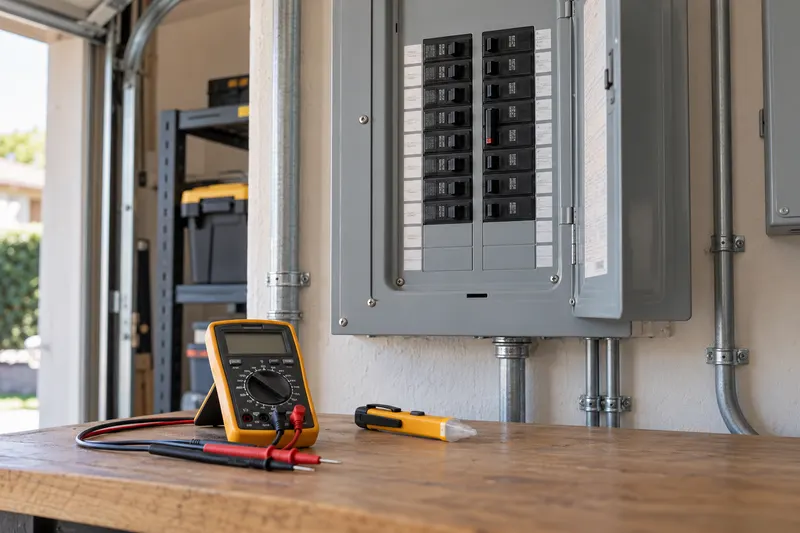
The main breaker is a large switch at the top of the panel, or in a separate box outside near the meter. Flip it with one hand and stand to the side. If the panel is wet, sparking or too hot to touch, do not go near it. Leave and call 911.
Turning off the main does not make the wires at the meter or the top of the panel safe. They stay live. Do not open the panel.
Why outlets overheat
Heat is caused by resistance, and resistance comes from a poor connection or too much current. These are the usual causes.
A loose wire at the outlet. Push-in “backstab” connections can loosen. A screw terminal can come loose from thermal cycles. The loose spot heats, softens the plastic and can arc.
A worn plug or outlet. A plug that fits loosely makes poor contact. This is common on outlets used with heavy loads, such as a space heater, window air conditioner or hair dryer.
Overload. A power strip or extension cord feeding too many devices. Space heaters and air conditioners should go straight into a wall outlet, not a power strip.
Aluminum wiring. Homes from the 1960s and 1970s sometimes have aluminum branch circuits. Standard outlets can overheat on them. The aluminum wiring page covers the fix.
A failing device. A damaged cord, a charger or a dimmer can overheat and scorch a plate.
Arc-fault protection exists for the hidden form of this problem. NEC 210.12 requires AFCI protection on most bedroom, living area and similar circuits, and an AFCI breaker that trips for no obvious reason may be reporting a real arc. The GFCI and AFCI page covers it.
After the circuit is off
Leave the circuit off until a licensed electrician has checked the outlet, the box and the wire. Do not turn it back on to check, and do not put a different outlet in. A scorched outlet means something heated the plastic. The cause may be behind the wall, in the next outlet on the circuit or at the breaker.
Unplug the devices from that outlet and keep them. Note what was plugged in, how long, and when you first noticed. Tell the electrician about other outlets that feel warm. Take photos of any marks.
You can run a single extension cord from a different circuit for essentials like a refrigerator. Use a heavy-duty cord, keep it short and run it out in the open, not under a rug.
What the electrician will do
The electrician tests the circuit with the power off, then opens the box. They look at the wire for browned insulation, check each terminal, and test the breaker. A damaged wire is cut back to clean copper. A burned outlet and plate are replaced. The electrician usually checks the neighboring outlets on the same circuit, since a problem rarely stays at one spot. If the breaker is at fault, it is replaced. If the wiring is damaged along the run, they will give options, which may include a partial rewire.
As of October 2026, a typical SoCal flat-rate repair runs $185 to $575, and Fixr’s national guide says many electricians charge a premium outside regular hours. See emergency electrician costs for the range. A typical fix is toward the low-to-middle of that range. A hidden burned splice costs more.
If your lights dimmed or flickered before the smell began, see flickering lights. Frequent damage to electronics can mean surges, which the surge protection page covers.
How the job goes
- Stop using itUnplug what you safely can, then do not touch the outlet again.
- Cut the powerSwitch off the breaker for that area. If unsure, switch off the main.
- Get out if there is smokeLeave the house and call 911 from outside.
- Keep it offLeave the circuit off until a licensed electrician has checked it.
Questions people ask
Is a warm outlet normal?
A plate that feels slightly warm after a heavy load, such as a space heater, can happen. An outlet that feels hot, or any warmth with no heavy load, is not normal. The heat usually comes from a loose connection or a worn plug. Unplug the device, turn off the breaker and have it checked.
When do I call 911 instead of an electrician?
Call 911 if you see smoke, flames or sparks, or the burning smell is strong and you cannot find the source. Get everyone out first. If the outlet is only warm or has a faint smell and the breaker is off, you can call an electrician. Do not wait to see if it gets worse.
What causes a burning smell from an outlet?
Common causes are a loose wire at the outlet terminal, a plug that does not fit snugly, an overloaded power strip, old or damaged wire insulation, or a device that is failing. Heat from a loose connection melts plastic and insulation. The smell may linger after the breaker is off. A fishy or sharp chemical smell is typical of overheated plastic.
Can I just replace the outlet myself if it is scorched?
Do not. A scorched outlet is a symptom. The cause may be a loose wire in the box, damaged wire further back or a failing breaker. Replacing only the outlet can hide the real fault. A licensed electrician should check the wire, the box and the other outlets on the circuit, and fix what caused the heat.
Keep reading
Electrical repair: what to check, what to shut off, and when to call
Most electrical repairs are small, but a hot outlet, a burning smell or a breaker that will not stay on…
Electrical emergency: what to do first and who to call
If you see fire, smoke or sparks, get out and call 911. If the danger is contained and the power is off…
An outlet that stopped working
Check for a tripped GFCI first, then the breaker. Most dead outlets come back with a reset. If you smell…
Why your breaker keeps tripping
A breaker trips to stop too much current. The cause is an overload, a short circuit, a ground fault or a…
GFCI and AFCI: where code requires them and what they do
A GFCI stops current that leaks to ground, which protects people from shock. An AFCI stops electrical…
Aluminum wiring: how to tell, and what fixes it
If your house was wired between about 1965 and the mid 1970s, check for aluminum. CPSC says only three…
What does an emergency electrician cost?
An emergency or after-hours electrician typically costs $350 to $1,200 in SoCal. That is an estimate…
Whole-home surge protection
A whole-home surge protector mounts at your panel and clamps voltage spikes before they reach your…
Power out in part of the house
If some rooms are dark and others work, check whether neighbors have power, then reset any tripped GFCI or…
Send a photo, get a range.
Share your ZIP and a photo of your panel. Your request goes to a licensed partner electrician, who contacts you.
Get this quoteAurion Electric is a referral service operated by Roviq LLC. Electrical work is done by a licensed partner electrician.
