Knob-and-tube wiring: how to spot it and when to replace it
If you see ceramic knobs and cloth-covered wires in an attic or crawl space, it is knob-and-tube. Insulation cannot cover it under the electrical code.
- Typical range: $8,000 to $15,000
- Code section: NEC 394.12(5)
- Permit: Required
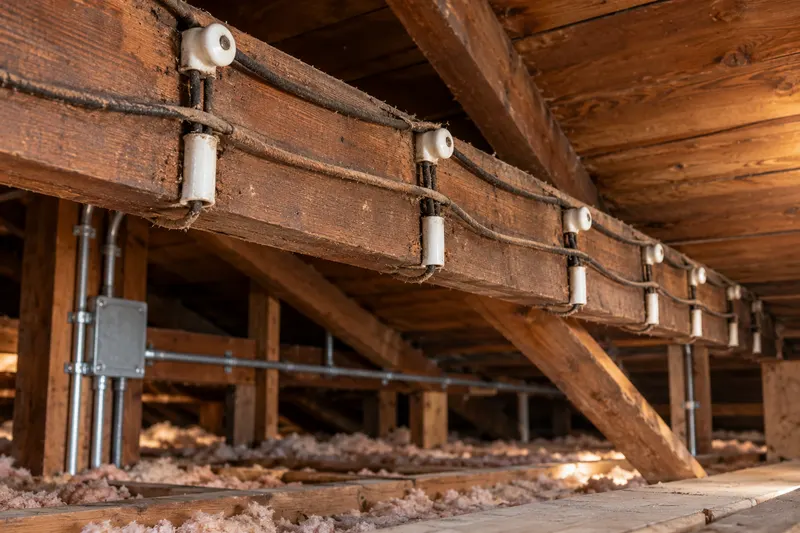
How to recognize it
Knob-and-tube was the standard wiring in homes built roughly before 1950. The hot and neutral wires run separately, supported on porcelain knobs and passed through framing in porcelain tubes. The wire is wrapped in cloth or rubber that goes brittle with age. Look in the attic or the crawl space. Outlets are usually two-prong, and there is no ground wire.
Do not touch it, and do not pull it. A licensed electrician should confirm what you have. Some homes have a mix where old runs were cut off and new ones added.
The insulation rule
The electrical code (NEC 394.12(5), which California’s code carries) says concealed knob-and-tube cannot be used in hollow spaces of walls, ceilings and attics that are insulated with loose, rolled or foam-in-place insulation that envelops the wires. The reason is heat. Knob-and-tube was designed to shed heat into open air. Bury it in insulation and it can overheat.
That matters because energy upgrades often add attic insulation. The electrical code (394.12) does not allow concealed knob-and-tube where insulation envelops the wires, so wiring in an attic that is being insulated has to be taken out of use first. Your city may add its own rules for old wiring, so ask the building department before you insulate.
Insurance and sales
Insurance is the reason many owners act. Some insurers ask about old wiring, charge more or decline to cover it, and the rules differ by company. Ask your agent in writing. Without regular coverage, you may need the California FAIR Plan, which the Department of Insurance describes as the insurer of last resort.
For a sale, a buyer’s inspection will flag it. The home sale inspection guide shows what else comes up.
What replacement involves
- The electrician maps every circuit and decides what can stay.
- New copper cable with a ground is pulled to each outlet, switch and light.
- Access holes are cut in drywall or plaster, or the cable is fished through attics and crawl spaces.
- New devices go in, including GFCI and arc-fault protection where the code asks for them.
- The panel may be upgraded if it is too small or old.
- The old wires are removed or disconnected so nothing stays live.
- The city inspects the rough-in and the final.
Cost, as of October 2026
Published cost guides put whole-house rewiring at about $7,200 to $20,000 nationally (Fixr and Bob Vila). The SoCal range for knob-and-tube replacement in a typical home is $8,000 to $15,000 as of October 2026. Patching and paint are extra. The knob-and-tube cost page lists what moves the number: square footage, plaster walls, access to the attic and crawl space, number of circuits, and the panel.
Compare it with a partial rewire. A partial job fits when knob-and-tube is limited to one area. If it runs through the whole house, a whole-house rewire is the cleaner fix.
Before you call
- Photograph what you see in the attic. Do not move insulation around the wires.
- Note whether your outlets have two or three prongs.
- Find out whether your insurer asked about wiring type.
- Read how to prepare for the electrician visit.
What to expect in the house
Expect noise, dust and some holes in the walls, especially in plaster homes. Ask the electrician how access holes will be cut and who patches them. In attics, the crew works around insulation, so wear a mask in the first days afterward. Keep pets and children out of the work areas, and ask the electrician for a rough order of rooms so you can plan around the kitchen and bedrooms.
Mixed and hidden runs
Some houses have knob-and-tube in places you cannot see, such as behind a ceiling after an old remodel. An electrician traces circuits from the panel and tests which outlets lack a ground. Plan for the possibility that more is found once the work starts, and ask how that is priced.
Questions people ask
Is knob-and-tube wiring illegal in California?
Existing knob-and-tube is not automatically illegal, but the code limits it. It cannot be concealed in walls, ceilings or attics where insulation covers the wires. New work cannot extend it. Cities can add their own rules, and some require an electrician to certify the wiring before insulation is added.
Can I add attic insulation over knob-and-tube?
Not with loose-fill, rolled or foam insulation touching the wires. The wires need free air to shed heat. A city may allow a narrow exception if a licensed electrician certifies the wiring, with warning signs and noncombustible insulation. Many people replace the wiring first instead.
Will my insurance cancel my policy because of knob-and-tube?
It can. Some insurers ask about old wiring, charge more or decline to cover a home with knob-and-tube. Rules vary by insurer and by policy. Ask yours in writing what it requires before you decide anything, and keep the answer with your records.
Can an electrician replace only the knob-and-tube parts?
Yes. Many homes have a mix of old and newer wiring. The electrician maps which circuits are still knob-and-tube and replaces those. A partial job costs less than a full rewire. It only solves the insurance and code issue if every knob-and-tube run is removed or made dead.
Keep reading
House rewiring in Southern California
Rewiring replaces old branch-circuit wiring inside the walls. Most SoCal homes that need it have…
Whole-house rewire: what is replaced and how long it takes
A whole-house rewire replaces the branch wiring in every room, usually with a new panel. The electrician…
Partial rewire of a house or a few rooms
A partial rewire replaces only the circuits that are unsafe or failing, such as a kitchen run, an attic…
What does knob-and-tube replacement cost?
Replacing knob-and-tube wiring in a typical SoCal home costs about $8,000 to $15,000 with the permit, as…
Selling a house in SoCal: the electrical inspection
What inspectors flag at sale, what a California seller must disclose, and which electrical repairs pay off…
How to prepare for the electrician's visit
A ten-minute checklist: panel photos, clear work space, utility data, appliance list, HOA papers and the…
Send a photo, get a range.
Share your ZIP and a photo of your panel. Your request goes to a licensed partner electrician, who contacts you.
Get this quoteAurion Electric is a referral service operated by Roviq LLC. Electrical work is done by a licensed partner electrician.
