How much does a whole-home surge protector cost?
A whole-home surge protector typically costs $200 to $800 installed in SoCal as of October 2026. One cost guide's main article shows a wider $70 to $700 range. A new or replaced panel needs one under the 2023 NEC.
Typical SoCal range, October 2026
$200 to $800
panel-mounted device, installed. Angi's main article shows $70 to $700; its HomeAdvisor-sourced page shows $200 to $800. Built from the published ranges listed under Sources.
A panel-mounted surge protector is one of the lowest-cost upgrades an electrician can do, and one of the few with a code rule behind it. The typical SoCal range is $200 to $800 installed, based on a published national cost guide. A second page from the same guide shows a wider $70 to $700 range, so treat any number as a guide and ask for a written quote.
The code rule and the difference between Type 1 and Type 2 are on the whole-home surge protection page.
What the price pays for
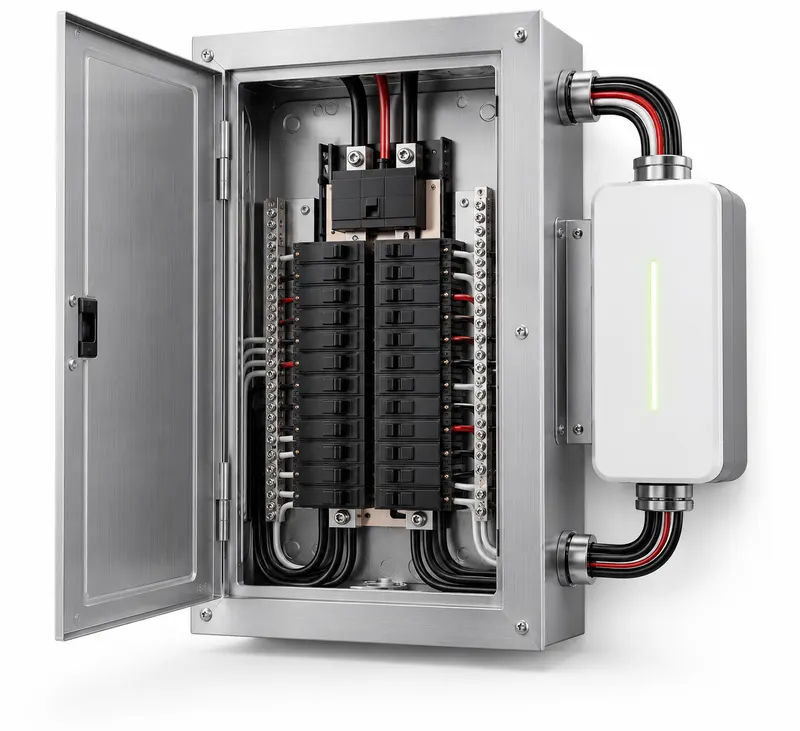
Two things: the device and the labor to wire it. The device is a box about the size of a lunch box. The electrician mounts it next to or on the panel, connects it to a breaker, and grounds it. The job is usually under an hour or two. Quality is the swing item, since devices vary a lot in rating, features and warranty terms.
When the code requires one
The 2020 NEC first required surge protection at dwelling-unit services. The 2023 NEC expanded it: the rule applies to all services and replacements of service equipment, and the device must have a minimum discharge current rating of 10 kA. California’s 2025 Electrical Code, effective January 1, 2026, is based on the 2023 NEC. In plain terms, a new or replaced panel gets a surge device, and it is part of the cost of that job. That is why a surge protector shows up in a panel upgrade quote and why the 200-amp upgrade cost page lists it.
If your panel is staying as it is, a surge device is optional. It is worth considering if you have expensive electronics, an EV charger, solar equipment or a heat pump.
What it protects and what it does not
A whole-home device clamps voltage spikes from the utility line or from big loads switching on and off. It does not replace a power strip at your computer, and it does not stop a direct lightning strike. It does not keep the power on during an outage. Think of it as protection for hardwired equipment: the AC, water heater, dryer, EV charger and everything on the circuits.
Where the price changes
- Panel full or crowded. A full panel may need a tandem breaker, a rearranged layout or a larger fix.
- Device placement. Short wire leads work better. A panel in a far corner of the garage with a long path costs more.
- Device type. Panel-mounted and other styles are priced differently. Ask the electrician which type is being quoted.
- Bundled work. If the device goes in during a panel replacement, the labor overlaps, and the extra cost is mostly the device.
Permits and fees
A panel-mounted device added alone often falls into a small electrical permit, if your city requires one at all. When it is part of a panel replacement, it is part of that permit. Fees vary by city. See your city page, such as Long Beach or Riverside, and the 2025 code changes guide for the current code edition.
How to compare quotes
- Ask for the brand, model and discharge rating (kA) of the device.
- Ask for the warranty terms in writing.
- Ask if the device is part of a panel replacement or a stand-alone add-on.
- Ask whether the price covers the breaker and the permit.
- Read the panel guide to see where the device will sit.
What is not included
- Plug-in surge strips for individual devices
- Coverage for appliance damage, which is a claim to a manufacturer or insurer
- A panel upgrade, if the panel is full or outdated
- Telephone, cable or coax protection, unless the quote lists it
- Permit fees, when the job needs a permit
What moves the price
| Factor | Effect |
|---|---|
| Device quality and rating | Higher-rated devices cost more; the 2023 NEC sets a minimum 10 kA discharge rating for the device at a service |
| Panel space | Most devices need a breaker slot; a full panel can force a larger job |
| Distance from panel | Short, straight wire leads work better and cost less than long runs |
| Device type and mounting | Panel-mounted and other device styles are priced differently |
| Whether it is done with a panel upgrade | Installed during a panel replacement, the device is mostly the part itself, since the labor overlaps |
Questions people ask
Is a whole-home surge protector required by code?
For new and replaced services, yes. The 2020 NEC first required surge protection at dwelling-unit services, and the 2023 NEC applies it to all services and replacements of service equipment, with a minimum 10 kA rating. California's 2025 code is based on the 2023 NEC. Existing homes with no work on the service are not forced to add one.
Is a plug-in power strip enough?
A power strip protects what is plugged into it, and only from smaller surges inside the home. A whole-home device at the panel protects hardwired items such as the AC, water heater and EV charger, and takes the first hit from a large event. Many homes use both.
Do surge protectors wear out?
Yes. The protective parts degrade after absorbing surges, and many devices have an indicator light or alarm for status. Replace the device if the light shows it has stopped protecting. Ask the electrician what the indicator means for the model installed, and check it after any major storm or utility event.
Will a surge protector stop damage from a power outage?
No. A surge protector limits voltage spikes, not a loss of power. It also cannot stop a direct lightning strike. If outages are your concern, look at backup power instead. A battery or a generator hookup is a separate project with its own cost and its own permit, so price it on its own.
Related
Whole-home surge protection
A whole-home surge protector mounts at your panel and clamps voltage spikes before they reach your…
How much do breaker box replacement and electrical panel replacement cost?
Replacing a breaker box with a new electrical panel typically costs $2,500 to $4,500 installed, including…
What a 200 amp panel upgrade costs in Southern California
The price of a 200 amp panel upgrade in SoCal is typically $2,500 to $4,500 with the permit, as of October…
Electrical panel upgrades in Southern California: when and how
A panel upgrade replaces the main breaker box, and most SoCal homes that need one are moving from 60 to…
2025 California Electrical Code: what changed for homeowners
Which code edition applies in October 2026 and the 2023 NEC changes that most often touch a home project.
How to read your electrical panel
A safe five-step read of your panel: main breaker, label, brand, free spaces and directory, plus when to…
What an electrical quote should include
Twelve lines every written electrical quote needs, so three bids can be compared on the same job.
Panel upgrade cost estimator
Pick your panel, target size and site conditions to get a typical SoCal range.
$200 to $800
panel-mounted device, installed. Angi's main article shows $70 to $700; its HomeAdvisor-sourced page shows $200 to $800.
Get this quote