How much does a home battery installation cost in Southern California?
The electrical work to connect a home battery is typically $1,500 to $4,000 in SoCal. The battery itself is extra, and its price varies by brand and size. This is an estimate, not a quote.
Typical SoCal range, October 2026
$1,500 to $4,000
electrical side only; battery hardware extra and priced by the installer. This is a desk estimate, not a quote.
A battery quote has two parts, and the second part is the one that surprises people. The hardware is the large number. The electrical work to connect it is smaller, but it varies a lot from house to house. The typical SoCal range for the electrical side is $1,500 to $4,000 as of October 2026.
Where a battery can go and what the permit covers is on the home battery installation page.
That range is a desk estimate, so use it to judge whether the electrical lines in a quote are in the right area, not to predict yours. The price of the whole installed system varies too much with capacity, brand and installer to give as one SoCal range, so ask for written quotes instead.
What the $1,500 to $4,000 covers
The electrical side is everything between the battery and your panel:
- Breakers and disconnects for the battery and inverter
- Wire and conduit from the battery to the panel
- A critical-loads subpanel, when the battery backs up only some circuits
- Grounding, labeling and the final connection
- The permit filing and inspection visit
The battery unit, the inverter if it is sold separately, and the gateway or control box are usually priced as hardware. Some quotes bundle them. Ask for the two parts on separate lines so you can compare.
What sets the hardware price
Hardware is most of the total, and these are the things that move it:
- Capacity in kWh. More stored energy costs more. It also decides how many hours the house runs on the battery.
- Power output in kW. A higher output starts a well pump or an air conditioner. A lower one only runs lights and a fridge.
- Brand and warranty terms. Compare the warranty years and the energy the maker guarantees at the end of them.
- Whole home or critical loads. Backing up a short list of circuits needs less than backing up the whole house.
- Backup gateway. The control box that switches the house between the grid and the battery is sometimes a separate line item.
The installer’s margin and any monitoring software sit on top. When you compare two quotes, compare capacity, output and warranty terms, not only the final price.
What pushes the electrical price up or down
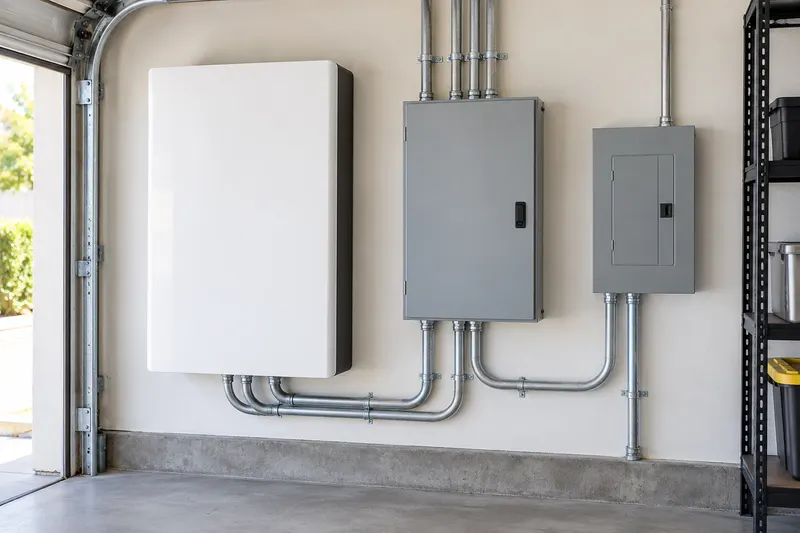
A battery on the garage wall next to the main panel is the low end. A battery on the far side of the lot, with trenching and a long conduit run, is the high end. An older panel with no open spaces can add a panel upgrade. Check the panel upgrade cost page if your panel is old, because a battery install can trigger that conversation.
Backup scope matters too. Powering a handful of circuits is a critical loads subpanel. Powering the whole house is a bigger job. The generator versus battery guide explains when each makes sense.
Incentives as of October 2026
- Federal credit: the IRS says the residential clean energy credit is not available for property placed in service after December 31, 2025. New 2026 installs do not qualify. See the federal tax credit status guide.
- SGIP (state program): the ratepayer budgets, including the small residential storage budget, closed to new submissions on December 31, 2025 under CPUC Decision 25-12-003, and waitlisted applications without reserved funds were cancelled. Do not plan around those. The income-qualified Residential Solar and Storage Equity budget (AB 209) lists $1,100 per kWh of storage and has extra eligibility rules; as of October 29, 2026 it has a waitlist in most areas (SDG&E, LADWP, SoCalGas and SCE’s non-municipal area), and only SCE’s municipal-utility area was open. Ask the program administrator for your utility.
- Riverside Public Utilities: $500 per kWh up to $10,000 for residential customers, or $850 per kWh up to $17,000 for customers enrolled in its SHARE program. It needs a permit with a final inspection. It applies only to Riverside city utility customers, not to SCE customers in the same county.
- Other utilities: SCE, SDG&E and LADWP do not list an open general home-battery rebate for single-family homes. Municipal utilities such as Pasadena, Burbank and Glendale have their own rules; ask them directly.
- Time-of-use plans: SCE’s TOU-D-PRIME plan is open to customers who attest to a home battery. It changes the daily charge and the per-kWh price, so compare it with your current plan using 12 months of bills. See the time-of-use guide.
Permits and the utility
Expect a city electrical permit and an inspection, and a utility interconnection review when the battery can export power or connects to solar. Fees differ by city. Published schedules in Riverside and San Diego show permit lines in the tens to low hundreds of dollars, but the exact line depends on how the city classifies the job. Read the electrical permits guide and check your county hub, such as Orange County or San Diego County.
How to compare quotes
- Ask for hardware and electrical work on separate lines.
- Ask which circuits stay on and for how many hours at a typical load.
- Ask for the battery capacity in kWh, the output in kW and the warranty terms in writing.
- Ask who files the permit and who talks to the utility.
- Ask what happens if the panel cannot take the new breakers.
- Compare at least two written quotes. The quote checklist lists what belongs on one.
What is not included
- Solar panels or a solar inverter replacement
- A panel upgrade or meter work, unless the quote says so
- Tree trimming, trenching through hardscape, or drywall repair
- Utility charges for a service change
- Future battery replacement
What moves the price
| Factor | Effect |
|---|---|
| Backup scope: whole home or critical loads | A critical-loads subpanel adds wire, a panel and labor; whole-home backup usually needs a bigger inverter and a service-side connection |
| Distance from battery to panel | Longer conduit runs and trenching raise labor and material, most often when the garage is far from the main panel |
| Panel capacity and age | A full or undersized panel may need a panel upgrade before the battery can be tied in |
| Solar already on the roof | AC-coupled or DC-coupled choices change the wiring and whether the existing inverter can be reused |
| Location of the battery | Garage wall, exterior wall or detached structure each change the mounting, conduit and inspection details |
Questions people ask
What does the whole battery system cost?
It varies with capacity in kWh, brand, and whether the battery backs up the whole home or a few circuits, so no SoCal range is given for the whole system. The $1,500 to $4,000 here is only the electrical side: breakers, wire, conduit, a subpanel and labor. Get written quotes that list hardware and electrical work on separate lines.
Can I still get a federal tax credit for a home battery?
As of October 2026, no for new installs. The IRS says the residential clean energy credit is not available for property placed in service after December 31, 2025. A battery finished in 2026 does not qualify. State, utility and city programs are separate, so check those before you sign.
Does a battery need a permit?
Usually yes. A battery adds a new power source tied to your panel, which most California cities treat as permitted electrical work with an inspection. The utility also reviews the connection. Your electrician normally files with the city, but ask who does it and check the city's permit office.
Will a battery run my whole house during a power shutoff?
Only if it is sized and wired for that. Many systems back up a short list of circuits, such as the fridge, lights and internet. Whole-home backup needs more battery capacity and often more equipment. Ask the quote to list exactly which circuits stay on and for how many hours.
Related
Home batteries: what the electrician does and where one can go
The electrician mounts the battery, connects it to the panel or a backup subpanel, and gets it permitted…
Backup power for a Southern California home
Pick the backup setup by outage length and by what must stay on. An interlock or transfer switch lets a…
Critical loads subpanel for a battery or generator
A critical loads subpanel is a small second panel that holds only the circuits you want during an outage…
Generator vs battery backup
A decision guide for outages and wildfire shutoffs: runtime, typical cost, fuel, permits, noise and…
Federal tax credits for home electrical work: status in 2026
What each federal credit covered, the dates it ended, who might still claim, and where to look for money…
Generator interlock kit and inlet: what it costs installed
A generator interlock installed in SoCal typically costs $400 to $850 for the interlock alone, and $400 to…
How much do breaker box replacement and electrical panel replacement cost?
Replacing a breaker box with a new electrical panel typically costs $2,500 to $4,500 installed, including…
PSPS prep checklist: what to do at home before the power goes out
Eight steps to prepare a home before a public safety power shutoff, from alerts to a backup power plan.
Panel upgrade cost estimator
Pick your panel, target size and site conditions to get a typical SoCal range.
$1,500 to $4,000
electrical side only; battery hardware extra and priced by the installer.
Get this quote