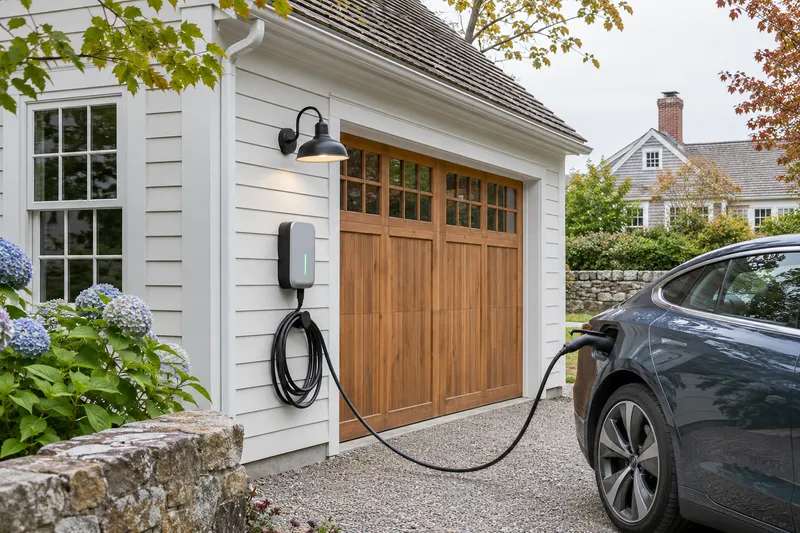
EV chargers in condos, triple-deckers and rentals
Massachusetts has a right to charge law for condo and HOA owners. Here is what it says, the steps to use it, and the options for renters and 2 to 4 unit buildings.
- Last checked: November 8, 2026
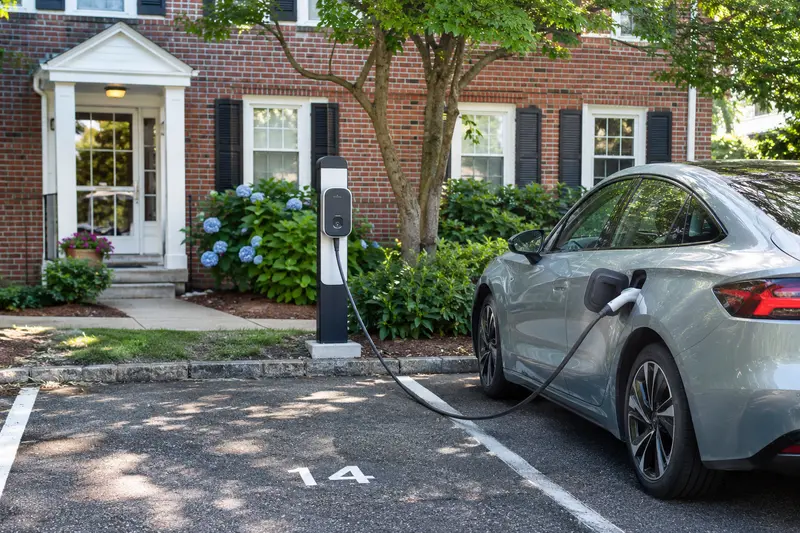
Last checked November 8, 2026
The short version. If you own a condo unit or a home in an HOA, the board cannot prohibit or unreasonably restrict a charger at your own parking space. It can ask for an application, and 60 days of silence means yes. You pay, a licensed electrician does the work, and the charger goes on your own meter if it can. Renters need the landlord's yes. Part of the EV charger installation guide.
What the law says
Chapter 239 of the Acts of 2024 added section 10A to M.G.L. c. 183A. The Executive Office of Housing and Livable Communities (EOHLC) issued a notice on February 26, 2025 that the rule is in effect. It has not filed regulations and says to consult legal counsel with questions. The law's key points:
- No prohibition, no unreasonable restriction. Historic district commissions, neighborhood conservation district boards, and the manager or organization of unit owners of an association cannot block a charger in your separate interest or an area you have exclusive use of.
- Dedicated parking counts. The law defines a dedicated parking space as one in your unit or one in a common area with exclusive use rights, such as a deeded space, a garage space, a carport or a designated space.
- Associations are broad. Condominium associations, homeowners' associations, community associations, cooperatives and trusts with covenants or by-laws all count.
- Reasonable restrictions are allowed. They cannot significantly raise the cost of the equipment or its installation, significantly lower its performance, or effectively prohibit it. In setting them, the board must give substantial weight to climate change and the state's emission limits.
Steps for a condo or HOA owner
- Read your by-laws and the architectural modification process. If the board has one, the charger application follows the same process, in the same way.
- Get a plan from a licensed electrician. Where the panel and meter are, how the circuit gets to your space, and whether the charger can go on your own electric account. The law wants it on your own account unless the contractor says that is impossible.
- Apply in writing. Include the plan, the charger model, and a note that you are applying under M.G.L. c. 183A, section 10A.
- Watch the clock. The board must approve or deny in writing. If it does not deny in writing within 60 days of receiving the application, it is deemed approved, unless the delay is for a reasonable request for more information.
- Permit, install, inspect. The wire permit and inspection apply as in any home. See permits and inspections.
- Keep your records. You must disclose the charger when you sell, and say whether it stays or goes.
Condo charger application packet
What to have in hand when you apply to the board. Print it and tick it off.
- Your by-laws and the board's modification processIf the board has an architectural modification process, the charger application follows it.
- A plan from a licensed electricianWhere the panel and meter are, how the circuit reaches your space, and whether the charger can go on your own electric account.
- The charger modelMake and model, and whether it is plug-in or hardwired.
- A written application citing M.G.L. c. 183A, section 10AWrite the date the board received it. The 60-day clock runs from receipt.
- The board's answer in writingNo written denial within 60 days means the application is deemed approved, unless the delay is for a reasonable request for more information.
- Permit, inspection and your recordsKeep them: you must disclose the charger when you sell.
From the Aurion guide at aurionelectric.com, last checked November 8, 2026.
What the owner takes on
| You are responsible for | The statute says |
|---|---|
| Cost | Installation at the owner's expense, by a licensed contractor or electrician, to all applicable health, safety, zoning and land use requirements. |
| Electricity | The owner pays for the electricity. Connect to your own utility account unless the licensed contractor deems that impossible. If impossible, the association must allow the common account and may require equitable reimbursement. |
| Maintenance | Maintenance, repair and replacement until the equipment is removed and the common area restored, plus any damage from installation, maintenance, repair, removal or replacement. |
| Selling | Tell buyers the charger exists, who owns it, the responsibilities, whether it is removable and whether you plan to remove it. |
| Removal | Remove it at your expense if reasonably necessary for repair, maintenance or replacement of association property or another separate interest. |
The association can also install chargers in a common area for all residents, provided it adopts appropriate terms of use. If your building wants shared chargers instead of individual ones, that is a board decision under the same section.
Renters
The state law protects owners. If you rent, the landlord has to say yes. A short written request that names the charger, the circuit, the electrician and who pays gives the landlord what is needed to decide, and a landlord can use the same utility programs. National Grid's EV Charging Upgrade Program serves tenants and landlords of 2 to 4 unit buildings and landlords or managers of 1 to 4 unit buildings who have one account for the building or a house meter. It pays up to $1,400 toward wiring for a 2 to 4 unit building, up to $2,000 in environmental justice neighborhoods, with the work and application due by December 10, 2026. Tenants and landlords who cannot enroll in Off-Peak Charging because they have no EV or have shared parking are exempt from that requirement.
Eversource's rebate worked the same way for 2026 and is closed. It paid up to $700 when one household uses the charger and up to $1,400 when a charger is shared by households in a 2 to 4 unit building. Rebates for larger apartment buildings are available by calling the program. Both utilities say changes are expected in 2027. See rebates and rates.
Triple-deckers and shared-meter options
In a triple-decker, the usual question is whose meter pays. There are four paths, and each one is sourced:
- The tenant's own account. The charger is wired to the unit's own meter. National Grid's rebate applies in a 2 to 4 unit building where the tenant has their own National Grid account.
- The house meter. The landlord wires it to the common-area account or the single building account. National Grid's program covers landlords with a house meter. The statute, for condos, allows the common account only when connecting to the owner's own account is impossible, with reimbursement.
- A separate EV meter. Wakefield Municipal Gas and Light offers a separate meter for charging only, on an EV time-of-use rate, with up to $1,250 for the electrician's preparation work. That is one utility's program, in one town.
- Dedicated space in a larger building. In buildings of 5 or more units, National Grid's rebates apply if each unit has a dedicated parking space and the circuit is on an individual unit's account.
Meters, panels and service size are a separate project in a three-family. Our triple-decker and multi-family page and panel upgrade guide cover them, and the Boston permit records show how often multi-family service changes happen.
Common questions
Is there a right to charge law in Massachusetts?
Yes. Chapter 239 of the Acts of 2024, the climate law, amended M.G.L. c. 183A and added section 10A. It says a historic district commission, a neighborhood conservation district board, or the manager or organization of unit owners of an association shall not prohibit or unreasonably restrict an owner from installing electric vehicle supply equipment in an area subject to the owner's separate interest or where the owner has exclusive use. The state housing office issued a notice on February 26, 2025 saying the rule is in effect.
Does the law cover renters?
The statute protects an "owner," defined as the holder of a separate lot, unit or interest with an undivided interest or membership in the common area. A tenant is not an owner, so a renter needs the landlord's agreement. National Grid's EV Charging Upgrade Program does serve tenants and landlords of 2 to 4 unit buildings.
How long can my condo board take to answer?
If the board requires an application and does not deny it in writing within 60 days of receiving it, the application is deemed approved, unless the delay comes from a reasonable request for more information. The board cannot willfully avoid or delay the application, and must approve it if you comply with the law and its architectural standards.
Can the board charge me a fee or add conditions?
It can charge reasonable fees for processing the application, no more than it charges for any architectural modification. It can set reasonable restrictions: ones that do not significantly increase the cost of the equipment or its installation, or significantly decrease its performance, or effectively prohibit it. Conditions that do any of those are not reasonable under the statute.
Who pays for the charger and the electricity?
You. The charger is installed at the owner's expense, and the owner pays for the electricity. The charger is connected to your own electric account unless the licensed contractor deems that impossible. If it is impossible, the association must allow a connection to the common account but may require equitable reimbursement.
What if I sell the unit?
You must disclose the charger, its owner and the owner's responsibilities, and whether it is removable and whether you plan to remove it. The owner and each later owner is responsible for maintenance, repair and replacement, and for damage from installation or removal.
Can the association install shared chargers?
Yes. The law lets an association install chargers in a common area reserved for all members or residents, as long as it develops appropriate terms of use for them.
Do I need a licensed electrician in a condo?
Yes. The law says the equipment must be installed by a licensed contractor or electrician and conform to applicable health, safety, zoning and land use requirements. A wire permit and inspection apply as for any home. See permits and inspections.
Condo, triple-decker or rental?
Send a photo of the panel or meter room and your town. We plan the circuit, the meter question and the paperwork. Or call (781) 210-8400.
Send a photo, get a price