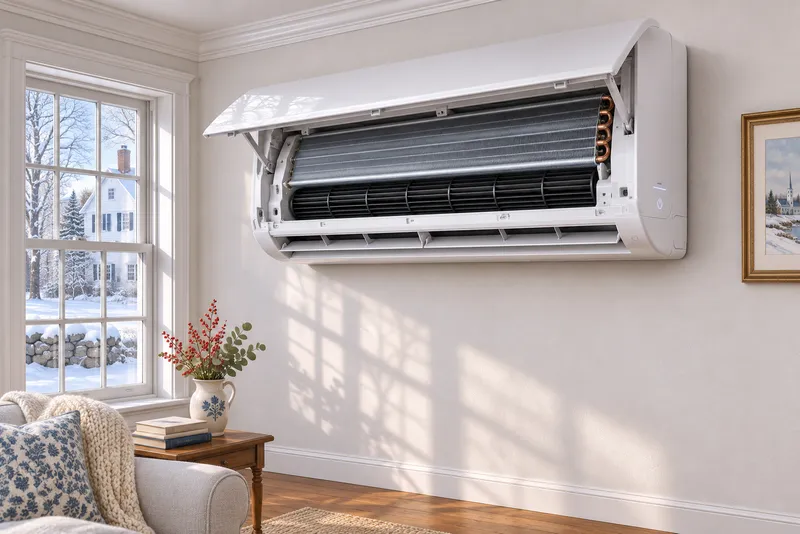
Heat pump not heating well in cold weather?
Before you assume it is broken, check the five things that cause most cold-weather complaints. Brand-neutral, works for Mitsubishi, Fujitsu, Daikin and the rest.
- Updated: November 7, 2026
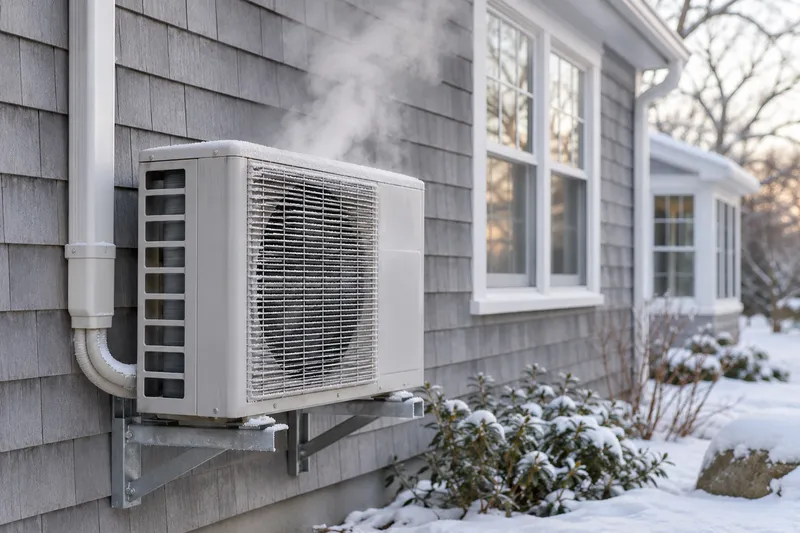
Heat pumps move heat instead of making it, and that works well in New England when the system is a cold-climate model and sized for the house. Mass Save says a heat pump system that is properly sized for the facility it is serving can deliver sufficient heat through the winter Mass Save. When one does not, the cause is more often small and fixable than a failed system.
Normal behaviour that looks like a problem
- Defrost cycles. The outdoor coil frosts in cold, damp weather and the unit melts it. Indoors, the head may stop blowing warm air for a few minutes. Steam rising from the outdoor unit is the ice melting and evaporating, and is perfectly normal Trane.
- A pause on start-up. Many indoor heads hold the fan for a short time until the coil warms so they do not blow cold air. Your manual describes it.
- Air that feels cooler than a furnace. A heat pump delivers a large volume of moderately warm air. A room can be warm while the louver air feels lukewarm to your hand.
- Frost on the outdoor coil. Common in winter NY HCR.
Check in this order
Brand-neutral. Fault lights and codes differ between Mitsubishi, Fujitsu, Daikin and other makes.
Setbacks and recovery
Turning the setpoint down 8 degrees overnight and back up in the morning makes a heat pump spend the first hours catching up, often at the coldest part of the day. A smaller setback or a steady setpoint usually works better, and some systems turn on electric backup heat to recover, which costs more to run. If your system has backup heat, check the manual for how it is staged.
Brand-neutral tips
- Whatever the make, look for the indicator lights on the indoor head. Their pattern is the fault code, and the manual lists them.
- Use the remote's heat mode, not auto, to see if the mode is the problem. Auto can pick cooling on a mild afternoon.
- If you have several heads, find out which ones are struggling. A single head that is cold points to that head, a dirty filter or a closed louver. All of them point to the outdoor unit or the settings.
- Take a photo of the model label on the outdoor unit and the indoor head. A technician can look up the specifications.
When it is not a small problem
If the checks do not help, the cause may be low refrigerant, a failed outdoor fan or compressor, a control fault or a system that is simply undersized for the coldest nights. Those are technician jobs. If it is the last one, the fix may be adding a head or backup heat, not a repair. Ask how the system was sized. We can walk through it if you tell us what you have: request a check.
Thinking about a new system? A cold-climate model is the kind Mass Save rebates: its air source heat pump page says equipment must meet ENERGY STAR Cold Climate Mass Save. See heat pumps in Massachusetts and the rebate calculator.
Common questions
Why is my heat pump blowing cold air in winter?
Often it is in a defrost cycle, still warming up after a start, or set to the wrong mode. If it keeps blowing cool for more than 15 minutes or the outdoor unit is iced over, call a technician.
Do heat pumps work in Massachusetts winters?
Cold-climate heat pumps are built for them. Mass Save says a properly sized heat pump system can deliver sufficient heat through the winter, and some cold climate models have been tested to produce heat at outdoor temperatures as low as -30°F.
How long does a defrost cycle last?
A few minutes is typical and the unit then returns to heating. If cycles keep getting longer, or ice keeps covering the outdoor unit, that needs a technician.
Should I turn the heat pump down at night?
A small setback is fine. A large one makes the system spend the morning catching up, sometimes with backup heat. A steadier setpoint usually works better.
Will cleaning my mini-split help it heat better?
If the problem is restricted airflow from a dirty filter, coil or blower wheel, yes. It will not fix refrigerant, the outdoor unit or the controls.
Is it OK to pour hot water on an iced outdoor unit?
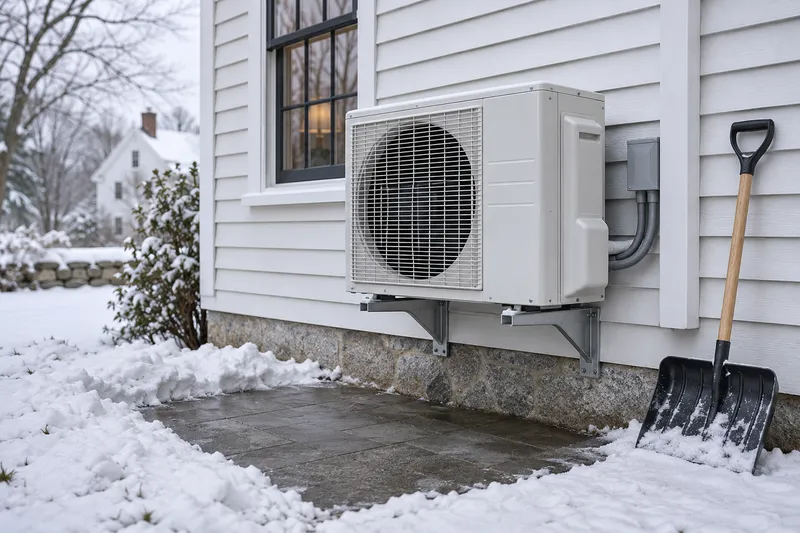
We would not. Let the defrost cycle melt it, clear snow by hand, and call a technician if ice keeps coming back. Pouring water can refreeze and damage the fins.
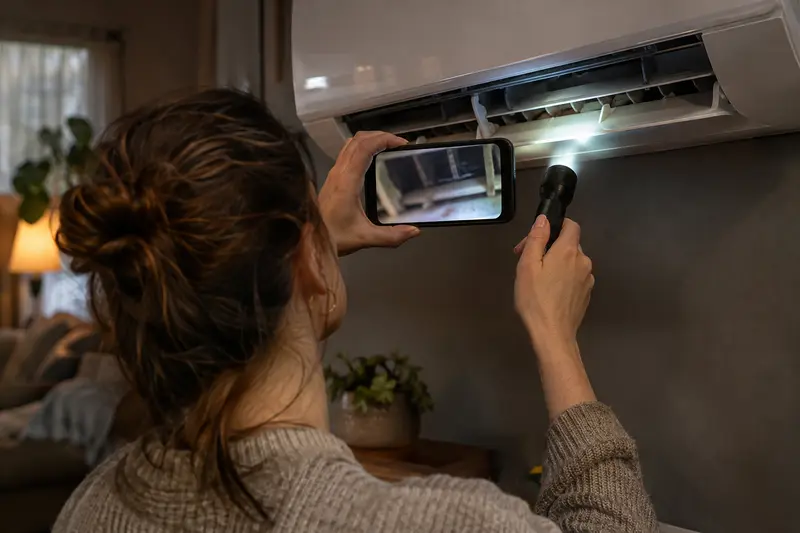
Not sure it needs cleaning?
Shine a flashlight into the vent and send us a photo. A technician looks at it and tells you if it needs cleaning.
Book a mini-split cleaning.
Your town and a phone number is enough to start. Or call (781) 210-8400.
Book a mini-split cleaning