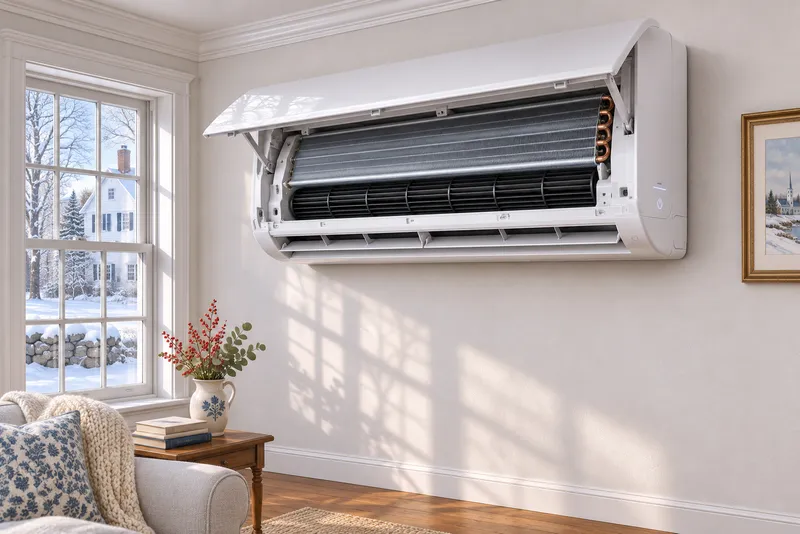
Heat pump maintenance checklist for Massachusetts winters
A heat pump heats the house all season. Spend half an hour in the fall and a few minutes after each snowstorm and it will have the best chance of keeping up.
- Updated: November 7, 2026
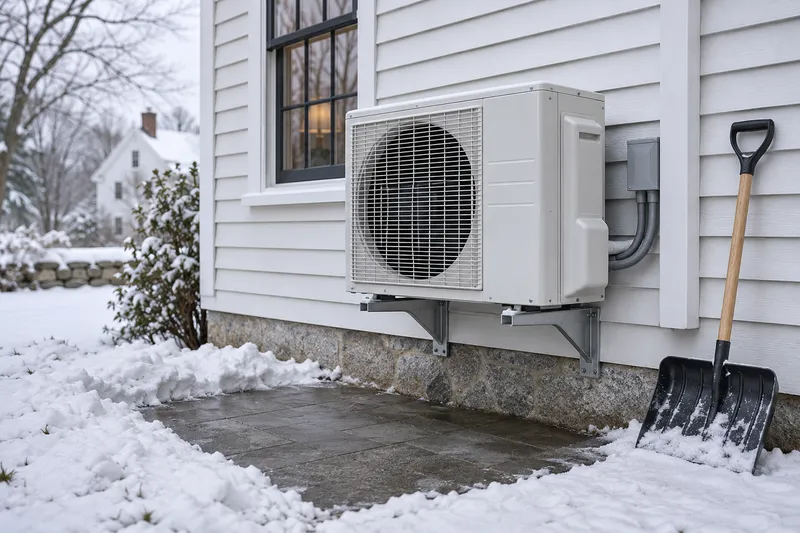
Massachusetts is one of the colder places heat pumps now heat. Cold-climate models are built for it: Mass Save says some cold climate heat pump models have been tested to produce heat at outdoor temperatures as low as -30°F Mass Save. But a unit buried in snow, a dirty filter or a blocked drain can wipe out that ability. This is the short list that matters.
When to do what
| When | What | Who |
|---|---|---|
| Early fall (September to October) | Wash filters on every head. Clear the outdoor unit. Test heat mode on a cool day. | You |
| Fall, if overdue | Deep clean the indoor heads and have the system checked | Aurion clean and a heating tune-up |
| Each month of winter | Look at the filters. Check the outdoor unit. | You |
| After each snowfall or ice storm | Clear snow from the unit and the area around it by hand | You |
| Spring (April to May) | Wash filters again. Check the drain. Start cooling on a mild day. | You |
| Every year or two | Deep clean the indoor heads. Professional inspection of the system. | Technician |
Your manual's schedule wins if it differs.
Indoor checklist
- Filters. Changing filters regularly is part of keeping a heat pump running well U.S. DOE. See how to clean them.
- Louvers and front panel. Wipe with a damp cloth. Keep furniture and curtains from blocking the airflow.
- Thermostat or remote. Check mode, setpoint and schedule. Big overnight setbacks make some systems work hard in the morning. See the cold weather guide.
- Smell, noise, dripping. A new smell or drip is a sign to act early. Smell guide, leak guide.
Outdoor unit: snow, ice and clearance
- Snow. When there is a significant snowfall, keep the outdoor unit clear of snow and ice NYSERDA. Brush it off by hand or with a soft broom. Do not use a shovel on the coil.
- Plants and debris. Trim shrubs back to at least two feet from the unit Trane. Pull leaves out of the grille in the fall.
- Under the unit. A wall-bracket or stand keeps it above drifts. If drifts reach the base, shovel a path.
- Roof runoff. Do not let eave drip or roof snow fall onto the unit. A snow guard or an angled shield is a job for the installer.
- Do not chip ice off the coil. The fins are thin aluminium and bend and puncture easily. Let the defrost cycle do it.
Defrost: what is normal
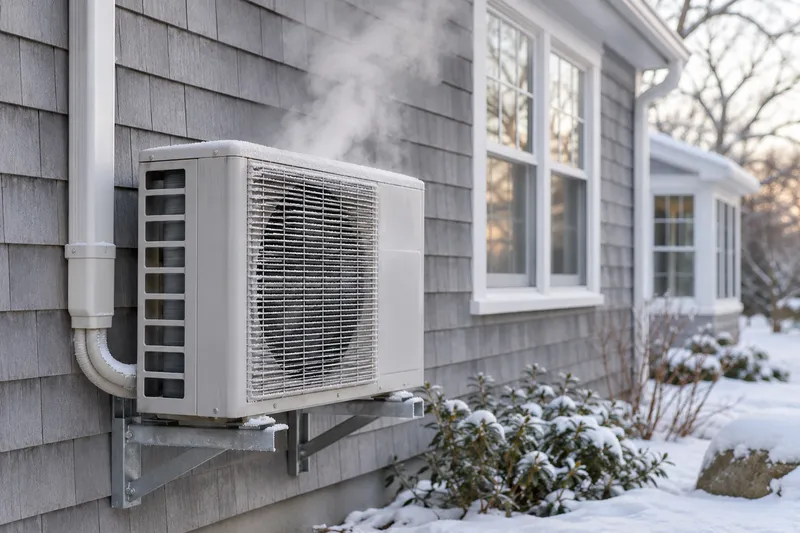
In cold, damp weather a heat pump's outdoor coil frosts, and the unit runs a defrost cycle to melt it. New York State's heat pump guide puts it simply: during winter months it is normal for outdoor units to get icy on the coils NY HCR. Trane says the steam you may see rising from the unit is the ice melting and evaporating, and is perfectly normal Trane.
Call someone if the unit seems to defrost constantly or if the defrost cycles last longer and longer with frost and ice starting to cover the unit Trane.
Drains, codes and what you can ignore
- Drain outlet. The hose end should hang free and drain away from the house. In winter keep it above the snow line and out of ice. A blocked hose can back up into the head.
- Error codes. Mitsubishi, Fujitsu, Daikin and other brands report faults through blinking indicator lights on the indoor head or a code on the remote. The meaning differs by brand and model, so use your manual. Write down the pattern or take a photo, then switch the system off and back on once. If the code returns, call, and tell the technician the pattern. Do not keep resetting the breaker.
- Refrigerant and electrical. Not owner jobs. Leave line sets, panel covers and disconnect boxes alone.
- Snow guard and bracket. If the unit has shifted, tilted or is vibrating, call the installer.
When to call a technician
- The unit runs but the house does not warm up, and filters and the outdoor unit are clear. See not heating well.
- Ice covers the whole unit or defrost seems constant.
- A fault code that returns after one reset.
- Water inside, a burning smell, grinding or a loud outdoor fan.
- It has been more than a year or two since a professional looked at it. Ask about a heating tune-up.
If you are still deciding on a system, see how heat pumps work in Massachusetts and the rebate calculator. The Mass Save rebate drops on January 1, 2027, see the 2027 change.
Common questions
Do heat pumps need maintenance?
Yes. They need regular filter care, a clear outdoor unit and a clear drain, plus a professional check every year or two. Filters and clearance are owner jobs. Refrigerant and electrical work is for a technician.
How do I keep snow off my heat pump?
Brush snow off the top and sides by hand or with a soft broom after each snowfall, and keep the area around and under it clear. Do not chip ice off the coil. A bracket that keeps the unit above the usual snow depth is the best fix.
Is it normal for my heat pump to steam or frost in winter?
Yes. Frost on the outdoor coil and steam during a defrost cycle are normal. A unit that stays iced over or defrosts constantly needs a technician.
How often should I clean heat pump filters in winter?
Look at them monthly and wash them when you see dust. Every 2 to 4 weeks is a common routine in heavy-use months.
What do the blinking lights on my mini-split mean?
They are fault codes and the meaning is brand and model specific. Look up the pattern in your manual, then call a technician if it returns after one restart.
Do I have to use the company that installed it for maintenance?
Not necessarily. Mass Save rebates require an installer in its Heat Pump Installer Network for the installation, but you can ask any qualified company for a tune-up. Check what your contract says about the equipment warranty first.
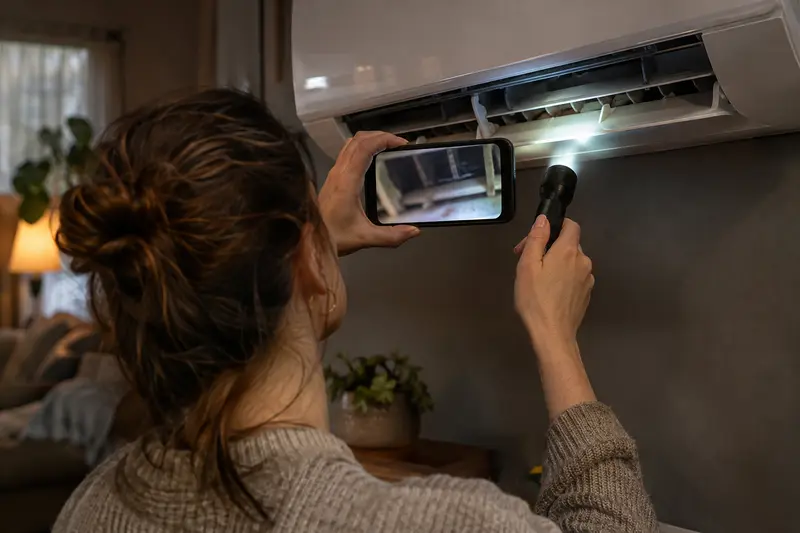
Not sure it needs cleaning?
Shine a flashlight into the vent and send us a photo. A technician looks at it and tells you if it needs cleaning.
Book a mini-split cleaning.
Your town and a phone number is enough to start. Or call (781) 210-8400.
Book a mini-split cleaning