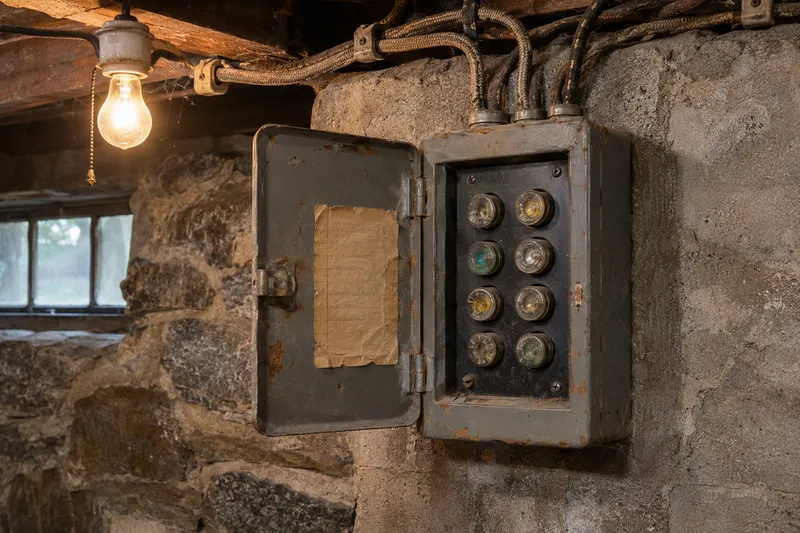
Fuse boxes and old panels
Fuse boxes, old panels and home insurance
An old panel rarely stops a house on its own. It comes up when something else changes: a heat pump, an insurance renewal, a sale.
- Checked: November 3, 2026
When it comes up
- A heat pump or other new load. The electrician checks whether the service and panel can carry it. See the heat pump guide.
- Insulation work. A Mass Save assessor looks for old wiring. See knob and tube.
- Insurance. Insurers can ask about the age and type of wiring and panel, in the application or at renewal.
- A sale or refinance. A buyer's inspector can flag a fuse box or an old panel.
Questions for your insurer
- What wiring and panel types do you require, and by when?
- If I replace the panel or the wiring, what proof do you need: a permit sign-off, an inspector's report, an invoice?
- Will the premium change after the work?
Get the answers in writing.
Questions for the electrician
- What is the service size, and what is the panel brand and age?
- Is anything on this panel doubled up or overloaded?
- If I replace only the panel, is the wiring behind it still a problem?
Common questions
Will my insurer cancel me over a fuse box?
Insurers set their own rules and we cannot tell you yours. Ask them, in writing, what they require for the wiring and panel you have.
Is a fuse box unsafe?
Not by itself. Fuse boxes are older, usually small, and often sit in houses that also have other old wiring. An electrician can tell you what yours is feeding and whether it can take the loads you plan to add.
Do I need a permit to change a panel?
In Boston, an electrical permit must be applied for by a licensed contractor. The City says a homeowner has to hire one to apply and do the work.
Have a fuse box or an old panel?
Send the address and a photo of the panel with the door open. We look at it and get back to you.
Send photos